
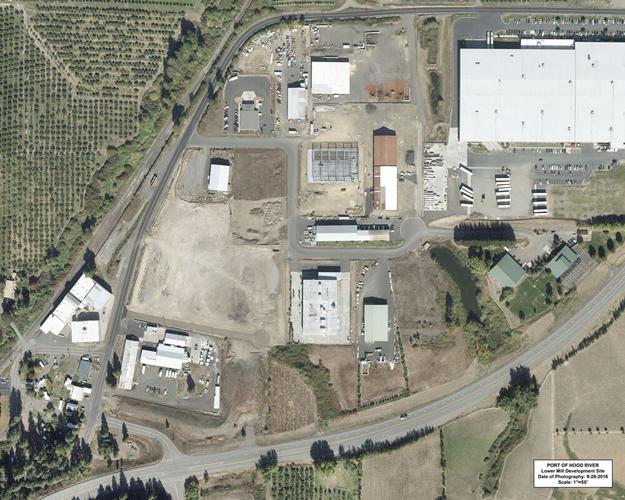

HOOD RIVER CO. — Last Monday, Amazon cleared one of its final hurdles in building a 49,000-square-foot warehouse and distribution center outside Odell, but less than 24 hours later, the Port of Hood River opted to sell its Lower Hanel Mill land to a local company instead.
Hood River County’s Board of Commissioners reversed a prior denial of Amazon’s proposed facility on Aug. 17. Since the corporation’s original purchase and sale agreement for 11 acres off Highway 35 had lapsed, however, the port had multiple offers on the table when its commissioners convened last Tuesday, ultimately finding one submitted by Dominguez Family Enterprises Inc. (DFE) most attractive.
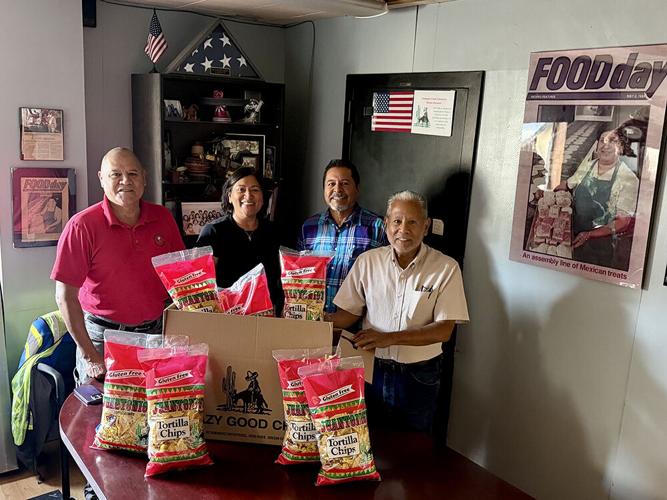
The makers of Juantonio’s tortilla chips, DFE initially plans to build a 35,000-square-foot manufacturing and warehouse facility to expand its longtime Hood River operations, retain approximately 60 existing jobs and create 15-20 new jobs. Additional warehouse and light manufacturing space for other businesses may come later.
“When I called my siblings, it was very emotional,” said Luis Dominguez, president of DFE. “We are very thankful to the Port of Hood River for considering us, and giving us this opportunity to buy the property. That was a gutsy move. It is a very big deal to our family and most of all to the community.
“We’re still in awe,” he added. “We are private, very quiet. We just do the work and do what’s best for the community.”
Dominguez and his siblings were born in Hood River. His family first visited the valley in 1937, moved here in 1953 (one of the first three local Mexican families), then settled permanently in 1967. They began to build the company 10 years later, renting a room on the Heights, according to DFE's website. Juantonio’s combines the names of company founders, Juana and Antonio Dominguez, and the extra land will allow them to keep their business local.
“The money stays here in the community. It’s not going to go out. Acquiring the property gives us a lot of options, such as installing state-of-the-art equipment to keep this family business going. The most important thing is to build a new facility. Our current one is old. We’ve made it work for the last 40 years, but it wasn’t built to make tortillas,” Dominguez said.
During an interview last Thursday, port Executive Director Kevin Greenwood anticipated a signed sales agreement in the next day or two, and once received, he will pull the port’s consent for Amazon’s land use application. DFE has until May 16 to inspect the land and complete any necessary due diligence; then the property will officially close. Dominguez noted that, already having a vision for the new facility, DFE plans to break ground within 90 days.
“We are grateful that Oregon’s planning process gave our residents a voice, and thankful to all who took the time to speak up, and to the planning commission for upholding Thrive’s appeal,” Chris Robuck, co-president and treasurer of the land use advocacy nonprofit, wrote in a statement. “The port committed a lot of public money and time to cleaning up this old mill site to make it shovel-ready for redevelopment, so we’re very pleased that a growing local manufacturing business with deep roots in the community is buying it.”
The county’s rationale
After county staff tentatively approved Amazon’s proposal in February, Thrive Hood River filed an appeal, resulting in multiple comment periods and two public hearings. Of primary concern was traffic congestion and road safety.
An average of eight box trucks, 24 semis, 134 delivery vans and 382 passenger vehicles were expected to enter or exit the facility daily, totaling 548 trips. That figure would jump anywhere from 33-50% during peak online shopping season from mid-November through December, and a couple of other times per year, according to NV5 Engineers and Consultants.
Both Oregon’s Department of Transportation and county public works staff had no concerns with Amazon’s traffic study, which was based on data collected Sept. 10 last year. It analyzed the four intersections that drivers would use to access the site.
During a May 29 hearing, Hood River County Planning Commissioner Jon Kelter Gehrig argued that Amazon was simultaneously benefiting from a broad interpretation of wholesale distribution, since it would be selling to retail customers rather than only other businesses, while narrowly defining site access. Amazon couldn’t have it both ways, he said, contending that the traffic study must consider impacts on intersections downstream of the facility.
Under Hood River County’s Zoning Ordinance, wholesale distribution is permitted outright on industrial land, but only if “site access will not cause dangerous intersections or traffic congestion.” In the end, planning commissioners sustained Thrive’s appeal, and Amazon challenged that vote before the board.
“I thought that [Kelter Gehrig] was correct in criticizing the attorney’s interpretation of the access standard to only refer to ingress and egress,” said Hood River County Commissioner Arthur Babitz last Monday. “But the question I see is one of what standard you use to determine what the appropriate scope is.
“The only way to consistently manage the process, to consistently decide what gets to be built or what doesn’t get to be built, is to have a process which is implemented by competent professionals,” Babitz continued.
With Commissioners Jennifer Euwer and Ed Weathers either absent or recused from the deliberations, the board followed expert advice and negated the planning commission’s decision in a 3-0 vote, with two extra conditions of approval.
Port decision
Those conditions became moot after port commissioners chose DFE’s $3.25 million offer on Aug. 18. The others included Amazon’s earlier $3.47 million agreement, but this time with an extension until April 16, 2027, and a combined offer from five other local business owners for a total of $2.58 million.
Port property sales criteria do not predicate decisions on price alone but also take into account economic value to the local community, job creation, development and financing risk, timing and “catalytic development potential,” where one company drives the creation of others.
“Dominguez is the best possible win-win situation for us,” said Commissioner Tor Bieker, noting that DFE offered $750,000 more than the combined offer — with no broker commission, since it would negotiate directly with the port. DFE also posed a more favorable timeline. Amazon’s offer wasn’t immediate, and the combined proposal would have required port staff to craft four separate sales agreements to accommodate the parties involved.
“We need the cash now,” said Commissioner Kathryn Thomas. Roughly $500,000 of the proceeds will be used to construct a new terminal at Ken Jernstedt Airfield, with the remainder going toward waterfront transportation improvements.
But port commissioners remained sympathetic to Amazon, saying it had negotiated in good faith, only to run afoul of local opposition.
“I do feel it’s unfortunate that we’re in this situation,” said Commissioner Kristi Chapman, suggesting the land use process should engender public confidence rather than uncertainty in the outcome. Similar concerns led Commissioner Heather Gehring to cast the single dissenting vote.
“We’re all very excited for the Dominguez family and look forward to seeing great things come out of the purchase,” said Greenwood. “Amazon helped bring more attention to the lot, which ultimately resulted in three competitive proposals that the commission, I thought, did a good job of debating.”
May move elsewhere
For two business owners involved in the combined offer, though, the port’s decision leaves their future in the county uncertain.
Garin Buckles, founder and CEO of Champion Tool Storage, launched his company back in 2006 out of his garage off Post Canyon Road and has since expanded to a facility adjacent to the Lower Hanel Mill land. Now with 40 employees, his 16,000-sqaure-foot warehouse where metal gets cut and shaped to meet automotive, aerospace and other industrial storage needs is cramped, effectively capping his growth.
“We’ve been trying to buy over there forever,” Buckles said prior to last Tuesday’s meeting. “Any kind of other manufacturing-zoned property that’s shovel-ready, or even close to ready, is zero in this county.”
As Greenwood explained, the port acquired the property back in 2015 and spent $1.8 million over several years on environmental cleanup, which was partially covered by grants, with the goal of providing a large manufacturing opportunity. To avoid being left with a small, devalued parcel, they wanted a big buyer who could take everything at once.
“Either we stay where we’re at and we lose customers at some point and don’t grow, or we sell and somebody takes it and ramps it up, or we move,” Buckles said. “That’s the bummer part, because we have so much opportunity right now.”
According to the combined proposal, Neal Creek Forest Products might be forced to relocate due to the lack of local expansion land as well. Altogether, the combined proposal would have generated about 50 new jobs in the county, about half of Amazon’s estimated total.
This story was updated to clarify that Dominguez Family Enterprises Inc. only sells tortilla chips under the Juantonio’s brand.


Commented