
Part 2
By Sean Avery
Columbia Gorge News
HOOD RIVER — With Nov. 3 inching closer, candidates for Oregon’s House District 52 (HD 52) and Senate District 26 (SD 26) are vying for a seat in Salem.
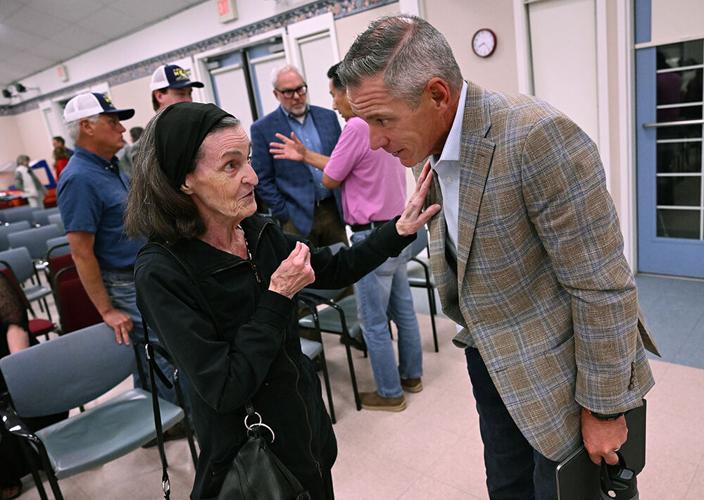
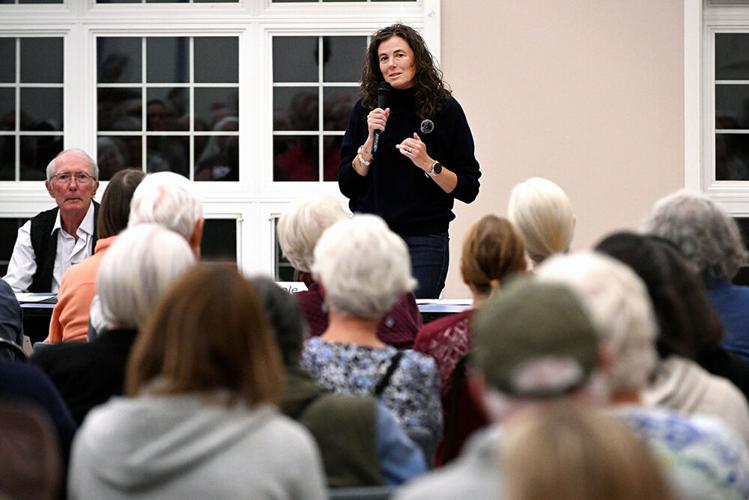
Scott Hege (R) and Hank Sanders (D), up for HD 52, followed by Jeff Helfrich (R) and Nicole Bassett (D), up for SD 26, addressed constituents at a nonpartisan public forum at the Hood River Valley Adult Center on Sept. 24, hosted by Columbia Gorge News.
Both districts include all of Hood River County, a slice of Wasco County that encompasses The Dalles, and chunks of eastern Multnomah and Clackamas counties. SD 26, however, includes additional Clackamas County population centers: Sandy, Estacada, and Canby, which make up House District 51.
Part 1 focused on HD 52 candidates; this week, it’s SD 26’s turn. Full story online at columbiagorgenews.com.
Senate District 26
Like HD 52, Helfrich’s current post, SD 26 won’t have an incumbent in the race. Sen. Christine Drazan — appointed after Daniel Bonham resigned to join the U.S. Department of Labor — is not running for re-election, instead looking to have better luck in a rematch against Oregon Gov. Tina Kotek.
Republicans have controlled the seat since 2010, though registration metrics are tight: 30% Republican, 27% Democrat, and 36% unaffiliated.
Rep. Helfrich, 58, is a long-time Hood River resident, Air Force veteran, and former Portland police officer. He has served on the Cascade Locks City Council and in the Oregon House, including as House Republican Leader. In his opening statement, he said those experiences taught him that intentions don’t matter without results and shaped his “back to basics” approach to politics.
Bassett never expected to run for office, but felt the moment was too important to sit out, with the economy failing so many people. Drawing on her experience founding The Renewal Workshop, an apparel repair company based in Cascade Locks, she said she understands how jobs are created and how regulatory burdens affect small businesses.
Both candidates were given the same questions, which were mostly different from those asked to HD 52 candidates.
Q: What needs to be done to ensure that farming is still a sustainable livelihood?
HELFRICH: There is a lot to that. In Salem, ideas get put in silos, but they don’t see the cumulative effect of what it costs to get things done. I’m proposing legislation that’s in the pipeline right now to save our family farms. One of the biggest things we see is regulation after regulation after regulation that a farmer cannot continue to work under.
BASSETT: When I got into this race, I had the chance to attend an economic forum on farming. I got a great introduction to what’s happening in farming across this country. I see the real risk and what we’re facing right now with agriculture, and we cannot lose this industry. Action is needed right now. I agree about regulation and looking at what we’re asking of our farms. When I was in the apparel industry, we made mistakes that we could not recover from, and so we have to focus on near-term issues. And we also need to look at the broader health and quality of our industry as well.
Q: The single most asked question concerned access to women’s healthcare, including abortion. What’s your position on women’s healthcare options?
BASSETT: I never thought that we would be in a place that we are right now. I think women’s right to choose is important, and within that choice, there are a lot of really hard decisions that have to be made and should be done at a personal level. So I do think we have to protect women’s healthcare in this state.
HELFRICH: There was a woman who got pregnant and had a baby. She decided to have the baby. That baby was then adopted. That baby was my father. Because that woman decided in that moment she was going to keep that child alive and put it up for adoption. I believe in life. I will always believe in life.
Q: Do you have a plan for reducing the tax burden on working Oregonians?
HELFRICH: We need to have a bipartisan solution. In 2010, it happened. We still have that footprint. We’re still working through those things. We have to have accountability before we go asking for anybody else’s dollars.
BASSETT: Eighty-four percent of our revenue comes from income tax, which means that we have to shove taxes into all these other places, and we end up with situations like this where we’re asking the average person to pay more. I think that we have a tax system in Oregon that was built for a different time, and I think that there is an opportunity now to look at how wealth is generated and where it sits, and how we could rethink that.
Q: Would you support legislation addressing how AI companies use and profit from local news content?
BASSETT: I think there’s a whole bunch of regulation that we’re going to need in place to understand and navigate AI, and we’re really not prepared for it. And the AI companies are also not prepared for it. So we have a very small window in time where we as citizens need to define what we want our future to look like. I think it’s incredible that all of you are here tonight to hear from us directly, and we even have a paper left in our community.
HELFRICH: It makes sense to make sure that the news organizations are compensated for their work. But how do you regulate that? What does that look like? I don’t know. There’s a world in which we don’t have an idea what it looks like, and we actually have to sit down and have the conversation, get a group of people together in the room, and say, how do we make this work?
Q: During COVID, Governor Brown reduced high school graduation requirements, eliminating the need to prove basic reading, writing, and math skills to graduate. That modification is scheduled to remain in effect until 2029. Is it time to return to the norm?
BASSETT: I think that a lot of decisions got made during COVID in a moment of trying to protect each other and our communities and our kids. I would have to listen to the input from the administrators and teachers and parents to see why this bill would continue. What is the benefit of it, or why maybe it is time to evolve it and change it? So my thing would be to bring in and have conversations with the experts in those spaces.
HELFRICH: We want to make sure they get educated appropriately. When we spend more money on education and we have lower graduation rates and outcomes, that is a problem. And we need to make sure our kids are ready for the real world. We have to go back to reading, writing, and arithmetic, and take care of what matters to get these kids graduated and ready for real life.
Q: What are two to three policies that will drive your work as a legislator?
HELFRICH: I think the biggest thing right now is the five-part proposal that I talked about for the family farms. That is so important. We have to make sure that our agricultural industry can live and thrive. The other part: we need to go back and look at the reforms to Measure 110. Are the people getting the resources they need for the deflection centers? The last thing is the transportation package.
BASSETT: I think what the Trump administration has shown us is that we are really vulnerable to the tariffs and to the war, increasing fuel prices. And so this is an opportunity for us to create resiliency in this state, looking at things that we can do to make sure that we can buffer fuel prices by investing in renewable energy. I also think that we look at materials and the agriculture we have in this state and how we can use leading materials, rethinking how we can be place-based. So I really want to focus on how we strengthen, incentivize, grow, and innovate our economy here in Oregon.


Commented