
As the vibrant colors of autumn fade and the crisp chill of early winter settles over the Columbia Gorge, our gardens begin their long slumber. For us gardeners, this isn’t a time to stop; it’s a time to tuck everything in securely! Putting our garden beds — especially our beloved roses — “to bed” correctly is the single best step we can take now to ensure they wake up healthy, vigorous, and ready for a stunning spring show.
Timing and the golden rule of dormancy
The first and most critical step is managing nutrients. As the Oregon State University (OSU) Extension reminds us, timing is everything: do not fertilize late in the fall. Adding nitrogen now encourages the plant to produce soft, new growth that is highly vulnerable to frost damage and disease. We want our plants, especially woody ornamentals like roses, to slow down and harden off for the winter naturally. OSU Extension provides excellent tips on rose care, including winter care and protection at https://extension.oregonstate.edu/sites/extd8/files/documents/ec1624.pdf.
For those of us in areas like the mid- and upper-valley of Hood River County, where temperatures fluctuate and dormancy arrives later, the ideal time to begin serious winter prep is typically late November or early December, once the plants are slowing down and near true dormancy. This is when we can safely prepare them for the cold months ahead.
A gentle prune for protection
While heavy shaping and major cutting are best left until the first major growth in spring, a light, protective pruning is essential now. This gentle work focuses on sanitation and minimizing damage from wind and snow.
Start by removing any dead, diseased, or damaged canes. Cut these out entirely, right down to the ground or below the point where the inner stem tissue is brown or discolored. This prevents diseases from overwintering. Next, look for canes that are rubbing against each other. This friction creates tiny wounds that are easy entry points for pests and pathogens. Snip these crossing canes to promote good airflow through the center of the bush — a key defense against future fungal issues.
If you have large rose bushes or other bushes that have long stems protruding outward, you can gently tie the bush to collect the long stems more toward the center so that they will not whip around in the wind or break under the weight of snow.
Cleanliness is health
One of the most important jobs of fall is sanitation. Diseases like black spot and powdery mildew love to overwinter in fallen leaves and on the canes themselves.
Start by diligently picking up every last leaf from around your rose bushes and garden beds. Do not add diseased material to your home compost pile; bag it and dispose of it. You can learn more about common rose diseases and treatments in this article from the University of California IPM Center, as described in this article: https://ipm.ucanr.edu/home-and-landscape/roses-diseases-and-abiotic-disorders/pest-notes/#gsc.tab=0.
Enriching the soil for spring
Winter is the perfect time to give back to the soil that has worked so hard all season. While the ground is still workable, you can introduce beneficial microorganisms that will do great work for you early in the spring. You can assess your soil health with a soil pH test, which should be 6.5–7.0 for rose gardens.
I recommend applying a generous layer of worm castings. As we shared in a previous article called “Plan a Worm Farm for a Worm-Powered Spring Garden,” https://www.columbiagorgenews.com/eedition/page-c-6/page_1a7a4ec7-cd30-5232-ba90-eb415ec8e779.html, worm castings are packed with nitrogen, phosphorus, potassium, and beneficial microorganisms. You can mix in beneficial fungi and nematodes available at garden stores. If you, like me, maintain a worm farm, gently introduce a handful of worms directly into the garden soil around your roses. These Red Wigglers will help process remaining organic matter and continue improving soil structure through the cold months.
The protective blanket of mulch
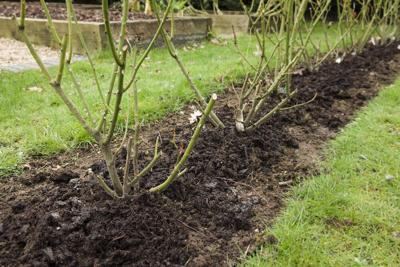
Once the ground is clean and amended, it’s time for the winter blanket — mulch! Mulching is vital for regulating soil temperature, not just keeping roots warm, but preventing the harmful cycle of freeze-thaw-freeze that can damage roots and crowns.
Apply a four- to six-inch layer of organic mulch (compost, straw, or shredded leaves) around your plants, but avoid volcano mulching! Do not pile the mulch up against the crown of the plant (the point where the canes emerge from the roots). Leave a small, donut-shaped ring of space around the crown. Covering the crown traps moisture against the base, encouraging mold, mildew, and disease.
Finally, if you live in an area prone to harsh, drying winter winds, a physical wind barrier is a great idea. In Parkdale, I use four bamboo or plastic stakes placed around the bush, then lace clean burlap — available at most garden centers — around the stakes to create a wind-blocking tunnel. I also like throwing some powdered sulfur on the canes inside the barrier to reduce sucking insects and mildew, and the burlap keeps the powdered sulfur on longer. This protection prevents the drying effect of winter windburn, keeping the canes healthy until spring. You can read more about these and other winterizing tasks in this OSU Extension article: https://extension.oregonstate.edu/news/protect-landscapes-when-freezing-weather-moves.
Prioritizing this deep cleaning, soil amendment, and protective mulching now will prove to be a crucial investment in long-term plant and soil health. This essential winter rest allows your roses and garden plants to emerge faster and stronger in the spring, leading to quicker, bigger, and brighter blooms that possess better resistance to the inevitable elements of spring weather, ensuring that “vibrant spring awakening” we all dream of.
By taking these few thoughtful steps now, you’re not just saying goodbye to your garden; you’re setting it up for its best year yet! Happy winterizing!
Central Gorge Master Gardener volunteers provide free beginning gardening classes and continuing education to home gardeners. For research- based information about specific gardening or pest questions, submit your concern online at www.extension.oregonstate.edu/mg/hoodriver, or by phone at 541-386-3343. Home gardeners can also drop off plant or pest samples Monday - Thursday between 9 a.m. and 4 p.m. at the OSU Hood River County Extension Service, 2990 Experiment Station Drive, Hood River, OR.
The Central Gorge Master Gardener program is a division of the OSU Hood River County Extension Service. OSU Extension Service prohibits discrimination in all its programs, services, activities, and materials.


Commented