
The apple most home cooks reach for in fall is not always the right one for baking. It might taste great right off the tree and looks fine in the cart, but neither quality tells the whole story once the apple hits a hot oven. The qualities that make an apple great for snacking are not always the qualities that make it great in a pie.
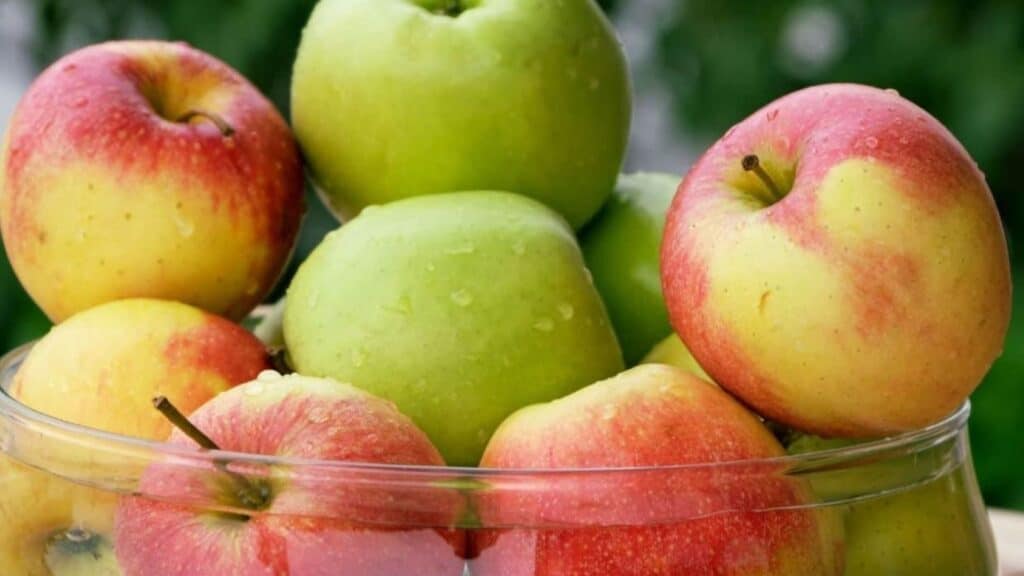
The mismatch between eating apples and baking apples catches even careful cooks off guard. Grocery stores carry a handful of varieties year-round, developed and marketed for crunch, sweetness and visual appeal. A specialty orchard may offer a dozen or more varieties over a harvest season. The varieties that never made it onto the national grocery circuit often have culinary characteristics that supermarket staples don’t.
The 2026/27 U.S. apple crop is forecast at 263 million bushels, down 7% from last year, meaning a smaller national harvest, although the outlook varies considerably by growing region. The varieties that dominate U.S. production, with Gala leading nationally, followed by Red Delicious, Granny Smith and Honeycrisp, aren’t all equal performers in a hot oven. Knowing which variety to reach for, and why, is worth more this season than it has in years.
Pie needs an apple that won’t give up
The science behind a collapsed pie filling is pretty straightforward. Apples contain roughly 25% of their volume as air held between their cells, and when in the oven, that air expands, the cell walls rupture and the juice releases. Acidity, like lemon juice, helps strengthen pectin and slow its breakdown during cooking, while the apple’s firmness also determines how well an apple holds together while cooking.
Granny Smith is a common choice for pies. With firm flesh and high acidity that help it hold its shape while baking, it’s also readily available, if a little tart. Northern Spy is the less-common, more rewarding option, with dense, juicy flesh and enough tartness to keep the filling together. Braeburn is the reliable grocery-aisle pick, tangy-sweet and very firm. Honeycrisp, despite its reputation as a great eating apple, is also a great choice for pie because its firm cell structure holds up similarly to Granny Smith under extended heat.
“For baking, I care a lot less about which apple is the sweetest and a lot more about whether it can survive the oven,” said Bella Bucchiotti at xoxoBella. “I usually reach for Granny Smith, Braeburn or Pink Lady because they have some tartness and actually hold their shape. If I’m making an apple pie, I want to bite into pieces of apple, not wonder where all the apples went.”
Red Delicious and McIntosh are the ones that tend to disappoint. They soften rapidly and turn mushy before a pie is done.
What works in a pie fails in a crisp
The topping on a crisp brings sweetness, fat and texture, which means the apple underneath has to provide contrast, not echo it. A sweet apple under a sweet topping tastes one-dimensional, and a firm apple that holds shape in a pie can feel stiff and underdeveloped beneath a crumble.
“When I’m baking with apples, I’m not necessarily reaching for the sweetest one,” said Shelby Stover of Fit as a Mama Bear. “I want an apple that can actually hold its own in the oven. Granny Smith is my go-to because I love that little bit of tartness, but I’ll also use Honeycrisp or Pink Lady depending on what I have on hand. The key is choosing an apple that holds its shape so you still get those crisp little bites of apple instead of a pan of applesauce.”
McIntosh is an underrated choice for a crisp. It softens easily under heat, which is why it isn’t a great choice for pies. But that same quality means it softens into tender, intensely aromatic fruit underneath a crunchy topping. Cortland works well too, with juicy flesh that does not brown quickly after cutting and just enough tartness to balance a sweet topping. Granny Smith can work in a crisp, but its firm texture and pronounced acidity produce a sharper, denser result than a softer apple like McIntosh.
Applesauce is where soft apples finally shine
Apples that break down readily under heat are exactly the ones that make the best sauce. The cell walls need to break down, the juice needs to release and the flavor needs to concentrate, which means the same varieties that struggle in pie are the right choice here.
Gravenstein is one of Washington State University’s top picks for culinary use among heirloom apple varieties. Thin-skinned, sweet and juicy, it breaks down quickly and produces a sauce with natural sweetness. It has a short storage life and shows up at farm stands early in the season.
McIntosh is the more accessible choice, soft and deeply aromatic under heat. For a quick fall project, a mix of tart Granny Smith and sweet Honeycrisp makes a well-balanced Instant Pot applesauce. Fuji works well when a sweeter, milder sauce is the goal.
The most popular apple in cold storage is not the most interesting one
According to January 2026 cold-storage inventory data, Honeycrisp was the most widely held apple in U.S. storage at the start of the year, with Gala close behind. Both are excellent fresh-eating apples. Cortland is worth seeking out for its slow browning after cutting, a practical advantage for packed lunches or a cheese board that will sit out. Mutsu, also sold as Crispin, has a sweet-tart flavor and crisp flesh that make it a more interesting alternative to familiar supermarket varieties.
For anyone near a specialty orchard, Cox’s Orange Pippin is worth seeking out. It’s a classic English dessert variety with a notably pear-like aroma, rarely found outside specialty orchards in the United States.
Rome Beauty does one thing exceptionally well
Rome Beauty has a very specific culinary strength that its near-absence from grocery stores does not suggest. NC State Extension describes it as a cooking apple that keeps its shape well in pies and other baked goods, making it especially well suited to whole baked preparations.
A baked whole apple needs to hold its shape as a container, not release its juice into a filling, and Rome Beauty is built for exactly that. It appears at farm stands through the later weeks of fall harvest, and a stuffed baked apple is one of the simplest fall desserts a home kitchen can produce.
Get your baking apples right from an orchard
American supermarkets stock only a fraction of the apple varieties available to growers and specialty orchards; some of the best baking apples are found in orchards. The selection narrowed over decades as commercial growing concentrated around what shipped well and traveled far, not what performed best once in the oven. For home cooks, the best ingredient upgrade any apple recipe can get is already waiting at a farm stand.
Jennifer Allen is a retired professional chef and long-time writer. Her work appears in dozens of publications, including MSN, Yahoo, The Washington Post and The Seattle Times. These days, she’s busy in the kitchen developing recipes and traveling the world, and you can find all her best creations at Cook What You Love.
The post The best apples for baking aren’t the ones most people buy appeared first on Food Drink Life.


Commented