
The food scene in Germany's second-largest city stretches far beyond fine dining. Beyond its 15 Michelin-starred restaurants, what makes the city truly compelling for foodie travelers is how dockside street food, historic fish markets, centuries-old coffee culture and baking traditions exist side by side.
Michelin-Starred Restaurants Await Visitors
Hamburg is quietly becoming one of Europe's most compelling food destinations, especially since the city has a record 15 Michelin-starred restaurants, nine of which also have a Green Michelin Star for sustainability. It is recognition of a dining culture where sustainability, seafood and serious culinary ambition coexist naturally.
The two-Michelin-star Lakeside at The Fontenay has one of Hamburg's most breathtaking dining settings. The restaurant overlooks Lake Alster, offering panoramic views across the water and the city skyline. Chef Julian Stowasser's cuisine is modern and seasonal.
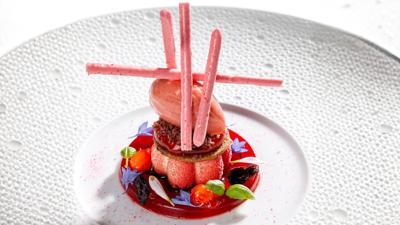
Lakeside's current tasting menu starts with Norwegian lobster with melon and seaweed, Balfegó bluefin tuna with mandarin and shiso, then continues with squid, carabinero and mussels, through to quail, lamb and a restrained finish of strawberry cake with basil, white chocolate and elderflower.
The Fischbrötchen Is Worth the Trip Alone
Hamburg's fish sandwich is simple, fresh and unpretentious. It is a soft roll filled with matjes herring, Bismarck herring, smoked salmon or North Sea shrimp, typically served with remoulade sauce and sliced onion.
The St. Pauli district in Hamburg is arguably the last place anyone associates with culinary adventures. The world knows the neon-lit Reeperbahn or the Beatles' early-1960s gigs in its clubs, but far fewer people know how much this area has changed over the years.
Brücke 10 is a harbor-side fish bistro best known for its cult-favourite Fischbrötchen near the St. Pauli Landungsbrücken in the Port of Hamburg. Visitors can choose from 10 different fish sandwiches while enjoying everyday life in the harbor.
Serving Fish For Over 85 Years
For centuries, Hamburg has been a trading hub for fish arriving from the North Sea and beyond. Few cities wear this heritage as proudly as Hamburg, where fish and seafood are not just staples of the cuisine but also part of cultural identity.
The famous Altona Fish Market (Fischmarkt) dates back to 1703, but still operates today in St. Pauli.
At the heart of this tradition is the legendary Veddeler Fischgaststätte, a no-frills institution on the Elbe that has been serving classic fried fish, matjes and traditional North Sea preparations since 1932.
With its unchanged mid-century interiors, short seasonal menu and an unwavering focus on quality, it stands as a living snapshot of Hamburg's food culture.
Visitors can relive its dockside history, working-class traditions and simple food that come together in this little corner of the city.
Hamburg Invented the Hamburger
Does the hamburger take its name from Hamburg, Germany? The 'Hamburg Round Piece' (Rundstück warm) is a traditional Hamburg dish widely linked to the origin of the modern hamburger.
The dish consists of leftover roast meat served in a bun with gravy to soften it. Originally, it was created as a practical way to reuse Sunday roast.
Heinrich Heckel, an innkeeper on the Reeperbahn in the early 1900s, has also been credited for the invention, who is said to have served warm roast in bread to late-night guests.
Over time, it became not only a staple of Hamburg but, thanks to German immigrants to the United States, the hamburger known around the world.
The Oberhafenkantine in Hamburg serves traditional Hanseatic 'Speis & Trank' food, including the historic rundstück warm.
Where Cinnamon Lingers at Every Corner
Hamburg's proximity to Scandinavia has left a distinct mark on its baking culture. The city's most beloved pastry, the Franzbrötchen, is a cinnamon Scandinavia-inspired roll.
The roll, visitors can find in most bakeries and cafés in Hamburg, is made from laminated Danish-style pastry dough and filled with butter, caramelized sugar and cinnamon. Once unique to Hamburg, it has since spread to other German cities.
Die kleine konditorei is one of the most consistently recommended bakeries in the city for Franzbrötchen. Locals often rank it among the very best thanks to its rich, buttery dough and perfect cinnamon balance. The bakery is a classic Hamburg neighborhood institution that often sells out early.
Hamburg Takes Its Coffee Seriously
Hamburg opened Germany's first coffeehouse in 1677, and the city has never lost its passion for the bean.
As one of Europe's largest port cities, Hamburg has long been a central hub for coffee arriving from Brazil, Colombia and Kenya.
Today, the city is at the forefront of a third-wave coffee movement, leading Germany's most vibrant specialty coffee scenes in the heart of Speicherstadt.
Elbgold is a specialty coffee roastery and café, founded in 2004. Alongside a new generation of independently minded cafés spread across neighborhoods from Sternschanze to Winterhude, a great artisanal coffee in Hamburg is never more than a short walk away.


Commented