



WASCO COUNTY — With two seats open on the Wasco County board, election season is seeing a packed race with Nichole Biechler, Lisa Gambee, John Grant and Robb Van Cleve running for Position 1, and Phil Brady, Dick Schaffeld, and Mike Urness for position 3.
Commissioner Jeff Justesen was elected to position 2 in 2024 and will be up for re-election in 2028.
The board will see a significant shift in seniority with Commission Chair Scott Hege stepping down at the end of the year after serving since 2011 and following Steve Kramer’s departure in 2024 after 11 years; incumbent Phil Brady is finishing his first term and if re-elected would hold the longest tenure on the three-member board.
Columbia Gorge News reached out to all the candidates to pose hard-hitting questions covering several major topics impacting Wasco County. Four of the seven candidates responded, offering their insight into how they would run the county over the next four years.
Position 1: Lisa Gambee

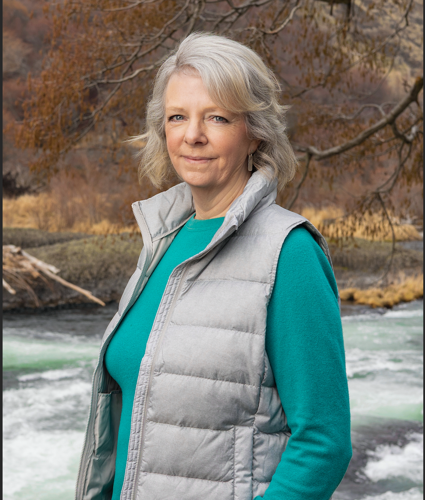
Lisa Gambee
Gambee served for approximately a decade as Wasco County Clerk, where she oversaw elections and other county clerk functions and worked with communities across the county.
Prior to her public service, she worked in brand strategy and entrepreneurship, focusing on communications, team leadership, and strategic planning.
Name one Wasco County decision from the past several years that you would have made differently. What defines your problem-solving style?
I would not have supported purchasing the 154 acres on the west side of The Dalles for $1.5 million. The commissioners had to act quickly, but the property lies within the National Scenic Area, which makes it very unlikely the land could ever be used for future community expansion or a sports complex. With more time for research, it would have been clear the property could not serve its intended purpose.
My problem solving style centers on listening carefully, asking questions, and fully understanding the issue. I rely on subject matter experts and work collaboratively to develop practical, achievable solutions.
The county’s housing needs analysis points to hundreds of units needed by 2040, while recent permit data shows relatively modest annual production. What specific constraint is most responsible for that gap in Wasco County, and what is your first concrete policy change to address it?
The constraint is two fold: limited buildable land and the high cost of construction. The county’s housing needs analysis outlines several strategies to help close the gap, including reducing barriers to flexible housing types, supporting multi generational or family living options, and evaluating policies that preserve or improve existing homes. A concrete step the county can take is donating underutilized county owned land to the Mid Columbia Housing Authority, allowing them to focus their resources on building affordable units rather than acquiring property.
How do you reconcile increased industrial demand from data centers with long-term water constraints (like dry wells) in the region?
The City of The Dalles Water System Master Plan Update shows how rapidly industrial demand is outpacing residential needs. By 2029, non residential use is projected to be two and a half times higher, creating real pressure on long term supply. With decreasing snowpack and wildfire impacts on watershed health, water reliability is becoming a major concern across Wasco County. My position is straightforward: companies driving large industrial demand should pay the full infrastructure costs required to supply it. Water is a public resource and protecting it must come before private expansion.
Preparation for wildfire such as defensible space, home hardening, and fuel reduction all cost money. Should those costs fall primarily on homeowners, the county, or the state? How would you fund your answer?
Wildfire preparation costs are — and should be — shared across multiple levels of government and individual property owners. The state is responsible for forest management and reducing hazardous fuels. Counties focus on emergency management, public safety, and coordinating information and resources for landowners. Cities work to protect water systems and ensure safe evacuation routes. Water and fire districts provide direct wildfire response. Homeowners play a critical role by creating defensible space and hardening their homes.
If the county were to increase its contribution, I would prioritize directing more General Fund resources to Emergency Management and Wildfire Coordination.
Earlier this year a group of Latino community advocates brought concerns to the county about ICE activity and widespread fear of detainment regardless of immigration status. What is your strategy for increasing trust in county government among Latino residents?
Immigrants are an important part of our community. No child should be afraid to go to school wondering whether their parents will still be home when they return. I attended the meeting where the City of The Dalles adopted its resolution supporting immigrant families, and I applaud that action. The County should adopt a similar resolution and pair it with direct action and clear policies. My strategy is to ensure consistent, direct communication from county leadership, provide accurate information about rights and available resources, and work with community advocates and service providers to promote safety, reduce fear, and ensure every resident feels respected and included.
Large funding streams for schools have been destabilized in the last year, SRS is an example. What do you see as the county’s responsibility in supporting schools amid budget deficits?
Secure Rural Schools funding made sense when timber supported rural economies, but it has become increasingly unstable for schools. Because property taxes collected for schools are redistributed statewide, the county cannot directly fill local budget gaps. What we can do is support our districts by convening partners, helping plan for needed facilities, and advocating for predictable, long term funding. Our schools are central to economic development and the wellbeing of families and communities, and I believe the County has a responsibility to stand with them as a strong, consistent partner.
Position 1: Robb E. Van Cleave

Robb E. Van Cleave
Van Cleave has held multiple local leadership roles, including serving as a City Councilor and later five terms as Mayor of The Dalles, along with positions as a Port Commissioner, Chamber President, and board leadership roles for regional health and nonprofit organizations.
His professional background includes work in human resources and administration, including roles with Wasco County, Columbia Gorge Community College, the Association of Oregon Counties, and Klickitat County, where he has served in administrative leadership positions.
Name one Wasco County decision from the past several years that you would have made differently. What defines your problem-solving style?
Basalt Commons. My problem solving style is straightforward and collaborative. I seek out people who are knowledgeable about the issue and those directly impacted, always including individuals with differing views and approaches. Effective leaders surround themselves with people who offer honest perspectives, especially when those views are unpopular. After five terms as mayor, I learned I rarely, if ever, knew all the questions to ask and never had all the answers. That experience reinforced the importance of humility in leadership: “Humility is not thinking less of yourself; it’s thinking of yourself less.” — C.S. Lewis
The county’s housing needs analysis points to hundreds of units needed by 2040, while recent permit data shows relatively modest annual production. What specific constraint is most responsible for that gap in Wasco County, and what is your first concrete policy change to address it?
Most projected housing demand will occur within Wasco County’s incorporated cities, limiting the County’s direct role to unincorporated areas. In those areas, the primary constraint driving the gap between housing need and production is the lack of buildable land, largely due to Exclusive Farm Use, Forest, and Scenic Area zoning, with infrastructure availability as a secondary factor. Because policy change requires a majority of the board, my first concrete step would be to advance a proposal to initiate a targeted, site specific review process, focusing county effort where housing outcomes are achievable rather than pursuing broad changes unlikely to produce results.
How do you reconcile increased industrial demand from data centers with long-term water constraints (like dry wells) in the region?
Wasco County’s lack of large industrial sites in the Enterprise Zone makes new data centers unlikely, creating an opportunity to re-imagine economic development more broadly. Rather than pursuing single, large employers, the Ccunty should focus on diversifying its economy by retaining and attracting small to mid sized, locally based businesses.
Our past experience with boom and bust cycles tied to dominant industries underscores the risk of over-reliance on any one sector. A balanced approach that supports entrepreneurship, workforce development, and locally driven industries will help build a resilient economy aligned with Wasco County’s long term capacity and needs.
Preparation for wildfire such as defensible space, home hardening, and fuel reduction all cost money. Should those costs fall primarily on homeowners, the county, or the state? How would you fund your answer?
Wildfires pose a serious threat to life and property, especially in rural and wildland-urban interface areas. With homes spread across 2,392 square miles and land ownership divided among 59% private, 25% tribal, and 16% public, no single approach to prevention or funding exists. Fire prevention is essential, but the ability to respond to inevitable fires is equally critical. We are fortunate to have key aerial firefighting assets based at Columbia Gorge Regional Airport. Wasco County should join ongoing local efforts to secure a seasonally based, retardant-capable air tanker at CGRA.
Earlier this year a group of Latino community advocates brought concerns to the county about ICE activity and widespread fear of detainment regardless of immigration status. What is your strategy for increasing trust in county government among Latino residents?
No individual or group should have to live in fear. Who are we, as a community, to tolerate that? This is not about political affiliation; it is a people issue. It is about all of us. As a starting point, we should take immediate action by appointing a community liaison for the Latino community; establishing a partnership with The Next Door to facilitate one-on-one listening sessions between commissioners, community advocates, and affected residents; and issuing a formal statement in support of immigrant families and their children, regardless of where they were born.
It’s time to put people over politics.
Large funding streams for schools have been destabilized in the last year, SRS is an example. What do you see as the county’s responsibility in supporting schools amid budget deficits?
We should all support and thank teachers, instructors, educational assistants, specialists, support staff, and administrators for their hard work preparing our children for the future. This includes the many dedicated people at CGCC. We should also support ongoing efforts to provide modern, safe learning environments for students throughout Wasco County, while recognizing and respecting that our school districts are governed by duly elected boards tasked with complex responsibilities, including funding decisions.
Position 1: Nichole Biechler

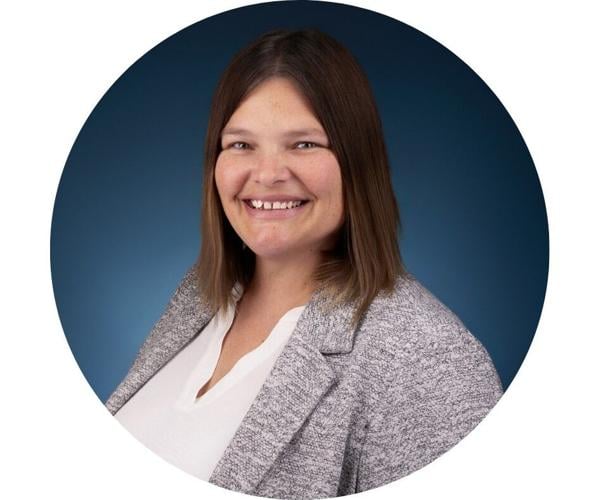
Nichole Biechler
Biechler is a local government administrator with more than a decade of experience, currently serving as Business Manager for Northern Oregon Regional Correctional Facility (NORCOR), where she oversees operations, budgeting, and organizational performance.
She previously served as Human Resources Director for Wasco County and interim HR director for Mid-Columbia Center for Living, with work focused on workforce development, labor relations, and organizational compliance.
Name one Wasco County decision from the past several years that you would have made differently. What defines your problem-solving style?
Hodges Property. I would have pushed for earlier, more transparent community engagement around development limitations due to National Scenic Area and Gorge Commission oversight, particularly where long-term impacts weren’t clearly communicated. My problem-solving style is collaborative and grounded in data: define the problem clearly, bring in impacted voices early, weigh trade-offs openly, and move toward practical, timely decisions. I value transparency and accountability, and I’m willing to adjust course when outcomes don’t match intent.
The county’s housing needs analysis points to hundreds of units needed by 2040, while recent permit data shows relatively modest annual production. What specific constraint is most responsible for that gap in Wasco County, and what is your first concrete policy change to address it?
Through influence, coordination, and policy direction rather than direct control, as commissioner I would prioritize a “ready-to-build” strategy in the county budget directing funds toward infrastructure planning, grant matching, and site readiness in partnership with cities like The Dalles and South County. I would support updates to county code, where we have jurisdiction, to streamline rural permitting and reduce delays.
Equally important is convening partners, cities, service districts, and developers to ensure alignment and remove bottlenecks.
Finally, I would advocate for state and federal resources to address Wasco County’s constraints: limited infrastructure, constrained land supply, and high rural development costs.
How do you reconcile increased industrial demand from data centers with long-term water constraints (like dry wells) in the region?
To be clear, wells were going dry long before companies like Google expanded in the region. The question is how we responsibly manage growth moving forward. We must align industrial demand, including data centers, with sustainable water use by requiring clear sourcing plans, strong efficiency standards, and long-term monitoring before approval. I support prioritizing projects that rely on recycled or low-impact water systems, while ensuring residential and agricultural needs come first. Economic growth matters, but it cannot come at the expense of our water security growth must be paced and managed within our natural resource limits.
Preparation for wildfire such as defensible space, home hardening, and fuel reduction all cost money. Should those costs fall primarily on homeowners, the county, or the state? How would you fund your answer?
This is a shared responsibility. Homeowners should invest in defensible space and home hardening, but the county and state must support through grants, cost-share programs, and fuel reduction projects. I would advocate for stronger use of state and federal funds, and local partnerships, to reduce the financial burden on residents while improving community-wide resilience.
Earlier this year a group of Latino community advocates brought concerns to the county about ICE activity and widespread fear of detainment regardless of immigration status. What is your strategy for increasing trust in county government among Latino residents?
Raising two bi-racial children, this question hits home. Trust starts with consistency and visibility. I would prioritize culturally competent outreach, partner with trusted community organizations, and ensure clear communication about county roles and policies. Creating safe spaces for dialogue and ensuring language access are key. The goal is a county government that listens, responds, and shows up reliably.
Large funding streams for schools have been destabilized in the last year, SRS is an example. What do you see as the county’s responsibility in supporting schools amid budget deficits?
As a parent with two children in our public school system, we see and experience the challenges. While schools are independent, the county plays a key supporting role especially in coordination, advocacy, and stability. I would support transparent communication with the public, help align resources where possible and advocate at the state and federal level for sustainable funding. The county should be a partner in long-term community stability, which includes strong schools.
Position 3: Phil Brady

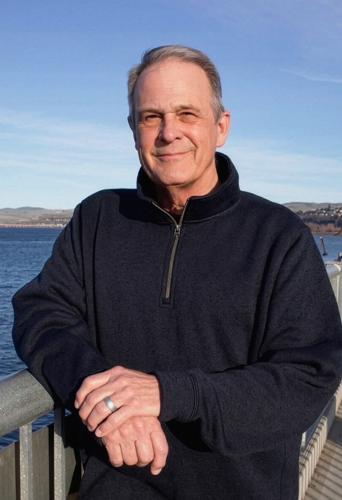
Phil Brady
Brady is a Wasco County Commissioner and educator who taught science for 18 years in the North Wasco County School District, including instruction at Northern Oregon Regional Correctional Facility (NORCOR). His service roles include chair of the Columbia Gorge Housing Authority, member of the Columbia Gorge Health Council, and former board chair of Mid-Columbia Medical Center. Columbia Gorge News has observed Brady largely voting in alignment with fellow commissioners throughout his term.
Name one Wasco County decision from the past several years that you would have made differently. What defines your problem-solving style?
In 2021, Wasco County sided with Google regarding The Oregonian’s lawsuit against water usage secrecy. Transparency would have served everyone better. I am supportive of the County taking a more critical position when setting up new agreements with Google.
My background as a science teacher shapes how I solve problems: As a teacher, I start by understanding the other person’s position. This has served me in the classroom and in the community. As a science person, I set aside personal preferences and focus on facts and structures. This keeps me grounded and fair.
The county’s housing needs analysis points to hundreds of units needed by 2040, while recent permit data shows relatively modest annual production. What specific constraint is most responsible for that gap in Wasco County, and what is your first concrete policy change to address it?
As Chairman of the Columbia Gorge Housing Authority, I oversee 130 units of affordable housing going up now in Hood River and 67 more coming soon to The Dalles — but it’s not enough. We need all types of housing, especially rentals and starter homes.
Our biggest challenge is land. High interest rates and construction costs is out of the county’s control, but we can use the land we have more effectively by getting grants and trying innovative land ownership models. Longterm, expanding the urban growth boundary without hurting the Scenic Area will bring in land we desperately need for housing.
How do you reconcile increased industrial demand from data centers with long-term water constraints (like dry wells) in the region?
The growing number of data centers threatens our regional electric grid and our local water supplies. In The Dalles, the city holds water priority over Google, protecting residents — but even without Google, dwindling snowpack from climate change is pushing water scarcity that makes enlarging city reservoirs essential.
I believe we shouldn’t build data centers if we don’t have electricity available to run them, because the impacts of that will be felt by everyone. I am supportive of the legislature’s proposal to pause data center construction and ensure production and transmission capacity can keep pace with both industry and public demand.
Preparation for wildfire such as defensible space, home hardening, and fuel reduction all cost money. Should those costs fall primarily on homeowners, the county, or the state? How would you fund your answer?
Last year’s Rowena Fire was a devastating reminder of how real the wildfire threat it, but we did many things right in our response and learned important lessons. Preventing fire damage through grants and assistance will always be cheaper than fighting fires to protect homes and rebuilding. Wasco County is using an $8M grant to reduce fuel loads in South Wasco, and help is also available to homeowners from agencies such as the Soil and Conservation District and Mid-Columbia Fire and Rescue.
Smoky air, economic disruption, and destruction of resources cost all of us through poorer health and a weaker economy.
Wildfire smoke, economic disruption, and drain on government budgets hurts everyone, and the 2025 legislature worked to distribute the cost across all homeowners statewide. I support continuing to share that burden fairly.
Earlier this year a group of Latino community advocates brought concerns to the county about ICE activity and widespread fear of detainment regardless of immigration status. What is your strategy for increasing trust in county government among Latino residents?
My wife and I served as Catholic missioners in Venezuela and returned to The Dalles to remain connected to a Latino community. I care about my Latino students and their families who bring so much to our community. ICE activity is driving fear, reducing school attendance, and disrupting our economy.
Local law enforcement needs community trust to do its job. I have used my position as Commissioner to facilitate discussion between our sheriff’s department, local police, and Latino residents, and am committed to ongoing dialogue. I support our local sheriff in avoiding collaboration with ICE.
Large funding streams for schools have been destabilized in the last year, SRS is an example. What do you see as the county’s responsibility in supporting schools amid budget deficits?
I taught in these schools and know what underfunded feels like. The inadequacy of our school buildings gets in the way of learning every day - overheated classrooms, crowded halls, and an environment unworthy of our students. Our community cares about this and is ready for action.
Budget constraints are real, but we can steer grants and public benefit money from data centers and renewable energy. My vision is to build a new high school at Wahtonka and turn the old high school into a city-wide early learning center, taking pressure off our elementary schools.


Commented