
HOOD RIVER — Hood River County School District (HRCSD) is facing another budget shortfall.
Superintendent Bill Newton said in a statement last week that, despite $4 million in reductions made during the last budget cycle, approximately $1.3 million more are coming for 2026–2027 to make up the difference.
“While we faced significant uncertainty this past fall regarding potential federal lapses and a 5% mid-year state reduction, the fiscal landscape has proven more stable than anticipated; however, we remain in a tightening cycle,” Newton said. “While State School Fund revenue is projected to rise by 3.2% ($65,236,276), our federal funding is expected to drop by 2.8% ($48,976).”
Also under consideration are rising pension costs and the expiration of the Public Employees' Retirement System (PERS) side account in 2027-2028.
The proposed budget will be presented on Tuesday, April 28, at 6 p.m. in the Hood River Valley High School library. Administrators and committee members will be available to answer questions and gather feedback from those present.
A second meeting is planned for Tuesday, May 5, at the same time and place. Following deliberations, the committee will vote to approve the budget and forward it to the school board for final adoption at the June 10 board meeting.
What will not change
Newton said a conscious choice was made to “shield the heart of the student experience” when cuts were considered: Class size averages will remain low; no furlough days will be implemented for staff; elementary support specialists and secondary counselors will remain; and no cuts were made to PE, library, music, STEM or CTE and extracurricular athletics programs.
He also said that some investments have been made, including a full-time special education position for Individualized Education Program (IEP) coordination, $100,000 to bridge the funding gap for free student breakfast and lunch, and professional development dollars.
“Two years ago, our reserves fell below the required 5% threshold,” Newton said. “Today, through disciplined fiscal responsibility, we have restored that balance while protecting the programs our community values most. This proposal reflects a balance between the hard realities of Oregon school funding and our highest goals for Hood River County students.”
Proposed reductions
Newton said that, with about 85% of the general fund supporting staff, “any meaningful reduction strategy must center on personnel.” Therefore, retirements, resignations, and reassignments have been utilized to address next year’s $1.3 million shortfall.
Newton pointed to several factors that have led to this funding gap, including declining enrollment and inflation in addition to rising pension costs.
“By identifying vacancies created by retirements or resignations and moving existing staff into those critical roles, we have been able to right-size our schools and programs without layoffs,” Newton said.
Proposed cuts to Cascade Locks Elementary equal a 0.5 licensed staff position, 0.5 support specialist and 0.45 administrative position; Westside and May Street elementary schools will see the loss of one paraprofessional position each. Hood River Valley High School will lose a full-time childcare paraprofessional position, with Parkdale and Hood River Options Academy losing a 0.5 licensed staff position each.
Operational savings are listed as the consolidation and reduction of software platform licensing and the technology refresh cycle — meaning iPads will not be replaced as often.
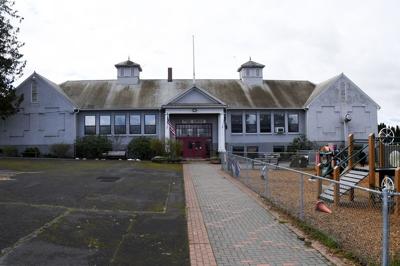
But the change getting the most attention at recent school board meetings is the relocation of the Early Intervention and Early Childhood Special Education program from Pine Grove to Mid Valley Elementary, starting with the 2026-2027 school year.
Newton said that the move to Mid Valley “is intended to maximize operational efficiency and minimize long-term facility costs associated with the Pine Grove building.”
Several factors have accelerated the timing of the move; facility work after a January flood have been ongoing and faced a number of challenges stemming from insurance claims and work-related issues.
“Several items related to building drainage have high costs to prevent a basement flood from reoccurring; however, due to the extent of the issues, it is recommended to being with an engineering study to determine the best method for managing site drainage,” Chief Financial Officer Mark DeMoss said. “The estimated cost of urgent and key findings ranges from $225,000-$300,000, with a 5-year total of approximately $960,000. Moving and renovating Mid Valley Elementary spaces is lower in both the short and long terms. The recent flood damage claim is approaching $300,000.”
An assessment by the Oregon Department of Education found Pine Grove “in poor condition.” Most of the building does not have a fire suppression system, several faucets have tested positive for lead, and there are problems with the sewer line. A broken dishwasher and leaking roof were also noted. Site drainage and plumbing were also listed in the 2016 financial report but were not completed, Newton noted.
Early intervention staff have voiced concerns with the proposed plan, primarily asking school board members to pause the move.
“Mid Valley does not have the space for our program,” said Pine Grove Secretary Merideth Cole during the April 8 board meeting. “We need therapy rooms, motor rooms, classrooms, confidential meeting space, and a playground into a facility that wasn’t designed for it. The space doesn’t work. The numbers don’t work. And the timeline doesn’t work.”
“This is not about Mid Valley itself,” said Erin O'Hern, a speech language pathologist with Pine Grove Early Intervention / Early Childhood Special Education program, at the April 22 board meeting. “We need space to provide therapy through play as well as table activities as we work on pre-academic skills.” She also wondered where “our 13 staff members, two district vans, and the families we serve park? Families need nearby parking throughout the day for screenings, evaluations, therapy sessions and meetings.”
Newton said the program will be in classroom and office spaces in the building on the east side of the Mid Valley campus — not in the gym or cafeteria, though the program is welcome to use those spaces if they wish.
“Moving the program to Mid Valley Elementary gives some families a head start on building friendships and getting to know educators and support staff they will work with for years to come,” he said. “It creates a seamless path into the school community so that everyone feels welcome and at home well before the first day of kindergarten.”
Pine Grove staff have also expressed concerns about children 0-5 using Mid Valley’s playground equipment. “It does not seem appropriate or safe for preschoolers to play on this large playground where elementary children may be playing at the same time,” O'Hern said April 22.
Newton said that recently renovated Mid Valley playground is suitable for ages 2 and up and would be available for Early Intervention’s use. Whether or not the playground equipment at Pine Grove will remain or be moved is yet to be determined.
The two for-profit daycares that also use the Pine Grove space will be moved to other sites within the district, “thereby maintaining rental income streams,” he said. “The main occupant is the EI/ECSE state grant, which does not currently pay rental or facility upkeep.”
As for what will ultimately happen with the Pine Grove site, that decision will be made as part of the ongoing long-range facilities planning process.
“This is a community committee process — incredible time and effort brought by individuals from all over Hood River County,” Newton said.


Commented
Sorry, there are no recent results for popular commented articles.