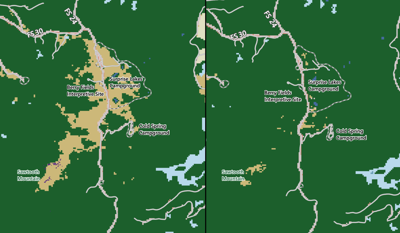
A map of the Sawtooth Berry Fields, located in the Gifford Pinchot National Forest. Ecological data demonstrates the dramatic decline in shrubland, or berry fields, from 1985 to 2023 as a result of conifer encroachment.
A map of the Sawtooth Berry Fields, located in the Gifford Pinchot National Forest. Ecological data demonstrates the dramatic decline in shrubland, or berry fields, from 1985 to 2023 as a result of conifer encroachment.
GIFFORD PINCHOT — For the second year in a row, the United States Forest Service (USFS) will not permit commercial picking of huckleberries near Sawtooth Mountain, off Twin Buttes Road or anywhere else in the Gifford Pinchot National Forest, officials announced on April 21.
As previously reported by Columbia Gorge News, USFS halted commercial harvesting for the first time in 2025. Huckleberry habitat has dramatically declined over recent decades due to fire suppression, conifer encroachment, drought and invasive species. Commercial pickers have also threatened those with treaty-enshrined rights to pick huckleberries, according to the Confederated Tribes and Bands of the Yakama Nation, and rely on ecologically harmful methods of harvest.
Gifford Pinchot is the only national forest with a large-scale huckleberry program, feeding natural produce companies like Northwest Wild Foods, which then sell to private customers, wineries or other companies that churn out huckleberry products, such as Tillamook Creamery.
Commercial pickers can rake in anywhere between 50,000 and 70,000 gallons of huckleberries in one season, based on numbers from USFS.
"Our responsibility is to steward huckleberry habitat in a way that honors treaty-reserved rights and trust responsibility, protects cultural resources and ensures these plants remain abundant for generations,” said Johanna Kovarik, Gifford Pinchot’s forest supervisor, in a press release. "We heard clearly from tribal governments, forest users and local communities about the impacts of commercial harvest and we are committed to a path forward that prioritizes ecological health and cultural respect."
The decision comes after a public survey, community roundtable in February, conversations with industry and government-to-government consultations with tribes. During last year’s pause, Indigenous gatherers not only observed improved berry abundance, but also reduced harassment and safer picking conditions, the release noted.
"The Yakama Nation appreciates the United States Forest Service's commitment to the Yakama Nation's First Foods and upholding the time immemorial rights our ancestors secured in the Treaty of 1855,” said Yakama Nation Tribal Council Chairman Gerald Lewis in a statement. "The Yakama Nation looks forward to further collaboration with the Forest Service and finding a long-term management strategy that restores and supports our First Foods.”
The Yakama Nation, Tulalip Tribes and the Affiliated Tribes of Northwest Indians (ATNI) have each formally requested that USFS permanently halt commercial harvesting in the Gifford Pinchot, so the agency is now initiating a multi-year planning effort to evaluate long-term management.
In the meantime, free personal-use permits are still available. The limit is one gallon per day or three for the whole season.



Commented