

LYLE — “In the Columbia Gorge, everybody is familiar with fire,” said James Mantone, co-founder of Syncline Winery and volunteer firefighter with the Lyle Fire Department. “It’s not if, it’s when.”
For generations, winemakers have reaped the benefits of the region’s geographic advantages, situated at a climatic inflection point between cool, wet conditions to the west and arid, sun-drenched land to the east. Here, grapes with a range of needs — from fog-loving Pinot Noirs to warm-minded Cabernets — flourish in harmony.
Over the last few decades, though, Northwesterners have come to reckon with a far less fruitful phenomenon. A consequence of warming temperatures clashing with human negligence, the frequency and severity of Gorge wildfires have intensified in the 21st century, sparking the inevitable question for wineries and homeowners alike year after year: whose turn is it next?
Syncline Winery
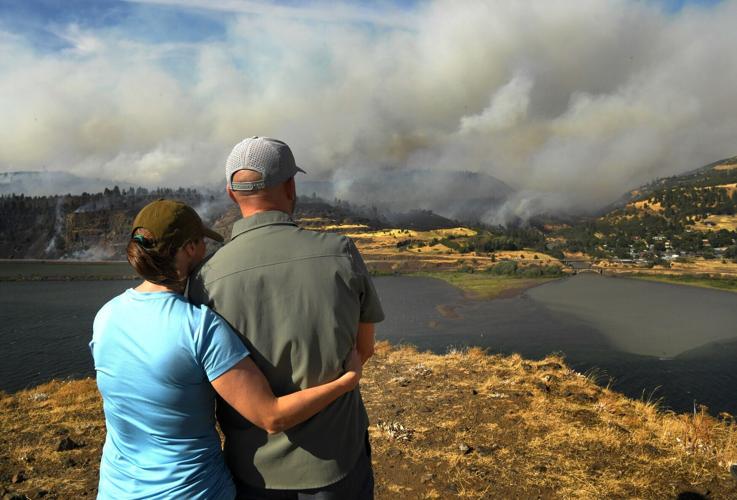
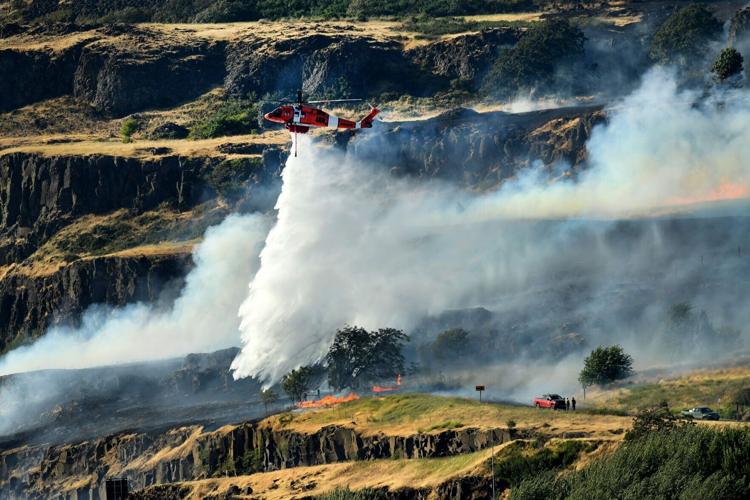
In July 2025, the Burdoin Fire blazed through nearly 11,000 acres of land in Klickitat County, damaging or destroying over 100 structures in the process. Lyle’s Syncline Winery, co-founded by Mantone and his wife Poppie in 1999, was one of several affected properties.
The couple initially relocated to the Gorge for the same reasons anyone might — a leisurely lifestyle, immediate access to nature, and a dynamic climate — recognizing a rich potential for horticulture. “At the time, there was hardly any wine going on,” Mantone said. “With all the fruit that’s grown in the area, we felt confident to start a brand here.”
Once they got a handle on the climate, the Mantones started planting vineyards, launching Syncline’s 27-year existence as one of Lyle’s pioneering wineries.
While Lyle has always offered sunnier skies, located past the Cascade rain shadow, the area has grown dramatically warmer and drier since they arrived, Mantone explained. Such trends have familiarized the small unincorporated community with constant summertime fire risk, requiring heightened alert and preparation from property owners.
Last year, figuring a fire scare for Syncline and nearby structures was inevitable, the vigneron decided to join the Klickitat County Fire Protection District #4, or the Lyle Fire District (LFD), which consists entirely of trained neighbors helping neighbors. “It felt like something I wanted to do for years,” Mantone said. “And I’d gotten the business to a point where I could.”
On July 18, 2025, the day Burdoin broke loose, Mantone received a call from a buddy in Hood River who noticed smoke rising over the White Salmon/Bingen area. On what was already a sweltering day, with winds blowing at 35 knots, he developed a bad feeling and notified staff to start preparing for the worst. “Everybody knew it was going to explode as soon as it started,” Mantone said. “It was just like the Rowena Fire a couple of months earlier; it’s going to move, it’s going to race; it’s not so much about stopping it, but about what you can do so people don’t get hurt.”
While Syncline patrons and staff evacuated, Mantone reported to the fire line. For 14 hours, without cell power, he worked to contain the blaze, unable to contact family. “I knew they’d gotten out,” he said. “I was doing everything I could to protect other people’s property.”
20 hours later, as the Burdoin churned on nearby, Mantone laid eyes on Syncline for the first time since the fire started. While the winery’s main structure stood tall, the property suffered extreme losses that would impact operations for the remainder of the year. Syncline lost roughly a half-acre of vines scattered throughout the property, spoiling the entire crop. Mantone and staff had to repair close to nine miles of trellis, four miles of fencing, and nine miles of irrigation.
Such a toll, Mantone stressed, paled in comparison to the devastation others in the Lyle community experienced — and are still experiencing — with many losing their homes entirely. “It’s a huge blow to the community,” he said. “There are neighbors out there who won’t be able to afford to rebuild. I hate to see people being pushed off their land.”
Now, emerging from a warm winter that saw historically low snowpack levels across the Western U.S., Gorge wineries are bracing for another intense fire season. “People are a little extra jumpy right now,” Mantone said.
Still, Syncline's preparation will look largely the same, implementing mitigation practices that they’ve learned and mastered over the years: keeping vegetation mowed short, discing, and adding firebreaks. Mantone believes the winery effectively redirected the Burdoin to the north last year through a combination of vegetation management and timely watering from its automated irrigation system, inadvertently protecting some houses.
Earlier this year, Syncline worked with horticulturists at Washington State University to research wines from their current harvest and further educate themselves on wildfire risk management.
“I’ve been doing this for 30 years; there’s been multiple vintages where we’ve had fires,” Mantone said. “It can be dispiriting, but I believe in this area for wine.”
COR Cellars
Another Lyle-based winery, COR Cellars, was founded by winemaker Luke Bradford in 2003, soft-launching over the next couple of years until its tasting room officially opened in 2005. Like Syncline, COR has grown into a Gorge vino staple over its 20-plus-year existence.
During this time, Bradford has witnessed plenty of fires come and go at a sporadic pace. “We had one surrounding us. There was one adjacent to us in 2020,” he said. “Burdoin was the first one that really burned through.”
Bradford and his family were traveling out of state when the flames took hold, prompting a mad dash back home after staff called with the terrifying update. “We immediately booked a flight home, scrambling to get all of the information we could,” he said. “It was out of our hands.”
While they were away, Burdoin burned through the property. Upon return, Bradford had a chance to survey the damage before the authorities shut the area down for the next week. Thankfully, COR didn’t suffer any major building damage during the blaze, but it lost a pump house, a couple of small sheds, deer fencing, metal and wood posts, and landscaping. The fire destroyed about a quarter of an acre of vineyard, and smoke damage prevented any further picking. “We kind of got lucky,” Bradford said. “I hesitate to feel bad for myself because my neighbors lost their homes…a neighboring winery lost its building.”
As with Syncline, COR’s tumultuous Fall, discarding debris, rebuilding infrastructure, and waiting for the land to bounce back, represents a fraction of the devastation that impacted the Lyle community at large — a minuscule slice of either owner's concerns. “It’s a lot of despair,” Bradford said. “Seeing what happened to people that you know and care about.”
For COR, Burdoin also illuminated challenges specific to businesses in the highly-regulated alcohol industry. “You have to make sure your valuables are packed and ready to go,” Bradford said, pointing to years' worth of computer records. “Being a winery, you not only have to do all the regular business practices, but also work through the Alcohol and Tobacco Tax and Trade Bureau and the Liquor Control Board.”
Finding quality insurance poses yet another concern for people who live in wildfire hotspots, Bradford explained. “It’s a real struggle, especially in this country where I’ve heard horror stories from people having issues, not just paying out of [Burdoin], but keeping their coverage moving forward.”
Bradford expects COR to stick to their usual mitigation practices this year, stressing that low snowpack doesn’t necessarily mean another brutal season is in the cards. “It’s so hard to tell. It’s going to be hot. Maybe it’s not,” he said. “We don’t think about it differently other than being on high alert…being extra vigilant.”
Part of that mindset stems from the fact that most fires are human-caused (e.g., discarding cigarette butts, fireworks, dragging a chain on a trailer, and train operations), which shifts the focus to raising awareness and encouraging local, state, and federal politicians to invest in emergency services.
Something COR has learned about fire season, no matter what sort of winter precedes it, is that no amount of risk management, though critical, can truly stop one; the firefighters, boots on the ground on the day of, are the real heroes. “Local fire departments aren’t big enough to handle all of it — they’re spread thin,” Bradford said. “It’s about boosting funding, because at the end of the day, that’s what helps.”
Whether the 2026 fire season arrives quietly or with force, winemakers in the Columbia River Gorge will endure. From the vineyard to the fire line, those who serve the region will always remain, and the beautiful land that sustains them, though scorched time and time again, will always bounce back.


Commented