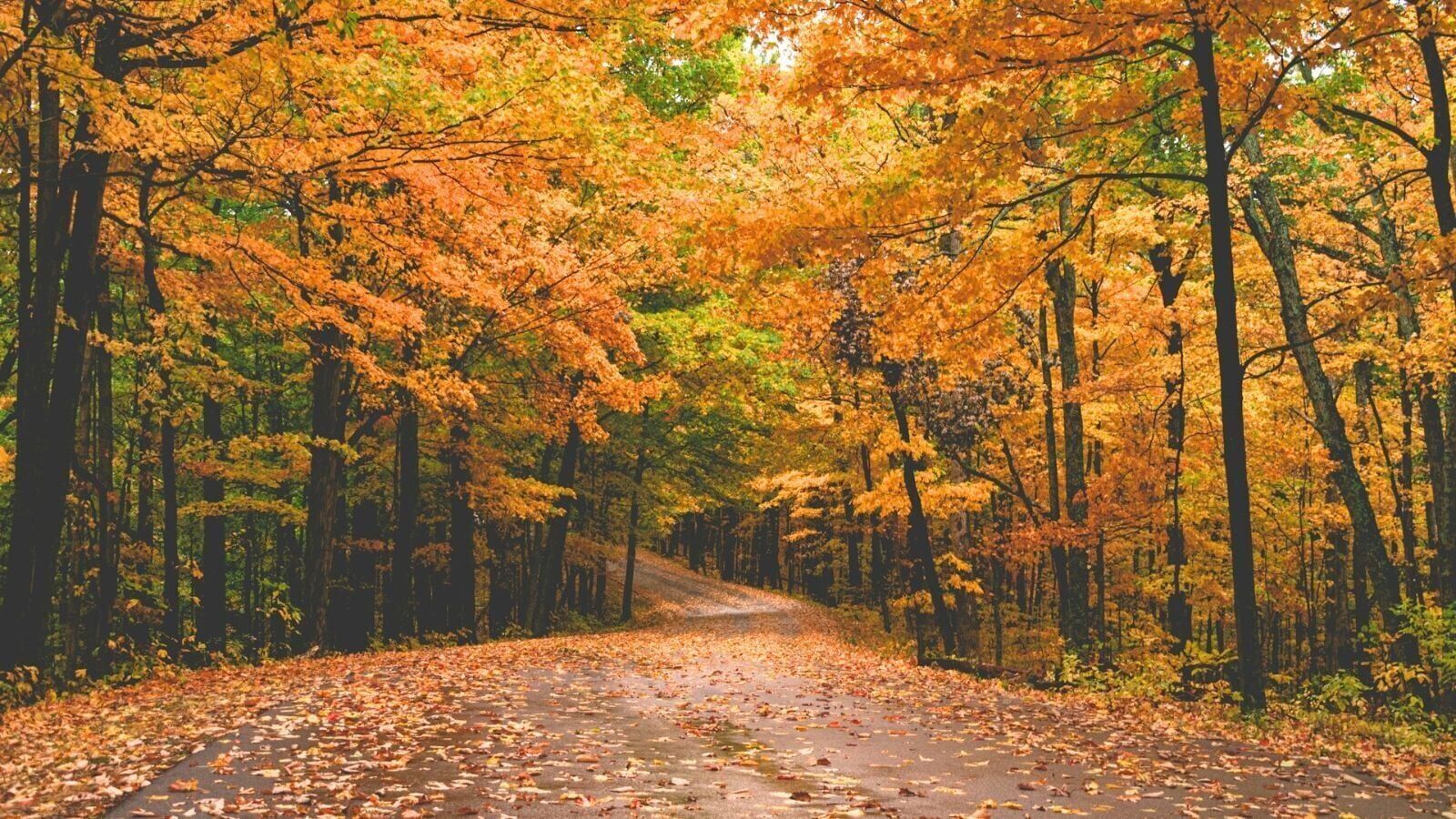
Fall foliage at Blue Ridge Parkway - Photo credit: Unsplash+ License.
Fall foliage does not end when New England reaches its early peak. Several destinations farther south or at lower elevations change colors only through late October and early November.
A new analysis from vacation rental platform Lake.com found that fall color across 100 popular North American lake destinations stretches for about nine and a half weeks, from September 18 to November 22.
According to the analysis, 43 destinations are expected to be at peak during the week of October 5 and another 43 during the week of October 12. The average destination holds peak color for almost two weeks.
Higher elevations can begin changing in September, and the most intense color at lower and middle elevations often occurs from mid-October into early November. More than 100 tree species contribute to the display.
That long transition also showed up in Lake.com's 2026 analysis. The Great Smoky Mountains had the longest peak window in the study at 15 days, from October 18 through November 1.
October is a high-traffic period. Foothills Parkway and Lakeview Drive are two routes the National Park Service recommends for fall color beyond Cades Cove, Kuwohi and Roaring Fork.
The park's September 2026 advisory recommends arriving early or late and keeping a backup destination in mind if parking fills.
The Oconaluftee Mountain Farm Museum near Cherokee is an additional stop that does not depend on foliage. Historic log buildings include a farmhouse, barn, smokehouse, applehouse and corn crib.
Warm nighttime temperatures and dry soil had slowed color in the northern and central districts. Maples, hickories, and oaks normally begin changing in mid- to late September.
Travelers can check Old Trace Drive at milepost 375.8, Baker Bluff Overlook at milepost 405.1 and Fall Hollow at milepost 391.9 as the season develops.
The National Park Service posts updated foliage reports so that travelers can check conditions before arrival.
The Meriwether Lewis site at milepost 385.9 provides a historical stop along the northern parkway. The site includes Lewis's grave and monument near the place where he died in 1809.
Guadalupe Mountains National Park
Guadalupe Mountains National Park has one of the later fall-color windows in this list.
The National Park Service generally places the season from mid-October to mid-November, with the best viewing often in the final week of October and first week of November.
McKittrick Canyon is the main viewing area. Deciduous trees grow inside the canyon against the surrounding desert landscape, creating a concentrated fall display.
The canyon is open for day use from 8 a.m. to 5 p.m. MT, and the gate closes at 5 p.m. Fall weekends can reach capacity, so weekday visits are preferable when possible.
Guadalupe Peak is a option specially for experienced hikers. The 8.4-mile round-trip trail gains about 3,000 feet and usually takes six to eight hours. It requires a full day and should not be treated as a short extension of a McKittrick Canyon visit.
Blue Ridge Parkway
Blue Ridge Parkway stretches nearly 470 miles with more than 5,000 feet in elevation. Its higher areas can start changing in late September, but its lower elevations only in October.
Lake.com's analysis found the same elevation effect elsewhere in the southern Appalachians. Asheville, one of the main gateways to the Blue Ridge Parkway, had a 14-day peak window, the second longest among the 100 destinations studied.
Humpback Rocks near milepost 5.8 offers a mix of mountain scenery and hiking. Road access should be checked before departure because current construction and Hurricane Helene recovery work can create closures and detours.
Humpback Rocks also includes a historic farm and visitor center. The visitor center is scheduled to remain open daily through November 1, 2026.
Since the trail to Humpback Rocks gains about 700 feet over a short distance, visitors looking for an easier stop can stay around the historic farm area.
Ozark National Scenic Riverways
Missouri fall color generally peaks around mid-October, with the change moving from the north and west toward the south and east.
The September 24, 2026 Ozark Region report said color was only beginning to develop, although drought stress had caused some leaves to brown or fall early.
The Lake.com data illustrates just how much later the region can run than New England. Lake of the Ozarks had a peak window from October 22 to November 2, roughly four weeks after Lake Placid's season begins winding down.
The Ozark Region report identified Rocky Falls Shut-Ins and Klepzig Mill as useful scenic-drive stops, but along Ozark National Scenic Riverways, Blue Spring is another option.
Alley Mill is scheduled to remain open daily through October 31. Travelers can also hike or float along the Current and Jacks Fork rivers. The rivers are spring-fed and can be floated throughout the year, but fall brings colder water and requires more careful preparation.



Commented