
The Dalles Urban Renewal Agency will continue its work, but will eschew building ownership and redevelopment in favor of planning and overseeing needed and significant infrastructure projects in the future.
That consensus was reached by the board during a special meeting Feb. 27 in the city hall council chambers following presentations that explored the viability of returning a portion of their tax funding to other districts or disbanding the agency permanently or temporarily.
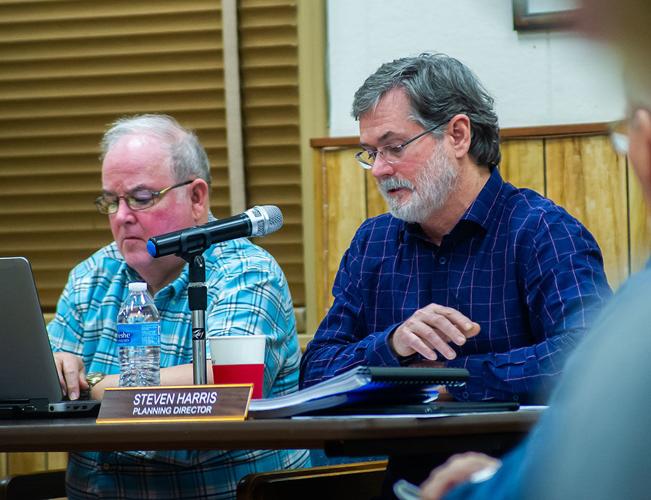
“We are asking, ‘Where does the board want to go from here?’” said Steven Harris, the city’s planning director.
The discussion was sparked by recent questions from the board regarding the agency’s options going forward, specifically in regards to the impact it and the enterprise zones it oversees have had in reducing tax revenue for other taxing districts in the county.
The agency receives the bulk of its funding from property taxes. It does not levy its own taxes, but receives a portion of assessed taxes; as a result, funding received by other taxing districts is proportionately reduced to fund the urban renewal agency.
In the 2018/19 fiscal year, the agency received $1,894,373 in revenue, $1,640,729 of which was tax revenue.
As a result, Wasco County saw a $92,459,270 reduction in revenue; the City of The Dalles, $278,811; and Mid-Columbia Fire and Rescue, $194,201. Additional districts saw a proportional decrease, except for Columbia Gorge ESD and Northern Wasco County School District 21, which were not directly impacted as their funding comes from the state.
Harris told the board the agency could not be terminated with debt, so debt held by the agency would have first have to be either paid off or transferred to the city by ordinance.
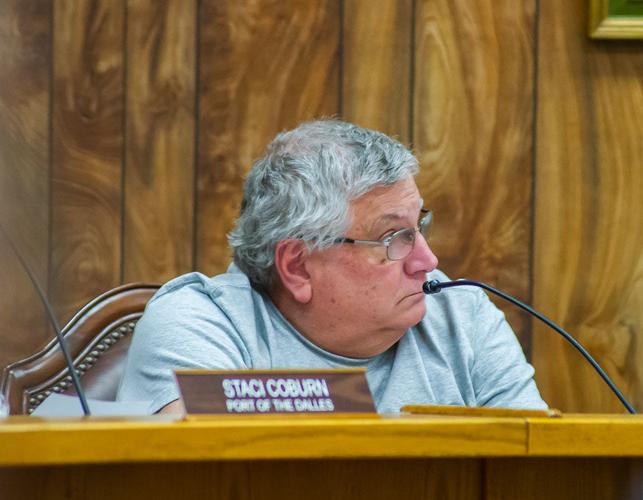
Temporarily disbanding was also considered, but faced similar restrictions. That possibility was raised looking forward to 2022, when the 15-year enterprise zone agreement with Design, LLC, the first Google data center built at Port of The Dalles, expires. The current agreement cannot be renewed, noted Staci Coburn, a board member representing the Port.
Wasco County Assessor and Tax Collector Jill Amery said the facility and its content is currently assessed at a value over $319 million, which if added to the tax rolls would generate $1.6 million in taxes annually. With the expiration of the enterprise zone, the state, not the county, will reassess the facility and its contents, she said. “They have the expertise needed to assess industrial properties,” she explained.
Under Levy
The agency could, however, reduce the amount of taxes taken by the agency through a process called an “under levy.”
State urban renewal law allows for an “under levy” of tax revenues which would normally go to an urban renewal agency, allowing them to remain with the various taxing districts.
Urban renewal consultant Elaine Howard explained the under levy process to the board, noting that it was both voluntary and complicated. “You have to decide how much you have to assess to get the money you need,” she said. “You have to consult with all the districts, sometimes the process can negatively impact a tax district” due to changing values of assessed properties and “tax compression.” The permanent tax levy is “set in stone,” she explained, so to reduce it or “under levy” requires overriding the assessed values the levy is based on. She noted the process would take at least a year to implement, and estimates were difficult. “It’s complex, and I’m uneasy projecting that number.”
Wasco County Assessor and Tax Collector Jill Amery noted the process is “complicated,” and estimates of the impact imprecise. “The best we could do is a percentage,” she explained, but districts are now able to calculate the impact on an under levy
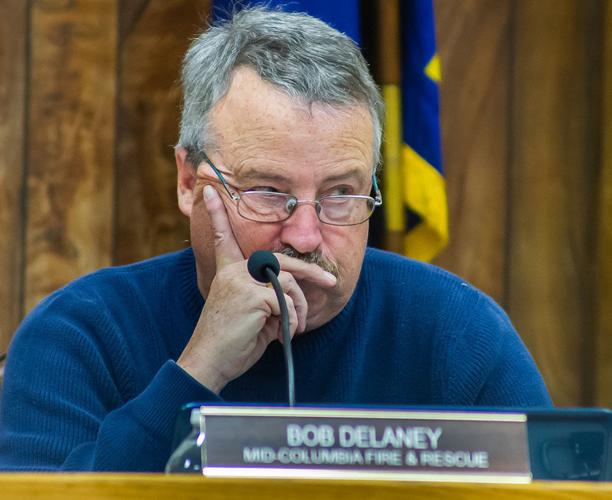
Board member Bob Delaney, who represents the Mid-Columbia Fire and Rescue District, said the district had looked at the estimates, and the benefits of an under levy would be minimal, in terms of the district’s overall budget and the board reached consensus that neither terminating the agency nor seeking an under levy were good options for the agency going forward.
Future direction
Harris then outlined the agency’s history, noting the majority of early projects were infrastructure-related, including downtown riverfront access and parking, an ongoing First Street revitalization project, Mill Creek Greenway planning, the east end roundabout and others. Early building re-development including a loan for Sunshine Mill & Winery, paid off in January of this year, and for the redevelopment of the Commodore. Both those properties were derelict.
Harris noted the agency “changed course” in recent years, moving more into property redevelopment, and said some of those proposed projects “didn’t pan out.” The agency has since liquidated those properties. “We’ve made strides to get back on course,” he explained.
Chris Zukin, seated in the audience, suggested the board not discount redevelopment of properties completely, however. “It saved those building from being completely derelict,” he said, especially the Commodore. “No developer would would touch it,” he said. The multi-story building was windowless, and locally called “the pigeon coop.” “It would still be empty and derelict without urban renewal,” Zukin said.
Audience member Todd Carpenter of Main Street also spoke in favor of property redevelopment. “It may not be a return on investment, but its made a difference in the community,” he said.
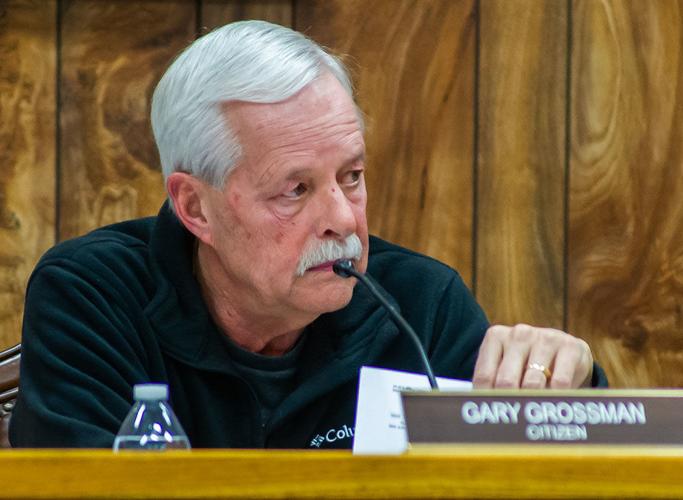
Board Chair Gary Grossman noted the agency had “done a good job liquidating assets and dealing with the problem,” and said going forward the agency needed to ask, “What can we do that’s new, and will benefit the community?”
Much of the problem was a failed attempt by the agency to redevelop the Granada block of Second Street, which included plans for a hotel and other major development. Those properties are now in private hands, some with ongoing work being done to revitalize them.
Board member Linda Miller, representing the city, said “hopefully we learned something from Second Street.”
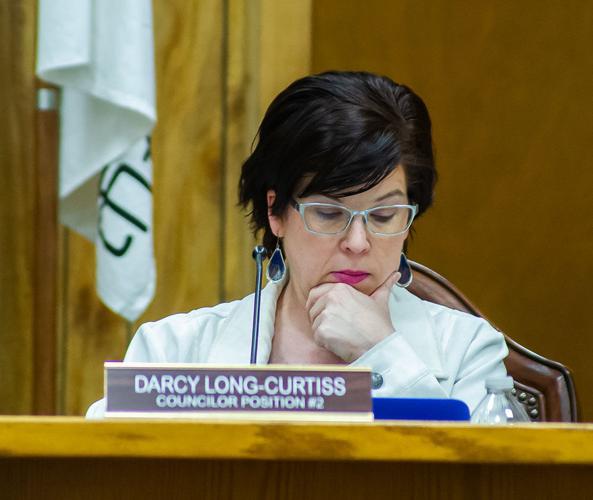
When asked if the board wanted a new study done to evaluate the agencies impact, board member Darcy Long-Curtiss, representing the city, said “we only need that if we doubt our success—we can spend that money (for a study) back into the community.”
The board reached agrement that, instead of looking back or pursuing an under levy, the agency needed to move forward and revise the project list with an emphasis on infrastructure.
“It’s not just about taxes, it’s about jobs and other things,” said Delaney. “We need to look at what needs we can meet, that otherwise can’t be met.”


Commented