
Wasco, Sherman and Gilliam counties do considerably better than the state average at getting newly pregnant low-income women into pre-natal care, a move that can prevent poor health outcomes and societal expense.
“We have been kind of a leader of the pack for quite some time,” said Jane Palmer, public health nurse supervisor at North Central Public Health District, which serves the three counties.
She attributed that to the easy access the health district has to women early in their pregnancy, since they come to the health district’s walk-in clinic for pregnancy tests.
Due to budget cuts, the walk-in clinic hours have reduced from five days a week to two afternoons a week.
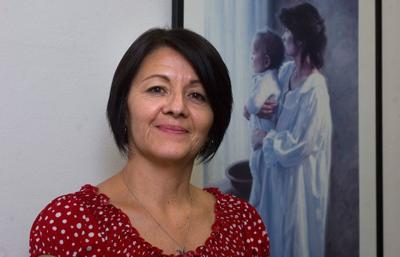
Palmer also credited certified community health worker Maria Peña, who oversees the program that signs women up for pre-natal care. “She brings a passion to her work,” Palmer said.
The program, Oregon MothersCare, is under the Oregon Health Plan, which is health insurance or low-income people. The program’s goal is to support healthy pregnancies by getting women signed up for health insurance through the OHP as early in their pregnancy as possible, so they will access pre-natal care.
The goal is to reach them in the first trimester. If they only learn of a pregnancy when the woman is already in her second or third trimester, the goal is to get her into pre-natal care within two weeks.
“The sooner the better you can get into pre-natal care, because the baby is going to be healthier,” Peña said. Pre-natal care encourages women to start taking better care of themselves, such as eating better, taking vitamins and quitting smoking.
Early pre-natal care has been shown to reduce pre-term births, which result in costly health care and long-term health consequences.
Preterm birth costs the US healthcare system $26 billion in 2007 dollars, Palmer said, citing a statistic from that year.
“If we can prevent one premature birth in our county then we as taxpayers are really seeing a huge return on our investment,” Palmer said.
A premature birth is defined as a birth where the baby is under five and a half pounds and under 37 weeks of gestation.
In the tri-county area, less than seven percent of babies are low birth weight, Palmer said.
Palmer said in the tri-county area, almost half of births are paid for by the Oregon Health Plan. In Wasco County, its 63 percent, she said.
“You figure if even one of those births ends up in the ICU it’s more of our tax dollars, so prevention pays in the long run,” she said. She said the cost of care in a neo-natal intensive care unit is about $3,000 per day.
Peña submits quarterly reports to the state on her work, and said, “We’ve always been above the state average. We always have the highest in the state.”
She gets at least 90 percent of pregnant women enrolled in pre-natal care. In the last quarter she had results for, Wasco County had enrolled 95.8 percent of eligible women in the Oregon Health Plan. Statewide, the rate was just 72 percent.
She has perhaps 50 clients per quarter, and sees about 200 clients a year. She works 10 hours a week on the program.
Asked what the key to her success was, Peña said, “We work really well with the providers in town.”
She added, “I’m pretty passionate about what I do and I know what the needs are and people know me now. I love when they come in looking for me needing help. I feel they can trust me.”
Her work is confidential, and her desk is neat as a pin, since all files must be kept under lock and key. “They trust that nothing comes out of here. And that’s a big thing because everybody knows each other because it’s a small town.”
She gets the consent of clients to call other providers on their behalf, since she schedules their appointments for them. The health district doesn’t drive them to appointments, because they don’t have the funding.
It used to take 24-48 hours to get a woman enrolled in the OHP, now it takes three weeks, she said.
The key service of the program, helping the woman apply for the Oregon Health Plan, can be a challenge. Peña sends in the application for the women and checks with them that they have followed through on deadlines, since the application has an expiration date.
“You would be surprised how hard it is to make them understand” that there’s a deadline, she said. “I always have to call them. They never call me.”
She is persistent about reaching them, and is required by the program to call them at least three times before giving up. “If they don’t call you back or they give you the wrong number you lose them; you don’t know what happened to them,” she said.
But the women who do sign up for OHP will see Peña five times: three times pre-natally and twice after birth. After that time, another program at the public health department offers home health visits.
The Oregon MotherCare program run by Peña is the only application site in Wasco County where women can apply to enroll with the Oregon Health Plan. The Oregon Department of Human Services used to offer that service, but doesn’t anymore, she said.
Once a woman is signed up through Oregon MotherCare, she is eligible for a host of services, including home health visits, a supplemental nutrition plan for women, infants and children called WIC, doctor visits and dental visits.
The latter benefit, dental visits, may not seem like an obvious need for a pregnant woman, but Palmer said proper dental care is critical, because cavities are a bacteria which can be transmitted to the baby. The health district is also working to curb tobacco use, since Wasco County has higher than average rates of smoking among pregnant women, Palmer said.
The program also serves a lot of Hispanic women, and culturally, the tendency is not to visit the doctor unless sick.
“We Hispanics don’t go to the doctor because if you’re not sick, why go to a doctor? That’s stupid,” Peña said.
It is a cultural norm that has to be overcome, she said.


Commented