
By Martin Gibson
Columbia Gorge News
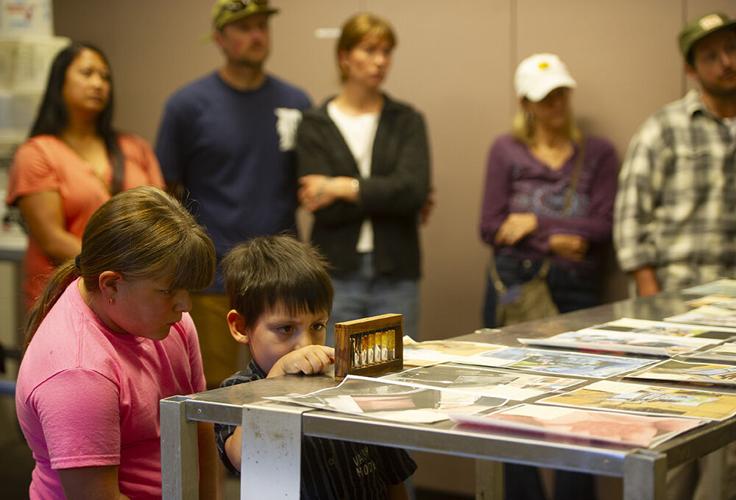
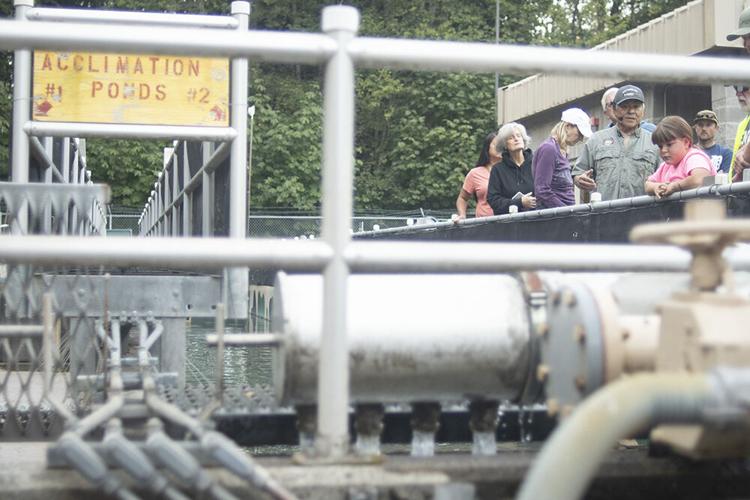
PARKDALE — In the midst of salmon spawning, Parkdale Hatchery held a public tour on Sept. 8, introducing locals to the facility that’s trying to restore spring Chinook to the Hood River watershed.
About 250,000 hatchery fish are released each year, in hopes of sparking a new population — but with the local genetics extinct and habitat sparse, progress totward a harvestable population that doesn’t need hatchery supplementation is slow.
The operation is a partnership with the Confederated Tribes of Warm Springs, whose rights to fish in their “usual and accustomed places” were guaranteed in an 1855 treaty. That treaty helped them fight for these restoration efforts.
“Many people don’t realize that if it wasn’t for the Tribes and their interest in these restoration efforts and providing harvest opportunities in the Hood River basin, they may not exist,” said Program Supervisor Mike Clark.
The hatchery’s built in a perfect place, staff said. It gets cold stream water from beneath a lava bed, water from the Hood River itself, and well water. By mixing the three flows, staff can get water of any temperature they need to coax the cold-blooded fish to eat and grow.
The river basin is 340 square miles. Spring Chinook were extinct here by the 1970s, it’s thought; reintroduction efforts began with the Endangered Species Act in the 1980s. Powerdale Dam, which blocked fish from the upper basin, was removed in 2010.
The goal is a new, fully independent population of wild fish. Federal legislation and Tribal treaties forced the Bonneville Power Administration (BPA), which manages Columbia River dams, to fund salmon restoration efforts in 1980. Programs like Parkdale Hatchery, owned by BPA but operated by Warm Springs, are supposed to help compensate for destroying so many “usual and accustomed places” for Native fishers. Half the salmon in the Columbia belong to the Tribes, and half to the states.
The hatchery also surveys for wild salmon nests, or redds, in the river gravels, and runs a habitat restoration program for salmon, steelhead, and bull trout.
Some returning hatchery fish are caught, and kept until they’re ready to release eggs and sperm. While captive, they’re treated with formalin to kill parasites and diseases that can otherwise devastate a hatchery. Once “ripe,” spawning involves killing the fish to harvest and mix eggs and sperm. Because the disease treatments contain formaldehyde, the bodies go to a landfill.
They spawned 45 pairs that morning. With enough eggs for a year, they’re now gathering extra for Round Butte Hatchery, which lost most of its fish to virus and parasite infestations, Parkdale Hatchery Manager George Santos said.
The eggs are raised at controlled temperatures, in trays of flowing water, treated for parasites daily. Hatched, they live and feed in brightly-painted ponds, learning to hide against the darker spots of paint — a skill they’ll need in a river of hungry predators.
The hatchery fish were gathered from Round Butte hatchery in the Deschutes River area. The current wild fish are mostly descended from hatchery fish.
The hatchery used to count fish at the Powerdale Dam before its removal. Now they use spawning surveys, creel surveys, PIT tags, a diversion on the West Fork, and screw traps to estimate adult and juvenile numbers. Last year, more than 3,000 hatchery fish returned. Wild fish might number a few hundred.
Future work might include genetic studies, monitoring individual redds, and eDNA sampling (where scientists check vials of river water for free-floating DNA scraps) to see what fish are swimming where in the cold, rushing water.


Commented