

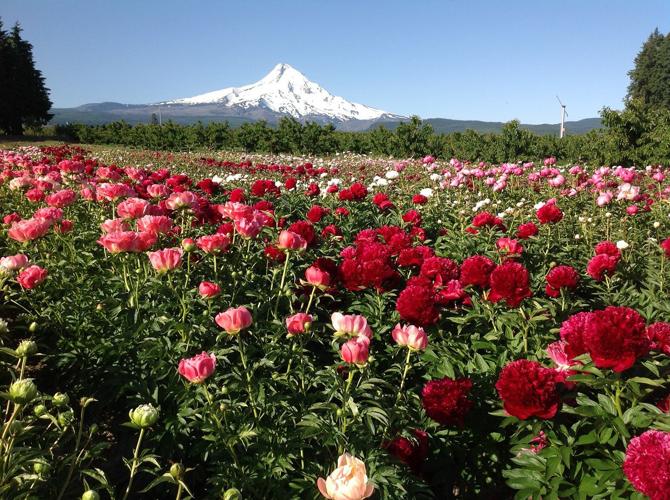
Jim and Lore Sampson are bringing peonies back. And with more than 600 cultivars, they’re off to a good start.
“As Jim would say, it’s a collection gone wrong,” laughed Lore, “but you know, they’re just one prettier than the next — it’s what has attracted us to them in a big way. They’re incredibly beautiful, incredibly hardy and extremely easy to grow. You can’t find anything lower maintenance for a garden plant.”
The Sampsons — who call themselves “peony ambassadors” — own and operate Rarity Gardens, located in Parkdale, and have been growing peonies for the past 15 years. They run the entire operation themselves.
“We agreed whatever we did, it would just be what the two of us could do,” said Jim.
“And to not grow anything bigger than we can lift,” Lore added. “Those were the ground rules.”
The two began their flower adventure with hostas and daylilies, which segued into peonies, said Jim. “But we’re working to revitalize those collections,” he added.
Growing peonies was “really appealing because we’re in the Upper Valley and the critters who come to our garden are big — a lot of deer and elk — and peonies are not attractive to them — they don’t like the taste,” said Lore. “With hostas and daylilies, they’re like mowing machines.”
Peonies, too, are easy to care for and generally pest-free, with the added bonus of being beautiful, she added.
“Peonies have been overlooked in gardens because they’re not hard to grow, just slow to propagate,” Lore explained. “There’s not really a fast way to increase peonies … It’s a labor of love.”
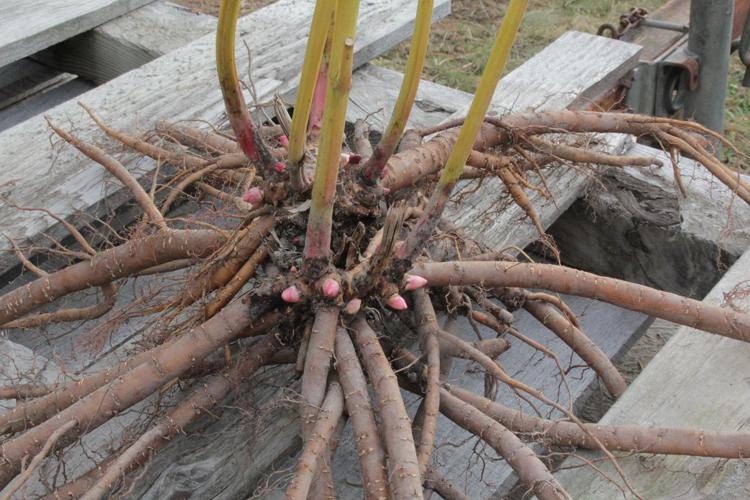
Peonies “bulbs” are really a woody root division — a plant must grow for three years before it can be dug up and “divided.” Most nurseries don’t have the time to devote to a plant that propagates so slowly, said Lori.
“(Large nurseries) have to have a thousand (plants) by next spring to turn over quickly,” she said. “Peonies don’t work that way and I’m OK with that, I guess. They take a little time to get going, but the payoff is huge.”
Rarity Gardens is not their only gig — Lore works as a researcher for an advertising firm based in Kansas City, and Jim teaches sixth grade science and math at Wy’east Middle School — but it is their happy place.
“After a day of research and writing, it’s really fun to go out and play in the peony patch,” said Lore.
“When I dig up a plant and look at its roots, I can see the species’ ancestors in those roots,” Jim said. “It’s like looking at someone’s kids and saying, ‘You have your mom’s nose.’ It’s very interesting.”
The two will be selling peony roots during this weekend’s Fruit and Craft Fair — you’ll find them in the Summit Building at the fairgrounds for their only local sale of the year — and have been getting ready for the event for months now. They start by cutting back foliage around Labor Day, then digging up the roots and giving them a good cleaning.
They have to sit in a shady spot next for a day or two — “When you first dig them up, they store a lot of water and a lot of nutrients and they’re really crispy,” Lore said. “They’re really fragile, and trying to divide them into root divisions, they’ll snap where you don’t want them to” — before the actual dividing can begin. Then all that’s left to do is pack the roots in damp cedar chips and label.
The Sampsons divide their peonies on the generous side because, as Jim said, “Our divisions are what we want to send out to customers. If we can’t send out a number one, we’re not gonna sell it.”
Larger divisions also mean the root will become established more readily in the garden.
“Fall is the time to plant them,” said Lore. “We always cringe a little because it’s very common to see peonies packaged up in the springtime … and it’s absolutely the wrong time to plant them.”
Peonies use the winter months for important root development, Lore continued, adding that as soon as the buds start to grow, the plant shuts down root growth in favor of leaves and flowers.
When people plant the roots in the wrong season, they tend to “have horrible luck,” she said. “I can’t tell you how many times people say, ‘I tried peonies and they just don’t grow for me.’”
“If you’re growing anything and it’s not growing well, there’s always a reason,” said Jim. “It’s not about who can grow and who can’t — it’s about figuring out what the problem is if there is one.”
If planted correctly, peonies can flourish in a landscape for 40 or 50 years “without really any care,” said Lore. “They do their own thing. For today’s lifestyle, people are busy doing other things, and that’s hard to beat.
“These aren’t your grandmother’s peonies,” she added. “You don’t have to worry about them tipping over. They’re really outstanding landscape plants.”
For more information, stop by the Sampson’s booth — they’re more than happy to answer questions and talk flowers.
“It’s one of my favorite topics!” Lore said.


Commented