Cloudy skies early, followed by partial clearing. Areas of smoke and haze are possible, reducing visibility at times. High 93F. Winds NW at 5 to 10 mph..
Tonight
Clear skies. Areas of smoke and haze are possible, reducing visibility at times. Low 59F. Winds WNW at 5 to 10 mph.
HOOD RIVER — Although it’s still more than a year away, construction of a new toll bridge between Hood River and White Salmon presents an early logistical challenge for the two separate entities with the biggest immediate stake in the project — and it centers on toll revenue.
The new, $1.12 billion Hood River–White Salmon Bridge will be constructed immediately downstream from the current span. The old bridge will continue to operate during construction, which could start as early as October 2027. It will be demolished when the new span is completed.
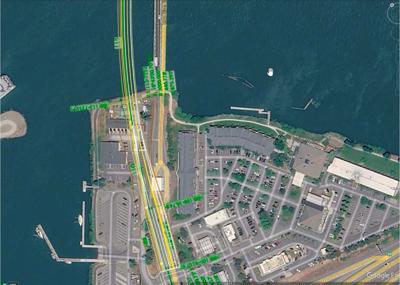
The challenge arises where the two spans will literally cross paths, according to information presented at the Port of Hood River’s board meeting March 17. The port owns the current bridge, but the new bridge will be constructed by a separate, bi-state entity, the Hood River–White Salmon Bridge Authority. The two bridges will be parallel to each other through construction … except at the Oregon shore, where engineers suggest the new bridge approach would displace the current toll booth.
Toll revenue is an essential area of common interest: About half of present toll revenues are directed to the bridge authority to build a fiscal reserve for construction, while future bridge tolls will pay for a federal loan, one of several federal funding sources needed for the new structure. The loan will be through the Transportation Infrastructure Finance and Innovation Act (TIFIA).
Any disruption to toll collection would threaten cash flow. Although the engineering plans are still subject to change, the idea at this point is to remove the toll booth structure, directing traffic to the east side of the approach road in order to assure access to the old bridge during construction. Tolls must still be collected during the transition.
“Continuity of operations” is one of many logistical issues to be addressed as the vision of a new Columbia River crossing moves toward reality — as always, contingent on federal funding. It was a discussion item at the March meeting with no action taken but provides a focus of weekly coordination meetings now under way between the port and bridge authority.
In other business at the March port meeting:
• Hood River Valley Parks & Recreation District board members briefed port commissioners on the district’s plans for a 25-year, $40.36 million construction bond and five-year, $0.33 per $1,000 assessed value maintenance and operations levy Hood River County voters will consider in the May 19 election.
The bond would rebuild the aquatic center, adding a permanent roof to the pool, redesign pool layout and make other physical improvements to the present structure on May Street. The levy would support parks and trails maintenance, sustain pool programs, continue community recreational projects, and address deferred maintenance. A $2 million capital campaign by a newly-formed parks foundation would assist.
The March 17 presentation is the latest of several by parks representatives to other local governments. Voters rejected an earlier measure in 2024. The new proposal is scaled back.
• Port commissioners and staff will convene their annual strategic planning work session on April 21. Anticipated topics include capital projects fund and capital repairs, waterfront improvements, commercial dock planning and long-term marina plans. Commissioners will also review potential construction contracting methods to deliver a possible new port administrative office; the current one will be displaced by bridge construction.
• The port will participate in an advocacy visit to Washington, D.C., late in May to raise Congressional and federal agency awareness of upcoming port projects ranging from an airport terminal building to waterfront and transportation improvements in the port waterfront area.
The trip is organized through a state agency, BusinessOregon, under contract to a private consulting firm, Accelerate Strategies. BusinessOregon makes the support available to all of Oregon’s 23 port districts.
“It’s really that relationship between the Port of Hood River and the State of Oregon that we get to utilize” without the cost of hiring a separate D.C. consulting firm, said Kevin Greenwood, the port’s executive director. Commissioners supported the trip and will participate.
“I’ve researched this and found that small governments get a 5-times return on investment for D.C. lobbying,” said Commissioner Tor Bieker. “It’s that call from the senator’s office that makes a big difference.”
“Meetings are back-to-back,” noted Commissioner Kathryn Thomas. “You’re working while you’re there. It’s amazing the amount of people you’re talking to about your projects. I’m 100% for sending people to D.C.”



Commented