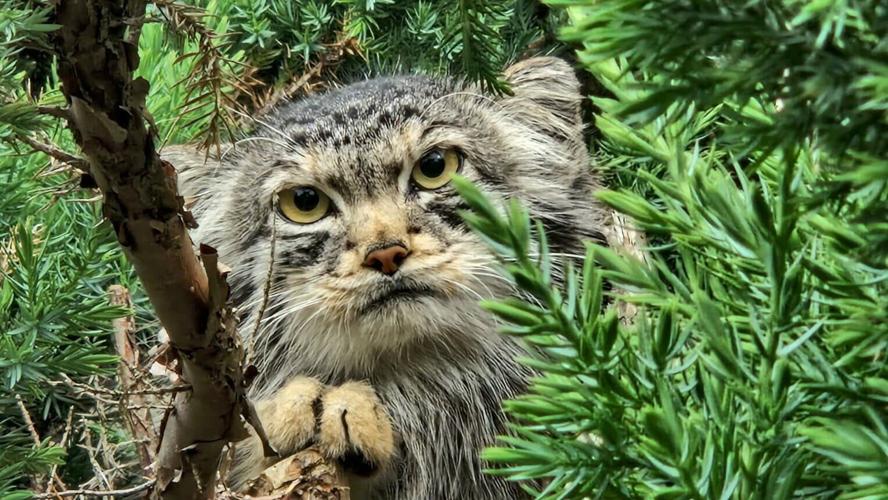
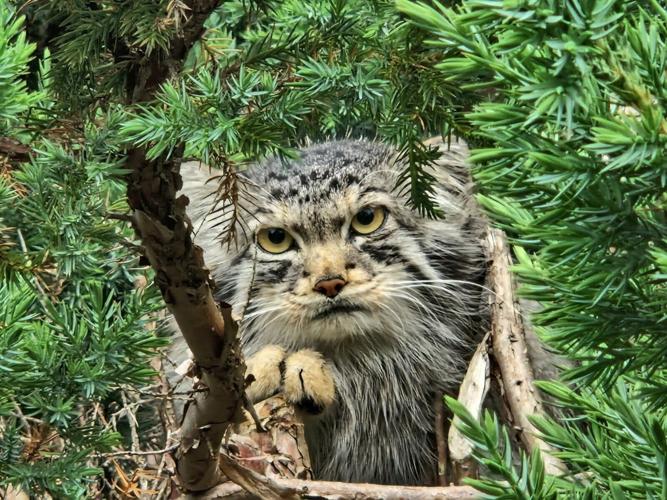
Duchess the Pallas's cat at Edinburgh Zoo. (Royal Zoological Society of Scotland via SWNS)
By Elizabeth Hunter
A zoo has welcomed one of the world's "grumpiest cats" - and hopes to "turn that frown upside down" in a breeding program.
Pallas's cats are famous for their downturned mouths, flat heads and low set ears.
Their looks have seen them dubbed the "world's grumpiest cats" and one has now arrived at Edinburgh Zoo.
Staff say they are hoping to "turn that frown upside down" as they prepare to introduce their male cat, Akiko, to the new female cat named Duchess.
The move is part of an international breeding program, as the species is listed as "near threatened" by the International Union for Conservation of Nature - so keepers are hoping the pair hit it off.
Chloe Fyfe, a zoo keeper at Edinburgh Zoo, said, "Duchess has been settling in well and exploring her habitat.
(Royal Zoological Society of Scotland via SWNS)
By Talker
"She is living up to her name – she's very prim and proper.
"Akiko will have to work hard to impress her when they are introduced, but he is up to the task.
"She has a lovely personality and complements him perfectly.
"Fingers crossed for kittens in the not-too-distant future."
Native to Central Asia, the cats' distinctive appearance is shaped by natural adaptations for survival on the steppes.
Their flat heads and low-set ears help them remain hidden as they stalk prey, and their round pupils add to the frowning look that has made them so recognizable online.
Chloe Fyfe said, "The grumpy cat phenomenon has been fantastic.
"It's made Akiko a real visitor favourite, and Duchess will quickly join those ranks.
"The growing interest in the species is invaluable, as it gives us a great opportunity to celebrate these remarkable animals and raise awareness of the challenges they face in the wild."
Pallas's cats face various threats across their natural range in the wild from habitat loss and degradation through agricultural and infrastructure expansion, loss of prey and predation by domestic dogs.
Their secretive nature and the remoteness of their habitat also make them difficult to study, and they are among the least known wild cat species in the world.



Commented