
Oktoberfest is in full swing, and the amber lager Americans are reaching for this season is a style Munich’s festival tents stopped featuring more than three decades ago. The golden, smooth Festbier that has been the standard pour at the Wiesn since 1990 is a different beer entirely from the rich amber lager crowding U.S. shelves right now. What Americans are actually drinking is a piece of German brewing history that Germany itself largely let go.
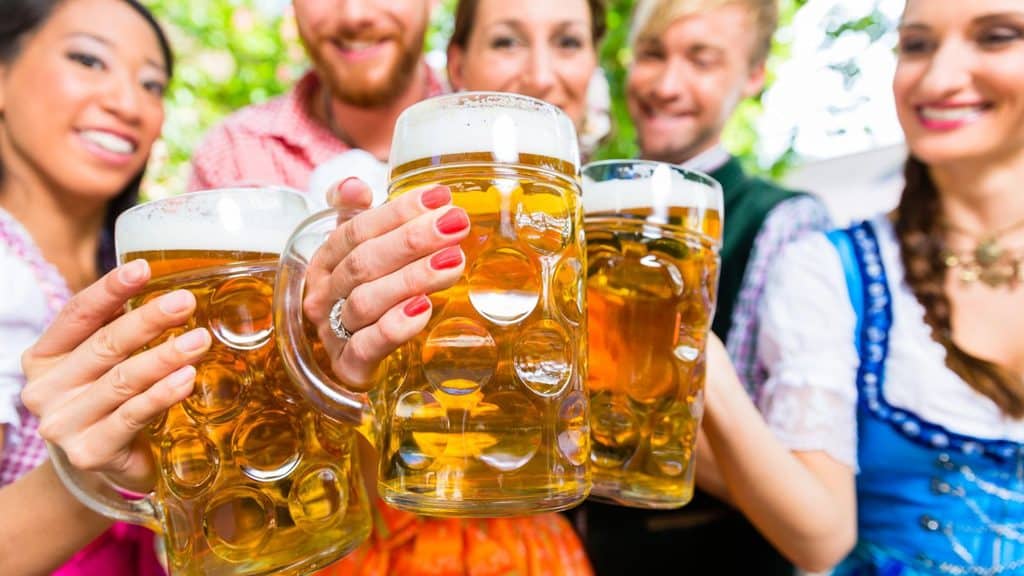
Märzen is the style most Americans picture when they hear Oktoberfest beer. The amber-to-copper lager has been woven into the American fall beer calendar for decades, rich with toasted bread and bready malt character, built for sipping when temperatures start to drop.
The name comes from “März,” the German word for March, because the beer was historically brewed in early spring and lagered through the summer months to be ready by fall. The amber Märzen-style lager became the traditional Oktoberfest beer in the 19th century, and it held that position for well over 100 years.
The beer Munich has been pouring since 1990
The beer in the glass at the Wiesn today is a different animal entirely. Since 1990, the majority of beer served at Munich’s Oktoberfest has been Festbier, a pale golden lager that looks nothing like the amber bottles American consumers have come to expect.
The six breweries permitted to pour at the festival, Augustiner, Hacker-Pschorr, Hofbräu, Löwenbräu, Paulaner and Spaten, each brew their own version. All are golden, smooth and malt-forward but pale, malty and generally lighter in character than traditional Märzen. They’re designed to remain easy to drink over a long festival session.
Paulaner’s mid-1970s decision that changed the festival
The switch traces back to Paulaner’s brewers in the mid-1970s, who decided the traditional Märzen was too filling for a full day of festival drinking. A lighter, more drinkable version was the answer, still malty and substantial but built to last through a full day of drinking. The other five Munich tent breweries eventually followed.
A Munich Regional Court ruling on Jan. 17, 1990, formally affirmed Oktoberfest as the “festival of Munich beer,” reinforcing the requirement that beer served there come from qualifying Munich breweries. A Munich committee decides on the type of beer to serve at Oktoberfest, and each brewery produces its own recipe within those rules.
The legal name Americans cannot put on a label
Under EU regulations, the name Oktoberfestbier became an EU-protected geographical indication in 2022, covering beer produced in Munich under the registered specification. Breweries outside Munich may still label similar beers using terms like “Oktoberfest-style” or “Märzen” depending on local rules.
In the U.S., breweries commonly use “Oktoberfest” for their own German-style seasonal beers, and many produce genuinely excellent fall lagers under that name. But as the official festival guidelines make clear, the beer Americans commonly encounter on U.S. shelves, the amber, malt-rich lager that defines the season for many drinkers, is the traditional style Munich moved away from before most of those drinkers were old enough to hold a stein.
Munich’s 1 remaining amber pour
Poschner’s Hühnerbraterei, a small tent at the Wiesn, still pours the original amber Hacker-Pschorr Wiesnmärzen from a wooden barrel alongside the standard pale Festbier, a quiet holdout from what the festival poured for generations. It is a minor footnote in terms of volume, but it suggests the old style never entirely lost its pull even in Munich. The brewery that helped define the modern festival still makes room for the beer that preceded it.
Märzen or Festbier: What the difference actually means
Märzen, the amber style that defines much of the American Oktoberfest season, delivers toasted malt, bready depth and a richer body. Festbier, the pale golden style now standard at the actual Munich festival, is smoother, lighter in body and built to be drunk across multiple rounds without wearing out its welcome.
The two styles can overlap in alcohol strength, but their malt profiles, color and body are noticeably different. They are two different answers to the same question.
The tradition crossed the Atlantic
The EU protection that took effect in 2022 draws a hard legal line around the name Oktoberfestbier, but it says nothing about the style. Märzen survives outside that line, brewed by American craft producers who treat it as a serious seasonal discipline rather than a calendar obligation. The beer Munich set aside a generation ago may now get more careful attention in the U.S. than it ever did at the source.
Jennifer Allen is a retired professional chef and long-time writer. Her work appears in dozens of publications, including MSN, Yahoo, The Washington Post and The Seattle Times. These days, she’s busy in the kitchen developing recipes and traveling the world, and you can find all her best creations at Cook What You Love.
The post Americans are drinking the Oktoberfest beer Munich stopped serving in 1990 appeared first on Food Drink Life.


Commented