
HOOD RIVER — I walk into Trustwell Living at Parkhurst Place, and immediately, I’m pleasantly surprised by the sense of community the building holds. I go up to the front counter, where I meet with a kind woman who takes me on a tour around the retirement home, going from room to room and getting a feel for the environment of this institution.
There is a sense of warmth and history in the building, each and every one of the people living there having led long lives. Before settling on interviewing Betty Lou,Lane,andJoan, we go around and talk to a few others.
One man, half asleep when we went to visit him, offered stern and kind words of advice. When asked what he would tell his 18-year-old self, he said, “Be honest and work hard.” He was quick-witted and was definitely ready for us to leave so he could return to his nap.
I thought about those words of advice for the rest of the day, because really, those two things will lead you down a successful path — honesty and dedication. We talk to another woman who tells me of her adventures of traveling and skiing in her youth. I really admired her, and she’s someone who I’ll remember for sure, someone I’ll use a little bit as a vision board because I aspire to lead a life similar to the one she described. Finally, I go to sit down with my three main interview candidates.
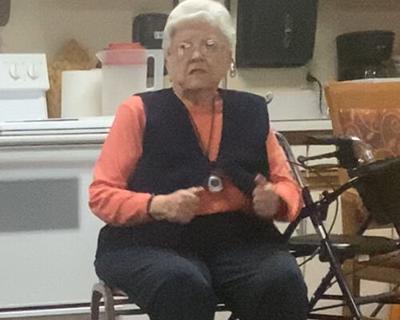
I got the honor to speak with Betty Lou, 90, Lane, 87, and Joan, 91.
But today, dear reader, we are going to focus on the wonderful woman that is Joan.
Question 1
If you could swap bodies with your 18-year-old self, what is the first thing you would do?
“Enjoy having my 18-year-old body back … and the brain!”
Joan answered quickly and humorously, no hesitation, her answer was simple as though she had thought it before.
Question 2
If you could sit down and have a conversation with a younger version of yourself, what is one piece of advice you would give, or something you would tell her to do differently?
“Well, when I was 17, and was in my last year of high school — because it was a teeny tiny school in Mosier, I was graduating early because I skipped the second grade. I got tuberculosis so I was in the hospital for five months at that time, and the next time I was midway through my college education and I was there for nine months. So I think what it taught me was to live in the moment — be thankful for what you have, and think positive about the future.
“I look back on those days and it was basically worry free until I got sick. We lived on 40 acres, just east, and we learned to appreciate the outdoors, and the views we had out all our windows, and enough food to eat, and … and lots of space to play. All the things that really are expensive.”
Question 3
My next question is if you want to tell a story of any one specific life experience that you’ll never forget, that stands out when you look back on the things you’ve done, something that was really formative?
“One for me was when my first child was born and he was whole and perfect, and it was just like — it was just amazing, just an amazing experience.
“And also, when I graduated from college, I was the first person in my family to do that. Well, a four-year college. I’ve had two aunts who had gone to teacher training school, and those days you could complete that in two years. That’s what they did. But I had a four year degree and my parents were there and they were incredibly happy so I’ll never forget that.
“I majored in elementary education and humanities. I taught first grade when the boys were up and out, and that was super fun, super fun! First graders are the best, just like sponges. They learn so much in a year, and they haven’t been ruined yet by culture. They have a wonderful mind and just potential of being filled with glorious things.”
Question 4
As someone who in the next year is entering the world of independence, living away from my parents and going to college and entering the workforce eventually, what advice do you have for me as I go out and do that? What things do you think society puts too much pressure on, like, what should I prioritize as I enter the “real world” — you know, I’m still a little bit in kid land living with my family and going to school and stuff.
“It’s a very big question because I feel like at any point in your life there could be a different answer, but I just think, stay open. If bad things happen, consider it a door that can open someplace else. Don’t dwell on the negative, try to make something wonderful out of the opportunities that you do have — and I have to say this, I’m eternally grateful for the state of Oregon because when I went to college, the state of Oregon started paying for my vocational rehabilitation, and they paid for my board and room and even my books and having the laundry done and everything that would help me be there without breaking down again and going back to the hospital. So I owe much of my love life, meeting my husband, everything that’s happened after that, to that support that I got, because my family didn’t have enough money to pay for my tuition. So that’s why I defend all these public programs that help people at that point. Whatever point in life you are, if you have no food, let’s help them — they need a place where they have enough to survive.”
Question 5
My final question for you is if you just have any last words you want to say? Any last stories you want to tell, advice, favorite song, favorite movie, just kind of a note about anything — this is your moment to share anything you want!
“My grandmother was really an important focus in my life, and her favorite thing to say was count your blessings, so that would be my advice to everyone. When bad things happen, don’t dwell on them any more than you have to. Count your blessings.”
•••
This is intern Anneliese Richardson’s first story to appear in Columbia Gorge News. See her introduction, this page, to learn more about this high school senior.


Commented