

THE DALLES — On Jan. 15, Oregon Public Broadcasting (OPB) published an investigative article detailing The Dalles’ push to expand its water reservoir capacity in the Mount Hood National Forest through a bill sponsored by U.S. Rep. Cliff Bentz.
Titled “As Google’s water demands grow, The Dalles aims to pull more from Mount Hood forest,” the piece examines a possible correlation between demand from resource-intensive data centers, which consume about a third of the city's water, and The Dalles’ 2024 master water plan, which projects the city will need at least one million gallons per day, specifically for an unnamed “large industrial user.”
City officials and Google representatives, however, are adamant that the tech giant is not a factor in their quest to expand the reservoir — a stance explicitly stated in the article, written by reporter April Ehrlich.
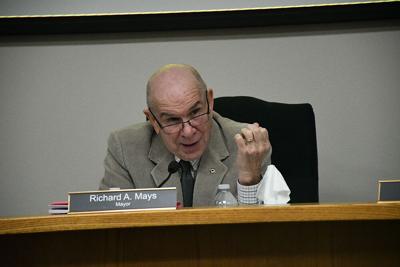
On Jan. 17, The Dalles Mayor Rich Mays took to Facebook for the first time since 2023 to share a four-page letter addressed to CEO Rachel Smolkin from retired public works director Dave Anderson, which describes the story as “egregiously misleading” and “disturbing.”
Six days later, the news source published a follow-up story — a line-by-line review of the article in response to Anderson’s letter — announcing two minor revisions, while standing by its foundational points.
At the request of Mays, Anderson read his letter aloud before The Dalles City Council on Jan. 26, reciting a laundry list of complaints and corrections. He additionally expressed disappointment in the publication’s follow-up, claiming they “doubled down.”
“OPB recently published an article that, unfortunately, contains several incorrect claims and presents false insinuations regarding matters related to Google and the city’s water supply plans,” Anderson said. “I believe it would have been more appropriately presented as an opinion piece rather than a news article.”
Anderson, who was employed by the city for 37 years before his retirement in early 2025, questioned the article’s intentions, “trying to lead the reader to believe there’s a connection between the projected future industrial water demand and Google,” he claimed.
Anderson expressed that the “unnamed industrial user” mentioned in the 2024 master plan is only included in a 50-year projection, and therefore, cannot be related to Google data centers currently in operation or under construction.
He then explained how the city began pursuing land around the reservoir, the Crow Creek Reservoir, in the 1990s, far before any data centers, which, he says, was also a goal stated in its previous water master plan (2006).
Such pursuits have remained unfulfilled, though, and the expansion proposed in 2024’s plan, which would triple its current size (900 to 3,000 acre-feet), reflects a 52% increase from 2006 (850 to 1,970 acre-feet), OPB noted in its follow-up.
Anderson went on to dispute the reported claim that Google provided a $28.5 million update to The Dalles’ water system “in exchange” for tax breaks, clarifying that the city required updates as a condition for service to avoid burdening existing ratepayers, and that tax breaks were provided separately through state-approved industrial development incentive programs, not as a quid pro quo for water projects.
“There is a bigger picture here,” OPB retorted in its follow-up. While the $28.5 million payment is detailed only in the infrastructure agreement between the city and Google, authorized by the city during its Nov. 8, 2021 council meeting, another agreement was made the following day between the city, Wasco County and the company: the Strategic Investment Program (SIP) agreement, which provided massive tax breaks to Google.
Google announced both agreements together in a press release, describing them as “part of its ongoing commitment to Oregon,” and according to meeting minutes, Mays said they “were closely related,” OPB added.
Next, Anderson questioned the claim that decades-old aluminum smelter operations in The Dalles overexhausted groundwater resources, thereby earning the city a spot on state regulators’ map of critical groundwater areas.
“The primary cause of groundwater overuse at the time was agricultural irrigation, which was mitigated when the Dalles Irrigation District water system became operational in 1966 and provided water from the Columbia River, rather than the aquifer,” he said.
He then denounced the article’s insinuation that the city, which obtained part, not all, of the former smelters’ right to pump underground in 2021 from Google, might strain resources again to help cool data centers. Upon publication, the original article stated that the city had the right to pump the same amount of water as the prior smelter — a detail corrected later on and addressed in the follow-up.
“The capacity of the aquifer was studied as part of the water supply planning process during the city’s consideration of the newest data centers, and a predicted future use of groundwater will be within the aquifer’s sustainable capacities,” Anderson said.
At the end of his recitation, Anderson reiterated that reservoir expansion has been planned for decades, is not a sudden development, and has no relation to data centers. The city’s 2024 master water plan projects that the expansion will break ground in 2040 and will undergo several environmental assessments at the state and federal levels before approval.
“Issues of water and energy demands by data centers warrant public awareness and are worthy of discussion to best balance the use of resources with modern services,” he said. “The debate should not be influenced by assertions that are not accurate.”
The entire council shared Anderson’s attitude toward the article, expressing frustration with the article’s framing. Councilor Tim McGlothlin, who’s served for over a decade and was “part of many of the decisions that we’re hearing about tonight,” he said, affirmed that the city intends to improve water retention for future usage by citizens, not Google.
Though unaddressed in Anderson’s letter, a paramount point in the report is that reservoir expansion would yield adverse effects on local fish populations by diverting snowmelt water from Dog River and into the expanded reservoir.
Regardless of whether the city’s plan is tied to Google, data centers are often questioned for their intensive demands on water and energy resources, particularly in rural areas facing ecological strain. Those concerns will face scrutiny if Bentz’s bill advances.


Commented
Sorry, there are no recent results for popular commented articles.