
By Sean Avery
Columbia Gorge News
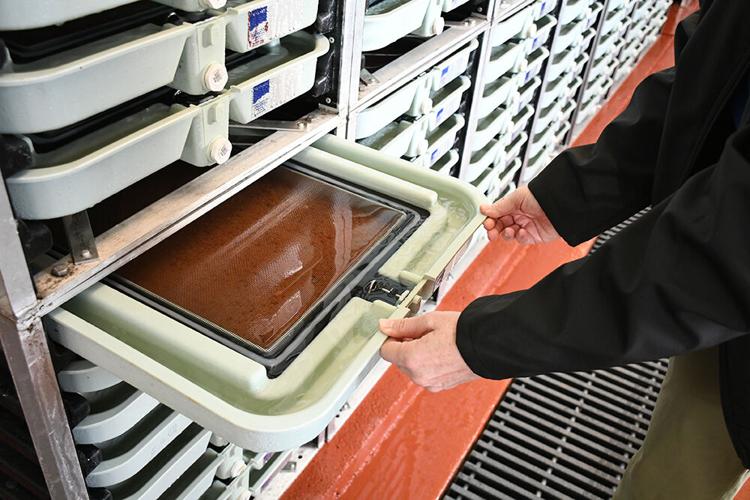
UNDERWOOD — For 125 years, millions of tule fall Chinook salmon have passed through the Spring Creek National Fish Hatchery (SCNFH), incubating, hatching, stocking, and returning years later to spawn — a cycle completed by scent after years at sea.
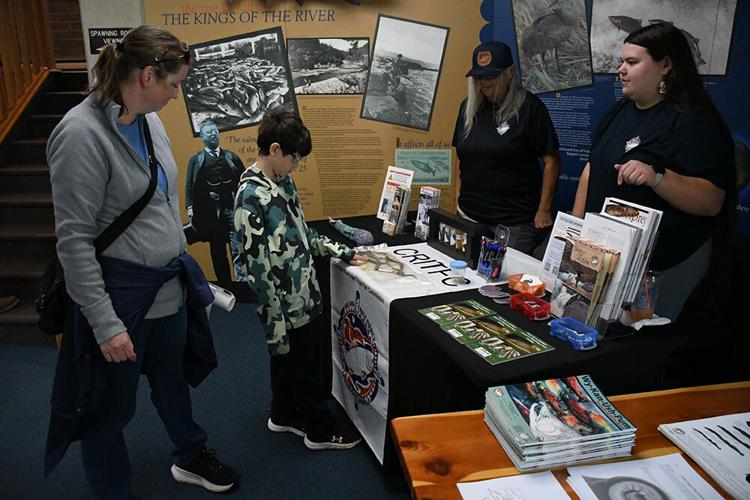
The mitigation facility celebrated its milestone with a community open house on Sept. 19, offering kids’ activities, informational chats with staff, and a microscope into day-to-day operations. Attractions included mini-golf, bubbles, dissection, and gyotaku, the ancient art of Japanese fish painting.
“It’s all about the kids and getting people out here to learn about fish,” said Hatchery Manager Dave Carie. “That’s our next generation; we want them to continue to fish and conserve the environment.”
Established in 1901 as an egg collection station for the Bureau of Commercial Fisheries Clackamas Hatchery, SCNFH started producing its own fish in response to population increase and subsequent overfishing pressures.
Employees quickly realized the hatchery’s water, which flows from a series of five unnamed springs situated at the base of basalt cliffs north of the facility, was practically perfect for salmon spawning: clean and uncontaminated by sediments.
SCNFH has consistently reared and raised healthy tule, releasing around 12.5 million smolts (juveniles) annually into the Columbia River, where migration towards the Pacific begins. This year, the hatchery has welcomed back approximately 75,000 fish, finding their way via a biological urge called imprinting, which lets them track the unique smells and tastes of the waters where they originated.
Considered a mitigation facility with conservation at its core, SCNFH helps make up for the loss of spawning habitat perpetuated by decades of hydropower dam construction. The facility also fulfills tribal treaty trust responsibilities, which entitle Columbia Basin tribes to half of the river’s fish.
“We produce salmon so they have something to fish for,” said Brooke Silver, a fish biologist with the Columbia River Fish and Wildlife Conservation Office. “It’s also incredibly important for the commercial ocean fishery as well as recreation.”
Representatives from the Columbia River Inter-Tribal Fish Commission (CRITFC), Laurie Potter and Kaitlynn Spino, attended the event, shedding light on the agency’s current Pacific lamprey protection and restoration initiative.
Founded by the Yakama, Warm Springs, Umatilla, and Nez Perce tribes, CRITFC works to coordinate management policy, provide fisheries technical services, and protect reserved treaty rights. By collecting genetic data from hatcheries across the region, they can track, manage, and compare hatchery-born and wild fish populations.
Porter said Indigenous involvement in fishery management, including CRITFC’s relationship with hatcheries, is of the utmost importance. “They’re the original voices of the region,” she said.
Spino, a Yakama Nation descendant, works in outreach, collaborating with educators and community groups to foster interest. “I’m trying to get that younger generation of scientists to become interested in fisheries,” she said. “It’s how I was raised.”
For more information on CRITFC and SCNFH, visit critfc.org and www.fws.gov/fish-hatchery/spring-creek/.


Commented