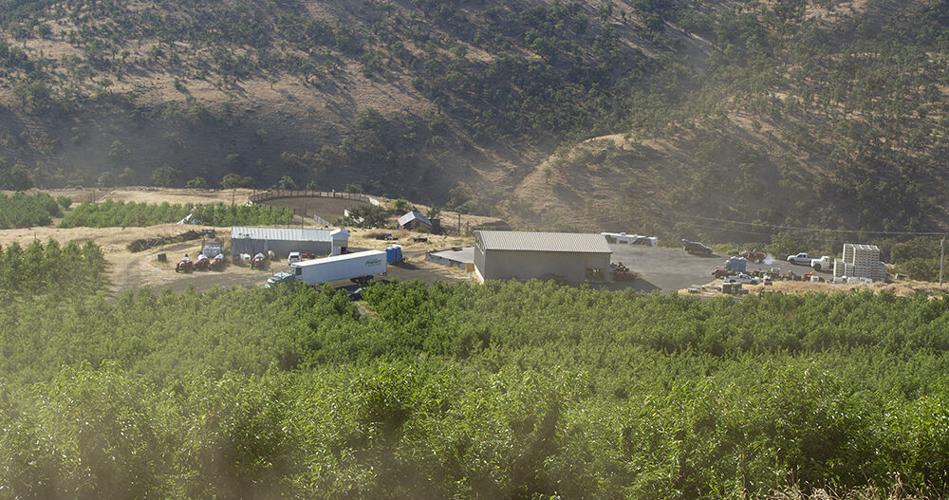
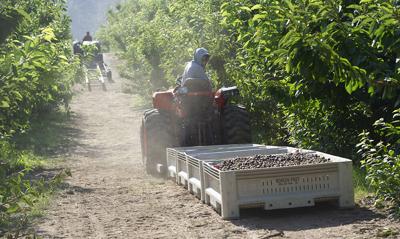
A semi-truck arrives on Dave Meyer’s orchard and waits to carry away the season’s last boxes of cherries as picking finishes late on July 16.Martin Gibson photos
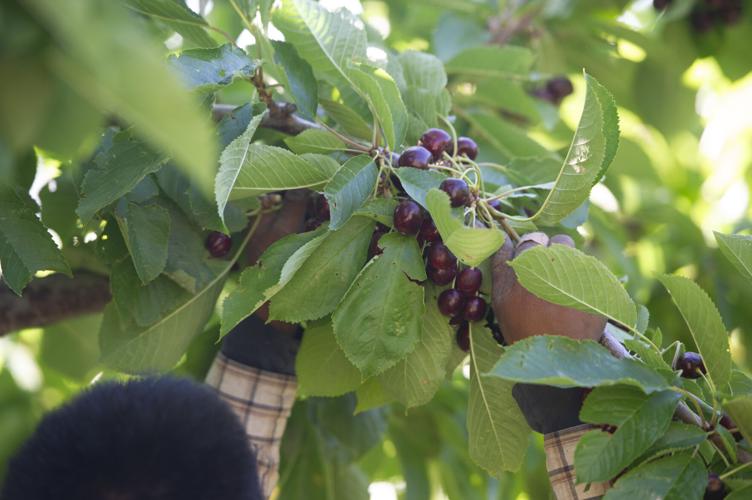
A picker in Jeff Heater's orchard strips ripe cherries off a branch. Experts can clean an entire tree quickly, only moving the ladder a handful of times.
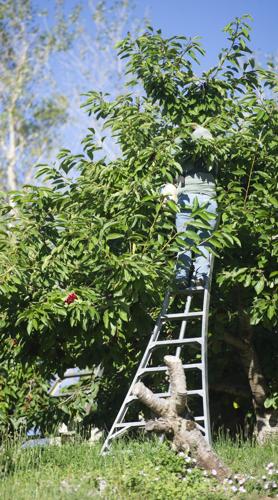
A worker reaches for the top of one of Jeff Heater's larger trees. Aggressive pruning causes the trees to produce bigger cherries, necessary as retailers demand bigger and bigger fruit.
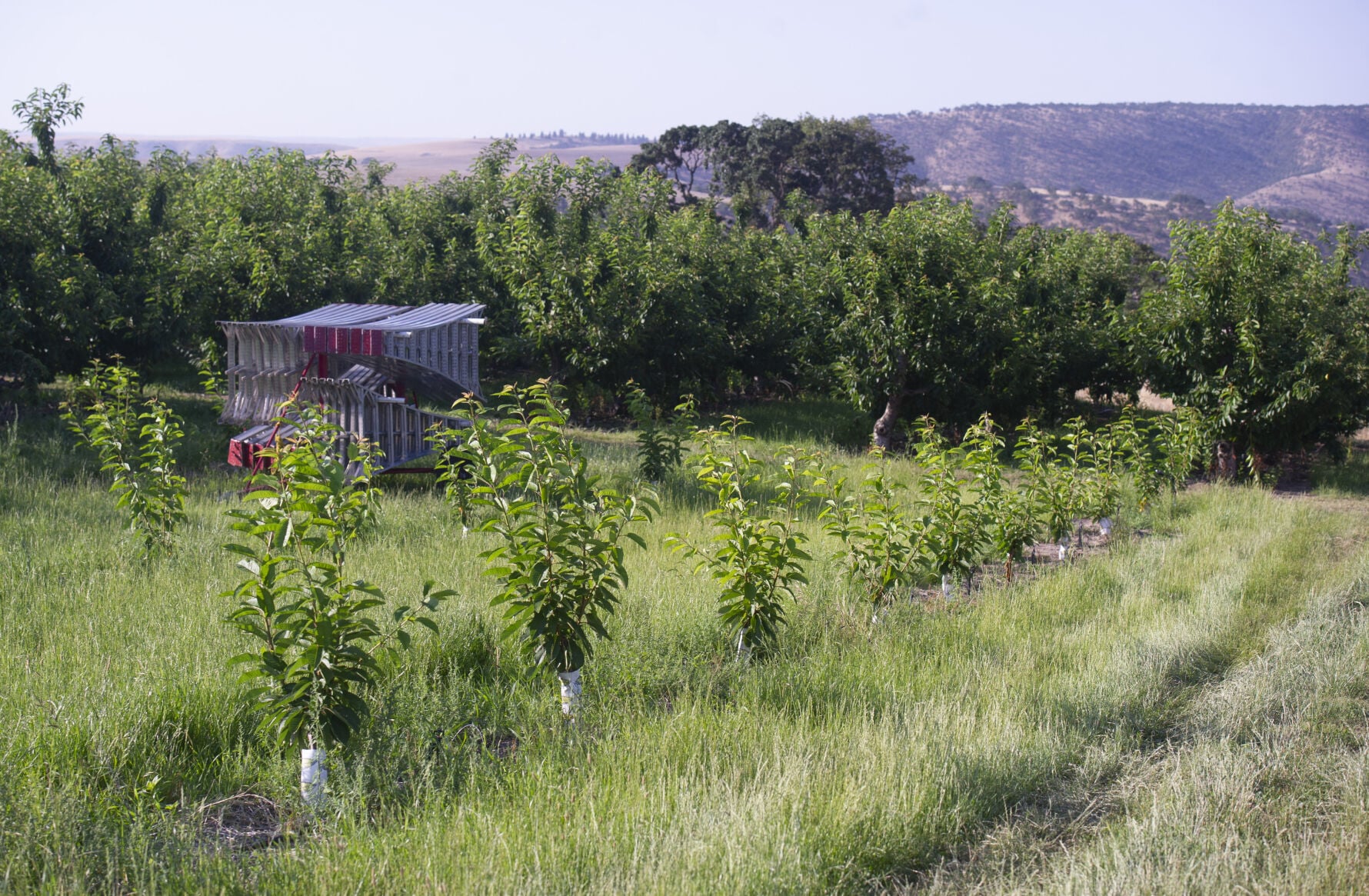
A new planting at Dave Meyer's orchard. Trees need replacing every 20-30 years, he said. Varieties go in and out of popularity, driven by the demands of the market. It can take up to five years for a new tree to produce significant fruit.
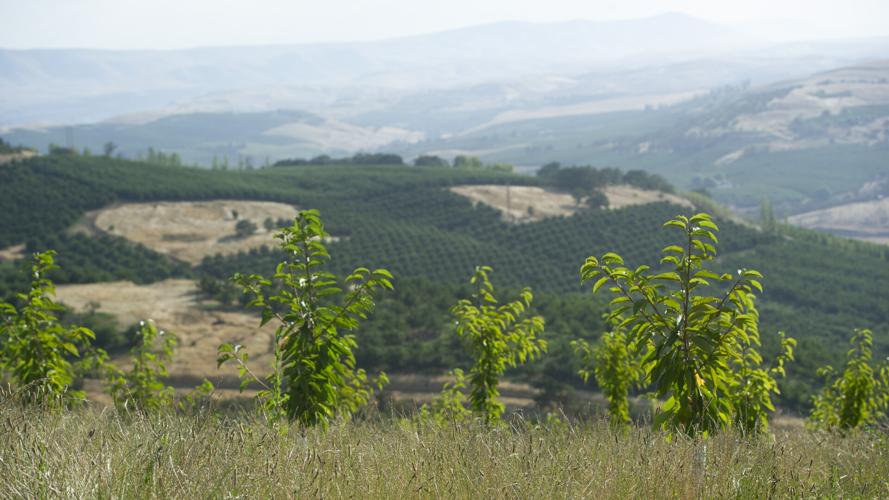
Another new planting at Dave Meyer's place overlooks his neighbor's orchards on Threemile Road, looking toward The Dalles and a haze of wildfire smoke.
THE DALLES — Local orchardists pulled in a “mechanically almost perfect” cherry harvest this spring, but with the market wobbling, they expect little profit.
They won’t know until they get paid in November.
Fruit quality is really good, said orchardist Jeff Heater, who also works as a crop consultant. The weather’s cooperated, with just a bit of rain that did a little damage, but not a lot. And, orchardist Dave Meyer added, nobody’s fallen off a ladder.
Heater is retiring from his leased acres on Threemile Road. He’s picked his last harvest. He wanted to raise family in an orchard, and he did, but admits the industry is increasingly difficult to navigate.
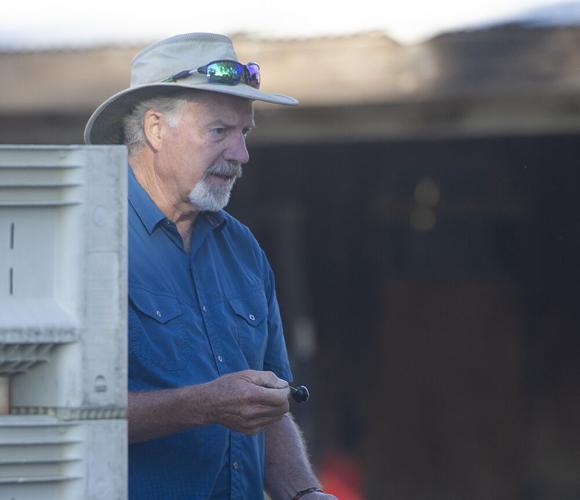
Jeff Heater discusses the harvest being brought down from his hillside acres on Threemile with his employees.
Columbia Gorge News spoke with three growers, and none saw a sustainable future for the cherry industry unless the market system changes.
“It’s just going to get worse. There’s no way I can see it getting better,” Heater said.
And then there’s the rise in immigration enforcement. Orchardist Ian Chandler said he never imagined safety from ICE would become part of his briefing to workers.
A picker in Jeff Heater's orchard strips ripe cherries off a branch. Experts can clean an entire tree quickly, only moving the ladder a handful of times.
Martin Gibson photo
Last year, as ICE arrests surged and workers stayed home, orchardists struggled to find enough pickers. This year, with people getting used to the new risk, enough workers came to the Gorge to pick everything — but the trauma for workers continues, he said, adding that when community members who’ve lived here for years, raised kids and worked jobs are arrested, everyone becomes afraid.
He and others were monitoring, with U.S. Sen. Cliff Bentz, a bill to expand the workers’ visa program, Chandler said. It give long-time employees, still slogging through roadblocks in the legalization process, paperwork and a chance visit family outside the U.S. That bill failed. With both parties raising money off immigration conflicts, but neither able to pass legislation to ease them, Chandler said he sees no solution.
The work of picking is hard, but can be profitable. Meyer’s harvest lasted 46 days, with about three days off in between. “Everybody’s half asleep and falling over themselves,” he said.
A worker reaches for the top of one of Jeff Heater's larger trees. Aggressive pruning causes the trees to produce bigger cherries, necessary as retailers demand bigger and bigger fruit.
Martin Gibson photo
Many pickers make more than $40 per hour, and the best can make $60. The lowest they can earn is minimum wage. It’s often a family business, with elders bringing young relatives here. Long-term relationships develop between family and grower, some for more than 40 years.
“Cherries tend to follow whatever bad is happening in the apple industry, and of course they went through variety after variety after variety. They’re chasing that magic, and it’s not moving the industry. It’s just helping a few players, basically, to find niches for a temporary period of time,” Meyer said.
A semi-truck arrives on Dave Meyer’s orchard and waits to carry away the season’s last boxes of cherries as picking finishes late on July 16.Martin Gibson photos
It costs an orchardist with under 1,000 acres about 70 cents to grow a pound of cherries. They’ll pay a packing house (often several packing houses, to spread risk) a set fee to process the cherries. The packing house sells them on to retailers or overseas.
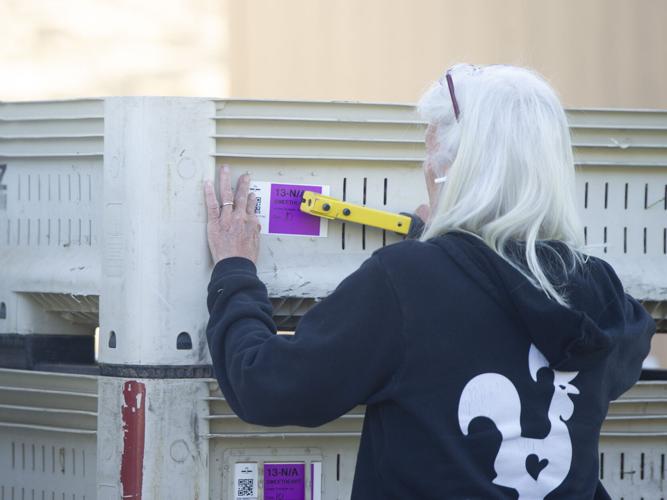
Bobbie Solle fixes labels on the boxes of cherries as they are tractored down from the orchard she and husband Jeff Heater run on Threemile Road.
The boxes are restacked to wait for a truck taking them to the packing house.
Martin Gibson photo
The retailers sell the cherries for around $6 a pound, and pocket the profit. The farmer gets paid last, with whatever is left over.
Last year, growers were lucky to make $5 back for every $10 they spent, Meyer said, and they barely broke even at least four years prior.
Four days after this year’s harvest began in May, the market started wobbling, and it’s been unsteady ever since, despite low competition from Oregon and California.
“This year won’t be as bad as last year. I can almost guarantee that,” Meyer said. But this spring’s good harvest was supposed to help growers recover from 2025. Now they’re just hoping they break even and make a bit of profit.
The domestic market is controlled by a few big corporations, such as Fred Meyer and Kroger. With little competition, they can set the price and terms for orchardists.
“Each year, these retailers are getting more and more powerful. And they’re able to basically demand a higher quality product at a lower price,” Meyer said.
International markets have shrunk as foreign policy grew more complicated and difficult, and competition overseas has grown as well, with Türkiye becoming the world’s biggest cherry grower. And foreign conflicts always affect agriculture first, Meyer said, as access to agricultural products is used as a weapon and bartering tool.
Meyer grows 14-15 varieties on the 150 acres he manages on Threemile Road with his wife, Dana. It broke his heart, but he had to rip out his last Bings. Once the gold standard and still good eating, the variety is fading as retailers demand bigger and bigger cherries for less money. And he has to grow what the market demands, like it or not.
As retailers demand bigger fruit, orchardists can see their packouts (the percent of what’s picked that they can actually sell) drop from what should be 90% to 60%, even 50%, wiping out profits. The smaller fruit gets dumped, or salvaged for three or four cents a pound.
Meanwhile, orchardists’ costs have soared, he said. Things like equipment, chemicals, and young trees cost many times what they used to. Larger orchards benefit from economies of scale, and as they buy up little orchards in bad years, consolidation makes the problem worse. For instance, most larger orchards now run their own nurseries, driving the businesses that used to supply small growers into the ground. The cost of young trees has tripled in the last 20 years, Heater said.
Another new planting at Dave Meyer's place overlooks his neighbor's orchards on Threemile Road, looking toward The Dalles and a haze of wildfire smoke.
Martin Gibson photo
A new planting at Dave Meyer's orchard. Trees need replacing every 20-30 years, he said. Varieties go in and out of popularity, driven by the demands of the market. It can take up to five years for a new tree to produce significant fruit.
Martin Gibson photo
Meyers is a big supporter of farmers markets and U-pick farms, “things that activate the community to go out, step in the dirt, pick some apricots or apples or whatever it is, and have conversations with the grower.” But that could only support a fraction of the great tracts of orchard that surround The Dalles.
It’s not just cherries. “Almost all agriculture is in a real slump right now in the United States,” Meyer said. Markets have contracted and gotten harder to enter, and the domestic market isn’t big enough to absorb all the produce.
Meyer said they need the federal government to open more markets.
All three said they need more competition at home: if more retailers could get a foot in the door, big retailers would need to pay more.
Meyer and Chandler mentioned they worry about private equity money that’s buying out orchards. Those funds are concerned with making profits for their shareholders, and in bad years, they’ll sell off bits of the operation to make up. Then the farm doesn’t have resources to recover if things get better.
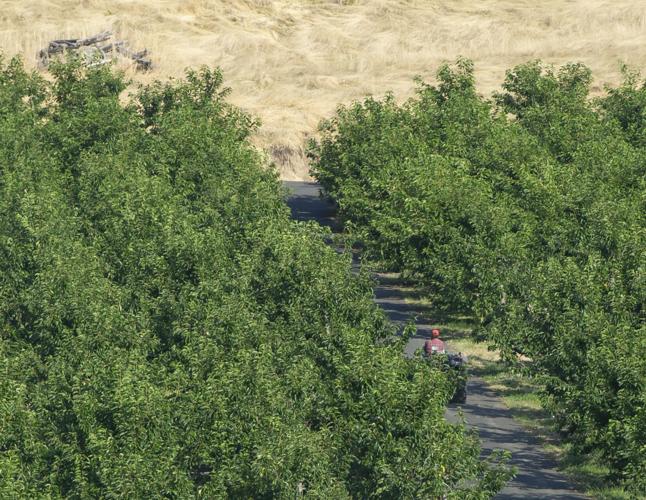
Navigating the swooping, steep roads in Meyer's orchard gets easier with practice.
Martin Gibson photo
Heater mentioned Oregon’s shrinking budget for research on agriculture and its economies. All three are also frustrated with the growing number of regulations on agriculture, especially housing and labor. Meyer complained small updates on space needs can make a small grower’s housing too expensive to rebuild, and too small to use.
And there’s a disconnect between the growers and consumers, who think food comes from the grocery store, not from the success of local farmers.
Meyer and Chandler said they think the disconnect between lived experience and western cities is behind their conflicts with Salem’s politicians as well. Most, they feel, lack an understanding from the grower’s point of view and see orchardists as treading on the downtrodden, despite long relationships with migrant families, compliance with the existing rules, and the good wages of cherry picking.
“The list just goes on and on and on and on, and little trivial things in the housing, and some very, very big things in the housing that are enough to bring any small grower to his knees,” Meyer said. It’s enough to bring down a small orchard even in good years.
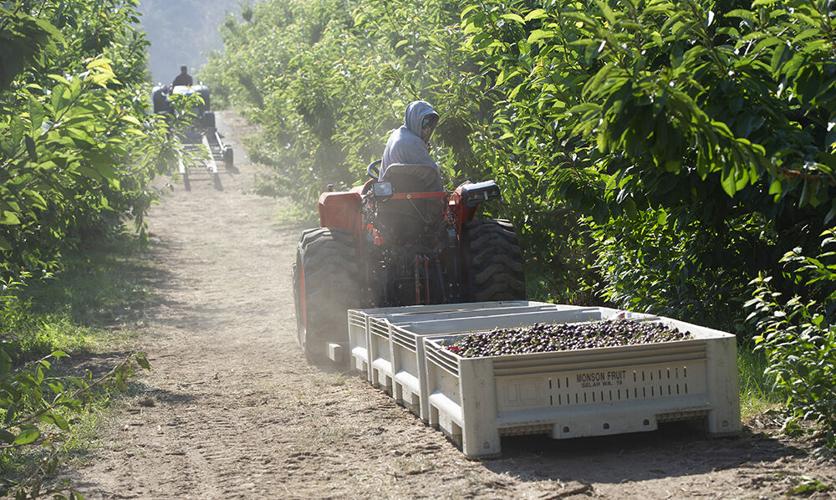
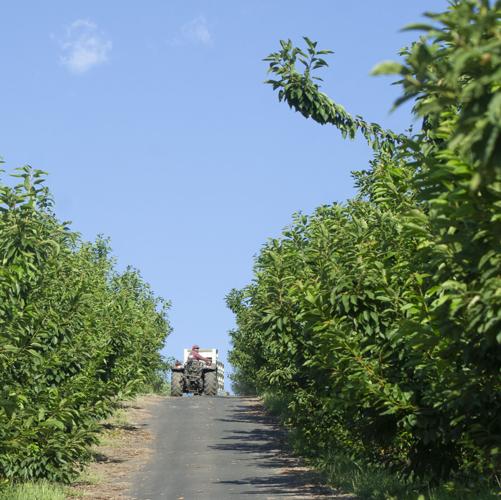
A worker ferries one of the season's last loads of cherries down from the steep hillside at Dave Meyer's orchard.
Martin Gibson photo
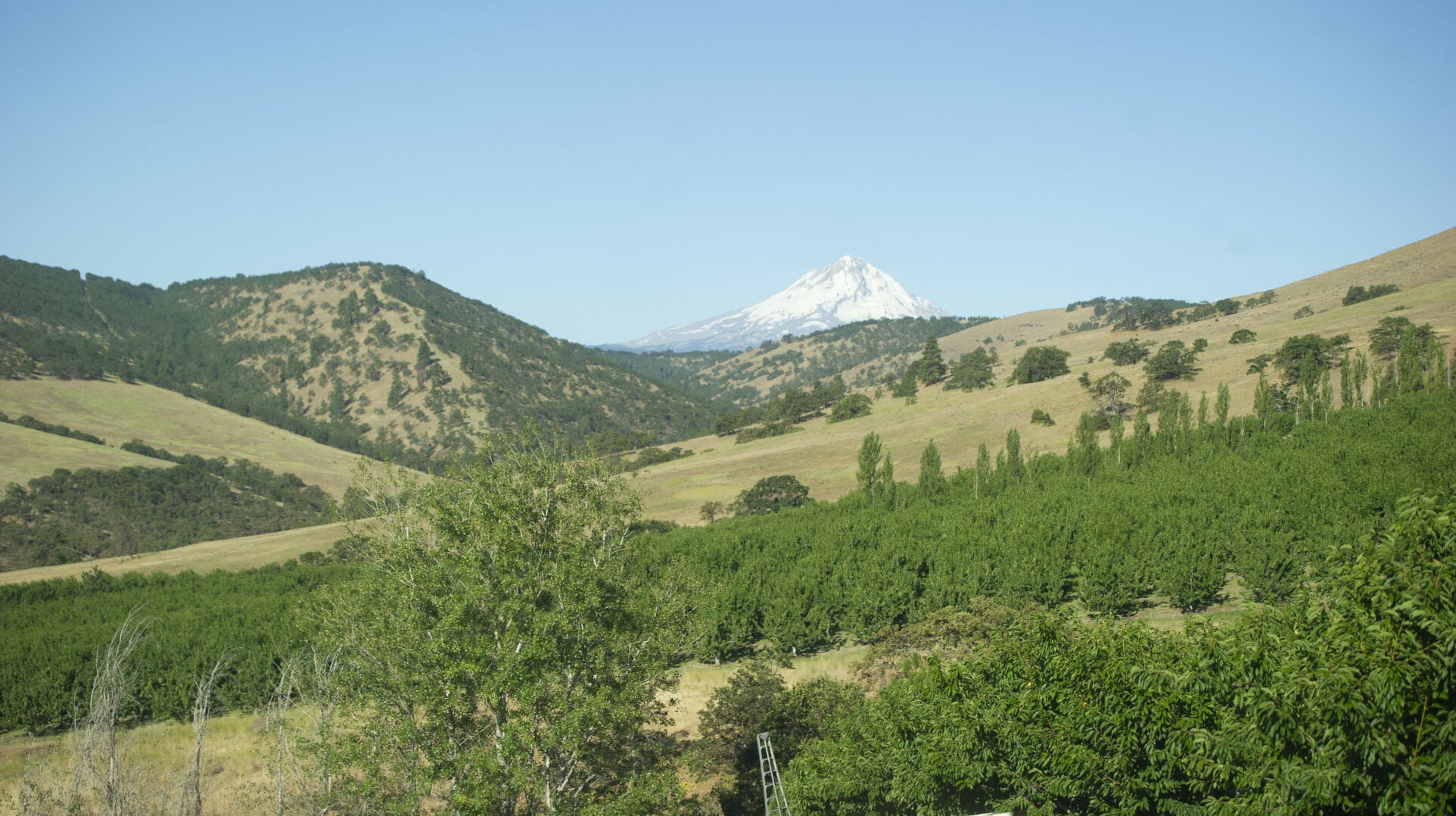
“My favorite part of farming is living out in the orchard like this,” said Heater. Waves of green trees surround his family’s house, framing a view of Mount Hood. “A little bittersweet, knowing that this is our last year of that.”
Heater ripped out his last apples when they lost too much money. Now that ground lies fallow, waiting for the next grower to find something profitable to plant there — not cherries. He thinks his property might grow hay.
“We’re both looking at this and saying, ‘Is there any future in this?’” Meyer said.
Mt. Hood, as seen from the home orchard surrounding Jeff Heater's house.








Commented