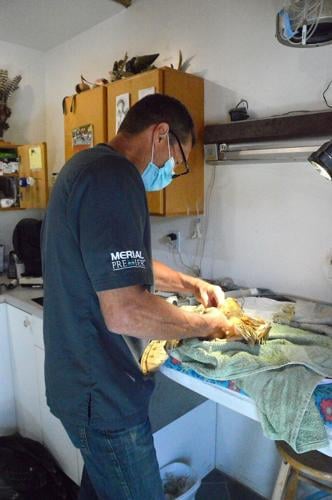
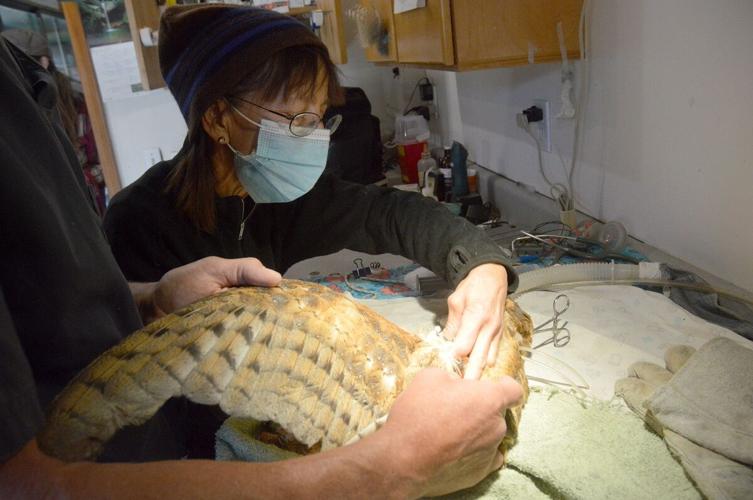
Dr. Dave Stauffacher, one of two veterinarians at Rowena Wildlife Clinic, examines the pins on a barn owl’s broken wing, to determine whether or not the owl is healed enough to have the pins removed.
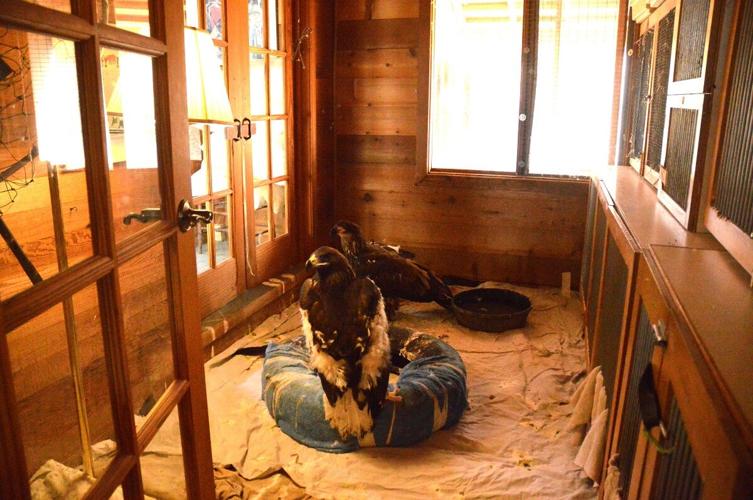
Two golden eagles hang out in a room of the Rowena Wildlife Clinic. The one on the right is a male, less than a year old, whose wings were badly burnt in a fire. The other is an older female with a bandaged right wing.
Dr. Stauffacher and Dr. Cypher examine the pins on a barn owl’s broken wing after Dr. Stauffacher finishes “physical therapy” with the owl. During physical therapy, the owl is anaesthetized and the veterinarian carefully moves and stretches the wing to ensure the joints keep their mobility.
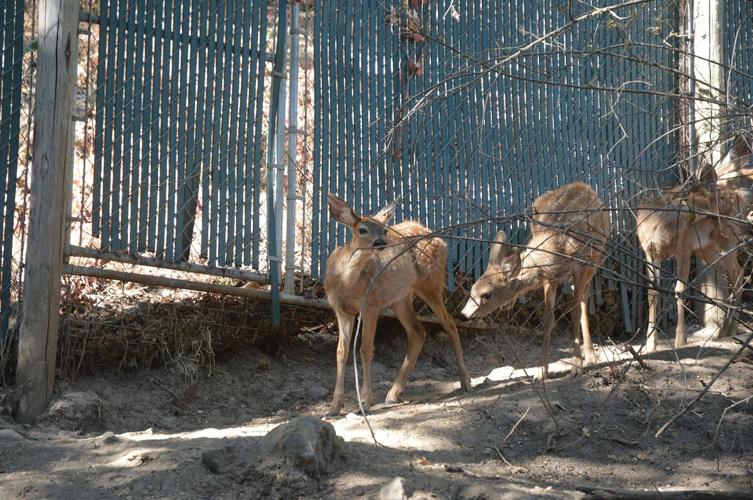
Three orphaned fawns explore their habitat at the Rowena Wildlife Clinic.
Alana Lackner photo
The Rowena Wildlife Clinic is currently searching for land in the Husum or White Salmon area to build another clinic.
RWC currently works as a rescue center for virtually all of the Columbia River Gorge, taking in animals from songbirds and raptors to foxes, raccoons and squirrels, and working to rehabilitate them and facilitate their return to the wild.
Dr. Dave Stauffacher, one of two veterinarians at Rowena Wildlife Clinic, examines the pins on a barn owl’s broken wing, to determine whether or not the owl is healed enough to have the pins removed.
Alana Lackner photo
The clinic was originally started in 2000 by veterinarian Dr. Jean Cypher out of her house. Now, 20 years later, the clinic and its patients have begun to outgrow their home.
Even with an expansive backyard space and a constructed aviary, having 50-plus patients at any given time is becoming more and more difficult.
RWC wildlife rehabilitator Ash Harris said the clinic is currently searching for a community member who would be willing to partner with them to either donate land or sell it at a charitable price.
“It’s starting to take over Jean’s house,” Harris said. “So having that extra space would be really helpful.”
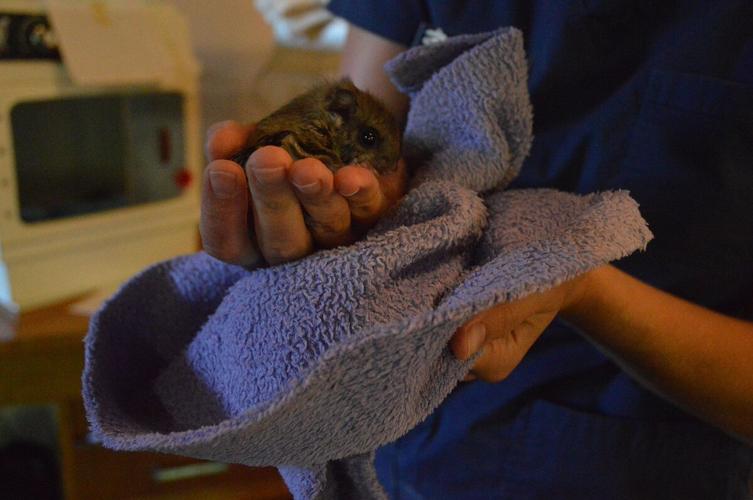
Wildlife Rehabilitator Ash Harris holds a baby flying squirrel that was brought in on the morning of Wednesday, Sept. 1.
Alana Lackner photo
Two golden eagles hang out in a room of the Rowena Wildlife Clinic. The one on the right is a male, less than a year old, whose wings were badly burnt in a fire. The other is an older female with a bandaged right wing.
Alana Lackner photo
Harris said they would also like to start an education center on the new property, since the current location can’t be used that way.
“Legally, we aren’t allowed to have the public come view our patients, which makes sense,” she said. “It’s an animal hospital. You wouldn’t go tour a people hospital.”
The center would be made up of patients who were unable to be returned to the wild and had the right temperament to be education animals, Harris said.
“I think the community would love to see something like that,” she said. “Especially because there’s so much tourism, and people might not know the animals that are around us that we need to be aware of.”
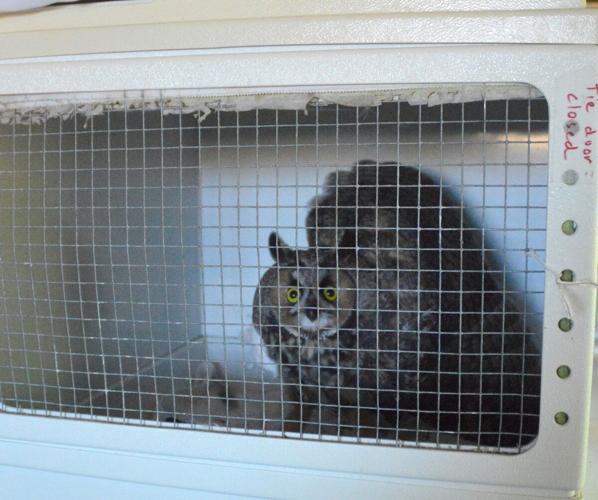
An owl at the Rowena Wildlife Clinic attempts to make itself large and intimidating, despite having one broken and bandaged wing.
Alana Lackner photo
Dr. Stauffacher and Dr. Cypher examine the pins on a barn owl’s broken wing after Dr. Stauffacher finishes “physical therapy” with the owl. During physical therapy, the owl is anaesthetized and the veterinarian carefully moves and stretches the wing to ensure the joints keep their mobility.
Alana Lackner photo
However, the education center would be later in the plan, since having more space for patients is the primary priority, Harris said.
Currently, RWC often gets at least one new patient a day, Harris said. Patients range from animals hit by cars or wounded in fires to those who are orphaned.
They frequently get calls from concerned individuals asking for advice, and can often help people figure out if an animal is truly orphaned, needs medical attention or should be left alone.
Once it’s established that an animal should become a patient at the clinic, they will instruct the caller on how to bring the animal in. Because the clinic only has five permanent employees, they are unable to go retrieve every animal by themselves.
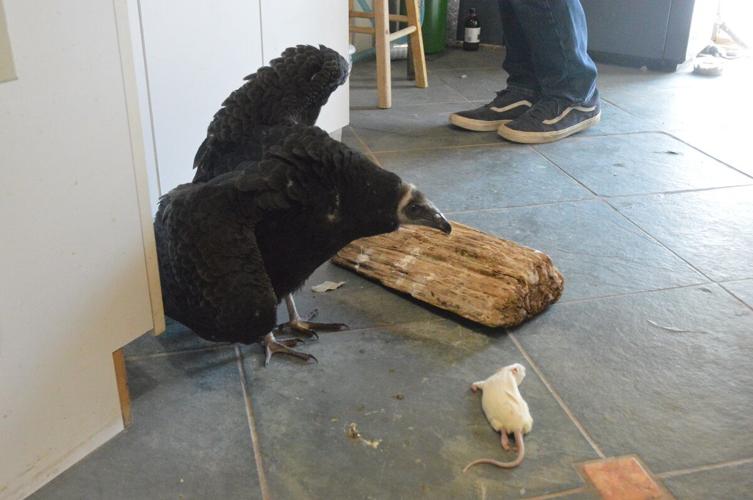
An injured turkey vulture stares at an offering of a dead rat as it adjusts to its surroundings at the clinic.
Alana Lackner photo
Despite the difficulty of covering such a large area with only a small staff, they’re happy to do it for the animals’ sake, Harris said.
“They were here before we were,” she said. “So it’s the least we can do to take care of them.”



Commented