
By Kirby Neumann-Rea
For Columbia Gorge News
HOOD RIVER — Similar themes but distinct voices, honest yet tinged with humor.
That is how to define the thoughts and experiences of the young people — now adults — of Tracks to ‘26.
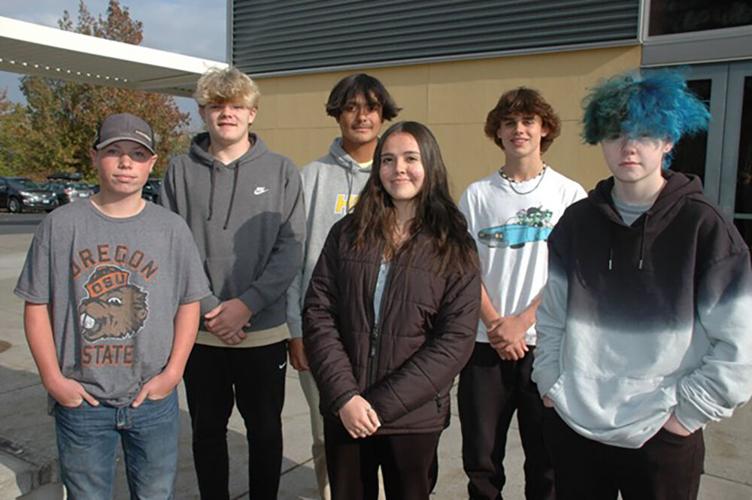
Currently seniors at Hood River Valley High School (HRVHS), they started in 2014 as representatives of six local elementary schools, answering annual questions in the Hood River News and, since 2021, Columbia Gorge News.
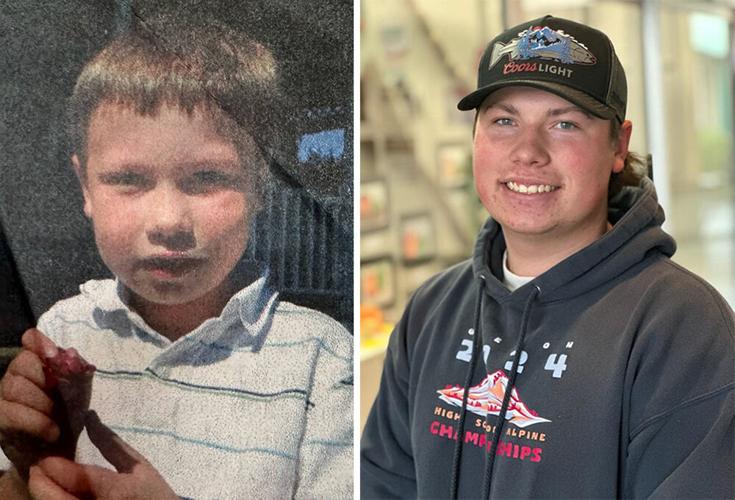
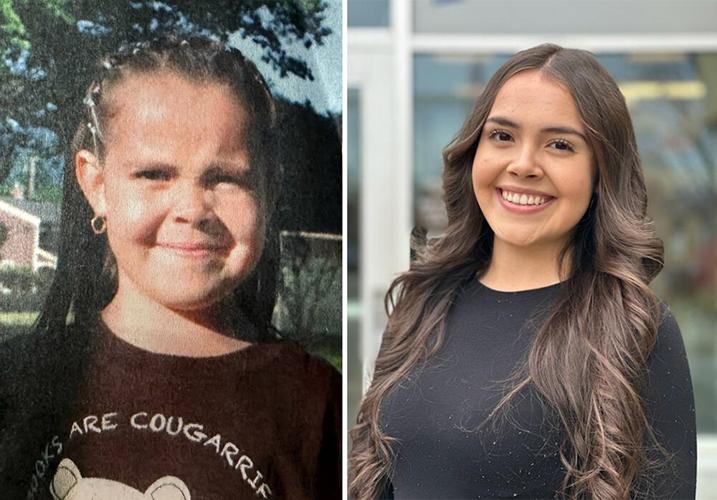
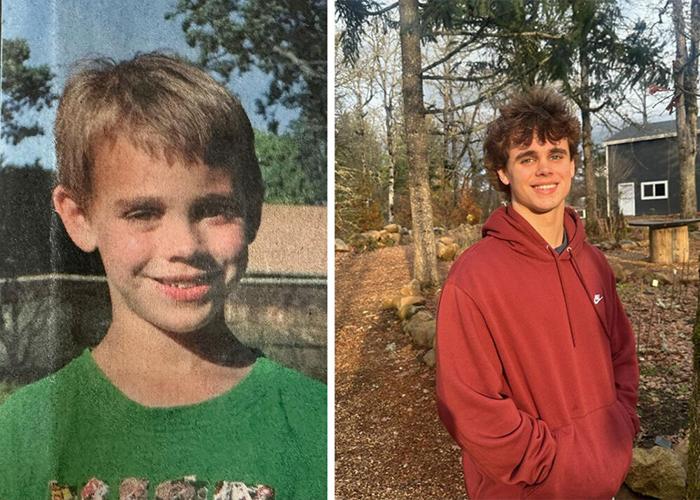
The students are members of the Class of 2026: Jess Aubert, Diego Bustos, Jayden Evans, Jack Miller, Sofia Rodriguez, and Nick Tuttle.
As I have come to know all six Tracksters over the years, they have opened up to me in ways that reflect their comfort — which, remarkably, has always been there. We have gotten to know all six via annual interviews since 2014, and we’ll get to this year’s responses below. Asked to look back on the experiences, these are their responses:
Nick Tuttle said, “Kindergarten. I remember mostly at the playground running around on the swings. I remember nap time. I think we had blankets and pillows. Crazy. That many years ago.”
How did it feel to be part of this 13-year project?
“It’s cool. It’s really cool how you’ve been asking us similar questions from kindergarten all the way up for now, different answers or same stuff, and all that’s happened. It’s cool.”
Jayden Evans and Diego Bustos had refreshingly frank takes on the question.
“You make me pretty nervous,” Bustos said.
After all these years, you’re feeling nervous right now?
“A little. But it’s fun, and some people do recognize me.”
But why nervous?
“I guess it was really the questions.”
Said Evans, “I feel like it hasn’t really personally affected me. I’m not much of a newspaper reader and I don’t have many of the issues. But it is definitely something I brag about.”
On seeing it end, he said, “It’s crazy, honestly.”
Jack Miller said, “I’ve loved it, just being able to go back and see, I went from short, two-word answers to actually giving some solid answers.”
“I don’t remember a school year without it,” said Jess Aubert. “It’s like, ‘it’s that time of year again.’ Not a bad thing. I get to skip a class.”
Sofia Rodriguez wrote of the experience this fall for a Writing 121 class paper, saying, “While I am excited to move forward, my heart breaks at the thought of leaving this small town and ending this 13-year segment. Although I focus on the present, my hope for the future is to look back on these interviews and know I was on the right Track.”
One final note: The “Tracks” project will formally conclude in spring with one last summation shortly before the Class of 2026 commencement. Our “final” interview was kept conversational. The only repeat questions were what they planned to do after graduation and what they think of the future.
Six conversations, 2025
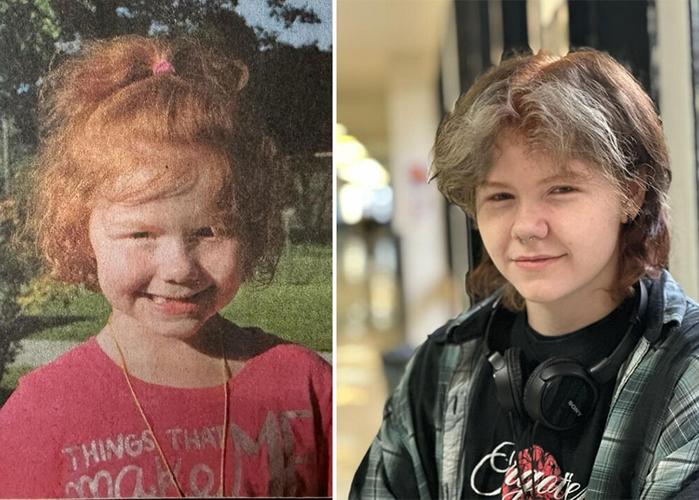
Jayden Evans
Jayden Evans began the project as a girl named Trinity. Asked about his name choice, soon to be made official, he said, “I don’t remember, honestly. It just kind of stuck.”
College preparations, work, and a school organization dominate Evans’ senior year of school. He’s active in the Source of Strength mental health awareness group.
“We’re getting it rolling out there this year, and I’ve been busy, taking a lot of college classes this year, but hoping to get more involved.”
Asked about the state of his own mental health, Jayden replied, “I’d say it … could be worse, so I’m grateful.” Stresses include “school, mostly, but also the teenage years and the century that we’re living in right now. I think they could be a whole lot better. It’s pretty stressful hearing about the things that are going on, especially since I have no control over them, but they’re gonna be affecting me and my generation most, but I’ve been trying to look on the bright side.”
Now 18, Evans plans to formalize his chosen name in the near future, a specific step he can take in his transition as a male. He spoke to the current, often hateful, societal tenor regarding trans people.
“I’ve been trying not look into it too much because I know it will stress me out more, but I have been hearing a lot about that, living in America and potentially moving to a more conservative place for college.”
While not fully decided, that place will likely be in Texas at University of Houston/Clear Lake. While considering options, Evans is taking classes online through Columbia Gorge Community College, “so I can continue working where I am now (Thunder Island Brewing) and save up for transferring to university and housing and all that good stuff.” He plans to study psychology: “Hopefully, more specifically, child psychology.”
Asked about other steps he plans to take in his transition, Evans said he is “getting legal documents settled, and sometime in the future, I am still hoping to medically transition because I haven’t begun taking hormones or anything. But I’m not in a big rush.”
How does this make you feel to be a year or two away from taking the medical steps?
“Hopefully, yeah, when I’m financially able, because it is very expensive.”
Asked about the future, Evans said, “I’m a little bit worried about it. That’s kind of a thing with me, growing up with anxiety. So it’s not much of a new thing for me, I’ve kind of learned how to get past the worry and focus on what I’m doing now and what I want to happen so I can focus on working toward that specifically.
“I was very set on taking a gap year, but I really started to look at it and realized I don’t really know how much time I have left and how it’s going to go, and I want to do everything I want to do before it’s too late,” he said.
To the question, “What’s on your mind these days?” Evans said:
“Honestly, recently focusing on getting all my credits and things done, being on track for college and working my ass off so I’m ready for college.”
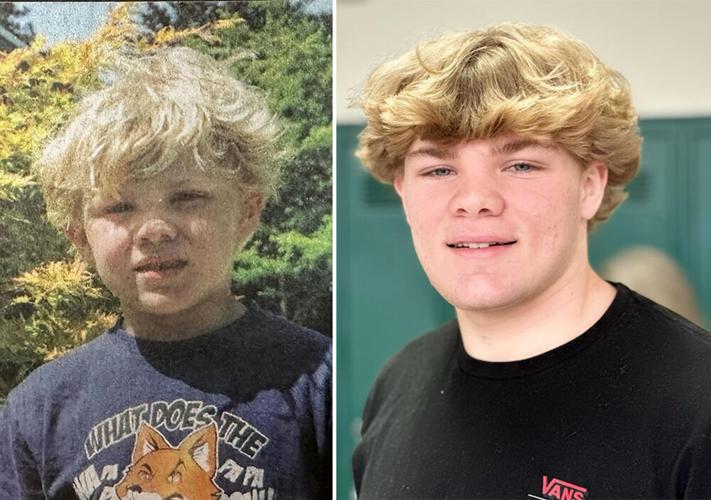
Jack Miller
You might have read Jack Miller’s name in this newspaper during the 2024-2025 HRVHS football seasons. He was a standout player and team leader. But while he plans to pursue athletics at a four-year college, to be decided, it won’t be football.
“I’m going to do collegiate track somewhere. I’m done with the football, the injury aspect of football, and I don’t want to get hurt for track season.”
Throughout his years of youth and JV football, he had not foreseen achieving the success and status he gained as an upperclassman. “Not at all. I didn’t see it until last year,” Miller said.
What he learned was, “How to get all the guys on the same page. You’d think it’d be really hard, but when you get in that leader role you can kind of corral all the guys into doing one thing and putting it in their mind, which this year was winning games and making playoffs. It was super fun.
“I think I can use my words to understand that as a senior group that’s what we wanted. I just got everyone to work for that.”
His general view of the future is “like 99% unknown.
“There’s the few things you have scheduled, but other than that, you don’t know what’s going to happen or when it’s going to happen.” Asked if he thinks of it much, Miller said, “Not really, It comes when it comes.”
For the present, he’s been thoroughly enjoying camping and fishing, especially at Kingsley Reservoir, where “the trout up there are really good this year.”
What else is on Miller’s mind?
“A lot, everything, with my ADHD mind, being focused now on school what I’m going to do after high school, that stuff.”
How does ADHD affect you?
“It just makes it harder for me to focus. Like my mind will wander off. It’s been going really good. When I study I have something I can fidget with, keep my mind focused.”
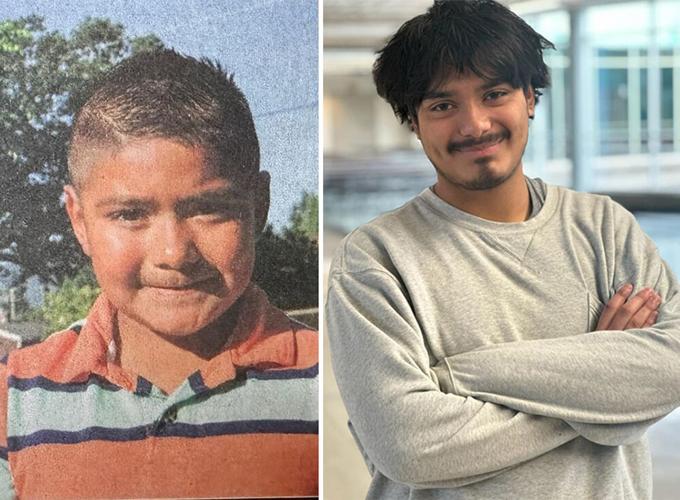
Diego Bustos
Diego Bustos has always been a man of few words. Asked as a high school senior what is most on his mind, he said, “School and work.” (He’s been at Solstice Pizza for two years, doing prep and dishwashing.)
Bustos plans to go to a university and study mechanical engineering, continuing his interest in cars.
What do you think about college?
“Scary, but I have to do it. I want to study more.”
School, this year, “is alright, really stressful,” he said, citing his advanced placement classes.
One thing that stood out with Bustos between ages 6-17 was his changes of interests and career ideas. He concurred that he’s had diverse focuses, from sports to jewelry-making to marketing to other interests as he matured. He played football through his sophomore year, but a fractured rib put an end to it.
What kind of forged your path?
“I get into one thing and research it a lot and I just go onto the next thing.”
What things intrigue you now?
“My car audio — installed it with my Dad and uncle. I replaced all my speakers and sub-woofer, and I’m trying to get a sound processor: you can control all the speakers individually and put filters on them so they don’t distort. It’s expensive.”
What kind of music do you like?
“A lot of rap,” he said, citing MoneySign Suede, a Mexican-American artist.
Bustos has a Mitsubishi Eclipse he’s owned four years, adding, “I’ll keep it but buy a new car soon.”
Bustos is particularly practical when it comes to pondering the future:
“I’m not sure,” he said. “I just want to be an engineer. I can work on cars and learn how to make them go fast, and that will be a fun thing to do, and to learn.” Asked about non-combustion engine technology, he said, “I don’t like electric cars.”
Asked if he was looking forward to the last half of his final year of high school, Bustos said, “Yeah. I just want it to end.”
Jess Aubert
Jess Aubert is enjoying being 18.
“Lottery tickets are really cool and I can buy my own ammunition,” said Aubert, of Parkdale, for whom hunting is a long family tradition. “Before, I had to give my Dad money to go buy shotgun shells but now I can buy my own. It’s way different.”
He said he also received a letter about registering to vote.
“Scary. It’s sitting on my counter. I haven’t done anything with it yet.”
The only “farm kid” among the Tracks sextet, Aubert has a clear view of his future and how it was influenced by his upbringing.
“I’m doing good [at school] this year. A lot with metals, like welding. I’m looking at colleges in Montana.” He plans to attend a two-year welding program in Butte, or possibly Alaska. “There’s something cool about watching the metals melt together.”
The alchemy of how the future will take shape is less clear.
“I feel like, I don’t now how to explain it or put it into words. Politics and the economy have gone progressively downhill,” Aubert said. “It’s going to be hard to make a living, but there’s not much I can do about it.”
Is your sense of the future mostly negative?
“There’s a lot of positives, I think, like spreading my wings, and going and having a farm and welding. I want to have my own place, not a tree farm like now but more cattle. I’ve learned that orcharding and farming in general is kind of a losing game, you just dump your money into it and get the same amount — if not less — back. It’s what I’ve grown up with, but that’s the reason why I don’t want to do it. I’ve learned the positives and negatives of it, like doing [frost] fans at three in the morning. Not fun.”
Asked about how his interest in metals was influenced by farm life, Aubert said, “It definitely played a part in what I want to do. I just don’t think I can see myself doing [a desk job] as a career. No hate, I just don’t think that’s for me.
“It’s definitely made me want to work with my hands. Digging a trench is a lot better than being in an office, in my opinion. Having calluses is not a bad thing. And having a farm definitely gives you a sense of life and death, because if you have livestock, you’re going to have deadstock. It’s what a farm does. If a cow dies in the field you have to deal with it, and it gives you respect for life. And even with a tree, it gives us fruit and money so, like, you gotta respect it. To lose that tree costs money, and gives you a sense of worth. And digging a hole to put a new baby tree in the ground: I dug that hole so I could put that tree in the ground. Going and tackling a calf and then giving shots so it can be immune to diseases and stuff, helping something have a better chance in life.”
We looked back at Aubert’s kindergarten-year comment about good things that had recently happened to him, when he said, “It’s good because we did a lot of fun things. One of them was my first day of kindergarten. I was a little shy.”
Asked last month, “Are you shy now?” Aubert said, “I don’t see myself as a shy person. I don’t really care what people think. If they don’t like it they can go — go find someone else to hang out with.”
What’s he thinking about these days?
“Wanting a truck. My parents said they would get me one for graduation. I’d like to get a square body, anything from ‘70s to ‘90s, whatever comes along. I really like the square look, probably a Ford F250.”
Sofia Rodriguez
Rodriguez’s future plans are fairly precise right now: she will work for a pre-med degree, and has major help. This year she applied to a college matching program called Questbridge, for low-income, high-achieving students: If selected, she would receive a full ride. On Dec. 3, she learned she had been accepted at Pomona College, west of Pasadena, California, an we asked what drew her to the degree.
“I think working with children, because I think I might want to be a pediatrician. It excites me, but everything in the medical field is exciting. Every time I have an appointment, I think, ‘What are they doing now?’ Then I took biology and then chemistry, and I said, ‘I really like this.’
“It’s hard but something I’m willing to put my time in. I have the right people in my corner.”
Asked in first grade about the future, Rodriquez had said, “Having bigger friends. I’ll be 14 in the seventh grade. It will be harder.”
This year, she said, “I’m nervous for college, but I think I didn’t realize how big a challenge it is. I’m excited for those shocks. The biggest city I know is Portland, so it’s going to be a shock.”
Artificial intelligence is an underlying consideration in asking the students what they think of the future, and it was Rodriguez who brought it up when asked the general question.
“I think technology is moving really fast, I think a little too fast. AI is kind of, not taking over, but I don’t know if that’s impossible,” she said. “It’s a relatively new thing and I think it will make it more difficult to really learn because I think everyone around me is constantly using AI. And so it’s not as sincere. It’s learning just to get it done.”
For herself, she looks at it this way: “If I keep doing my thing and using AI as I’m taught, like a helper rather than just to get done. I’ve used ChatGP and had lessons of problems to have it help you instead of doing it for you.”
On the personal side, Rodriguez’s mother died during her freshman year.
“I’m doing better,” said Rodriguez, who spoke openly of her loss in her 2023 and 2024 interviews, and continued to do so this year.
“I have a lot of support and what my resources are. But it’s still difficult, but October to November have been really busy, writing supplementals [to college applications] so it was really crazy and in that time we were doing the musical, I was helping at home, and working a little, and I feel like I burnt myself out but I never really saw the effect of that until, I think it was senior night, and I was just bawling my eyes out before the show,” she said.
“I think it was a mixture of all those things, and senior night, realizing my Mom wouldn’t be there and it was kind of all of that. I think it’s getting easier to live without my Mom but it’s also really difficult to say that, because I don’t want to forget her and I know I’m not but it’s in the way I see it because it’s been two years but it still feels like it was yesterday. I take it one day at a time.”
Active in HRVHS theater since grade 6, on-stage and back-stage, Rodriguez was dance captain for three years, including the fall 2025 “Mamma Mia!” production; she credits Director Jennifer Graves and others with giving her a “fun and welcoming” place. The only high school year she was not involved in theater was that of her quinceañera. She said, “Coordinating the dances and teaching them and working with dancers has been really fun.”
For now, “I love to cook for my Dad and my brother. I think right now my mind is stuck on this college thing,” she said, 12 days prior to learning if she was accepted in Questbridge.
“I think a lot about politics. It’s blasted on every social media platform, blasted on everything. I think everyone’s on high alert right now so it’s like a close second to what’s on my mind, and I don’t really know what to do and it’s difficult but at the same time, I also want to support however I can.
“I’m part of MECHA, and I try to do things through that.” (Movimiento Estudiantil Chicano de Aztlan is a Hispanic student organization focused on promoting education and Latinx culture.) “A lot of people are on high alert because of ICE being in Hood River, a lot of people aren’t going to church or the store, so maybe making grocery runs for people and ‘how can we help you?’ and trying to do things like that, however I can.
“That’s the only thing I feel like I can do. It’s not much but whatever I can. We’re trying to make it bigger. We’ll try to team up with the Latino Network and things like that. I think it’s good to know we live in a community where we know we support each other.”
Nick Tuttle
Personal tragedy has also underscored life for Nick Tuttle. Nearly two years ago, his close friend Tristan Baker died by suicide. Tristan was living with the Tuttle family at the time.
Tuttle, now 18, finds himself in a far more settled emotional state than our conversation (done via email) a year ago.
“It’s been almost two years, a lot going on. It’s gotten a little better, the grief is not as bad … you still miss the person,” Tuttle said. “It sucks, thinking about it, thinking about what you’d be doing now, how him and me would be and what we’d be doing. A lot. Hanging out a lot, doing sports together, football, baseball, future things, if we ever started a business, stuff like that we won’t be able to do now. Like graduation: that’d probably be the person I’d be walking with. That’s obviously not going to happen.
“I’m working my way through it. I am A LOT better than when it happened. The first year was really hard,” Tuttle said.
He participated, and stood out, in football and baseball as a junior, and was a team leader in the gridiron Eagles’ successful 2025 campaign, but opted to attend school off-campus.
“It did help. I wasn’t going to school much and it was hard to go there, so at the start of my junior year I started online school and it helped me a lot,” Tuttle said. “I have four classes and I do a couple steps a day in the classes and I go to the HROA [Hood River Options Academy] for tests and quizzes. I’m there sometimes, and if I need help I go to my grandma’s [Pam Bielemeier] for help with an essay or math, and [math teacher]Carly Borton has been helping me a lot.
“Football was a good year, especially for my senior year. It was one of my most successful,” he said. “We set goals. We wanted to host a playoff game, win our league and win a playoff game. We got most of that. Another thing is that Tristan would be there playing but it felt good to succeed and do good in the season,” Tuttle said. His focus now is on baseball, with winter batting and other workouts scheduled, along with a spring team trip to Arizona.
“I’m really looking forward to it. I think we’ll have a good year. All of the people I’ve played with since I was little, most of them are on the team.”
Post high school plans loom large for Tuttle.
“I’m leaning toward firefighting, still trade school, maybe in business, but looking into places to do firefighting, maybe do both, volunteer and still go to school.”
Tuttle has contended with dyslexia since his early elementary years and knows it is a permanent condition, yet one he is managing.
“It’s still a struggle, reading, sometimes words are mixed up, like they get blurry or flip, but it’s gotten better. I’ve been reading and doing more,” he said.
Overall, Tuttle said, the future is “exciting but also, nervous. I feel like it’s going to happen fast. After high school is where everything like starts, you gotta find your career. It’s exciting but also nervous.”
What do you find yourself thinking about?
“Where I’ll be, if I’ll be doing firefighting, if I have a wife and kids, stuff like that.”
•••
Former editor with Hood River News and Columbia Gorge News, 2000-2021, Kirby Neumann-Rea created the Tracks to ‘26 project in 2014. He moved to McMinnville in 2021 but returns each year to speak with the six participants. Neumann-Rea retired from full-time newspapering in April 2025 but still writes for the News-Register in McMinnville, and posts to his own newsletter on Substack.com, called Burn the Ax Handle.


Commented