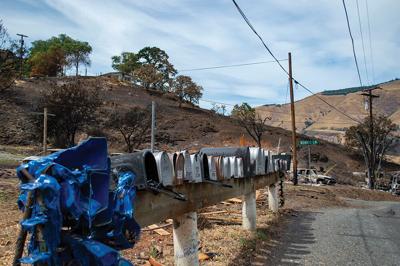
THE DALLES — Ongoing recovery efforts from the Rowena Fire, which devastated the community after starting on June 11, destroying 56 homes and 91 additional structures, underscored the July 2 Wasco County Board of Commissioners meeting.
Several residents brought concerns and questions before the board, noting apprehension around rebuilding in the Columbia River Gorge National Scenic Area, a federally protected area established by Congress in 1986. Within this area, building and land-use restrictions are enforced to protect scenic views, ecosystems, and cultural resources, often requiring property owners to follow specific guidelines regarding structure size, design, placement, and materials.
Officials focused on providing residents with resources following the fire, but questions about rebuilding sparked during the public comment period.
Wasco County Emergency Manager Sheridan McClellan provided a comprehensive update on the more immediate picture and ongoing safety concerns.
“The purpose of the Rowena Fire Incident Command is to provide immediate assistance for impacted residents,” McClellan said, describing efforts to facilitate hazardous waste and debris removal through state resources.
Jessica Metta, director of the Mid-Columbia Economic Development District and liaison officer for Incident Command, further detailed the complex coordination between multiple agencies to support residents. She highlighted the critical upcoming milestones, including hazardous materials removal and debris removal thereafter, contingent on residents signing right-of-entry forms.
“To be eligible for the hazmat removal service, residents need to sign a right-of-entry form,” Metta emphasized, noting the urgency and finite opportunity window for residents to participate.
Rebuilding concerns
Residents voiced their thoughts directly to commissioners. Jack Garvin, a Rowena resident whose property survived the fire, praised county response efforts but urged a streamlined permit processes for rebuilding.
“Are they going to be allowed to live in RVs while we rebuild?” Garvin asked, suggesting the county waive the $3,800 permitting fees in disaster situations to lessen the burden.
Resident Miguel Guzman expressed frustration with potential delays in the cleanup process, eager to expedite the rebuilding of his family’s home.
“I have a family. I don’t want to wait any longer than I have to,” Guzman said.
Commissioners reassured residents of their right to independently manage cleanup, provided they comply with required safety testing and disposal regulations.
Other residents raised broader concerns about the specific requirements of building in the Scenic Area. Kendra Curtis called for a reexamination of these regulations, specifically citing restrictions on protective metal roofs.
“We wanted to put on a metal roof and were told by the scenic area we could not because of the shine,” Curtis said, emphasizing the need for regulations to prioritize fire safety over aesthetic concerns. “We’re trying to protect our house — and they’re worried about the shine on our roof when a car drives by?”
Rick Star, who lost his home, passionately decried the Scenic Area regulations, suggesting more emphasis on fire management practices near the railroad where the fire began.
“Does anyone care about the fire swath near the railroad?” Star asked sharply. “What about the 50 feet on either side of the railroad? What about that, while we get talked to about the color of our roof and salamanders?”
Star emphasized the stress of the rebuilding process while factoring in considerations set forth by the Columbia River Gorge Commission, which oversees land use regulations in the Scenic Area.
In response, Commission Chair Scott Hege said Star’s concerns had been noted.
Returning home post-fire
In a July 10 release, the Wasco County Sheriff’s Office provided additional guidance for residents returning home after the Rowena Fire.
Officials emphasized the hazards of self-cleanup due to potentially toxic debris, urging residents to wear protective equipment such as sturdy shoes, goggles, gloves, Tyvek suits and N95 masks.
The county also stressed the importance of avoiding bringing ash indoors, recommending measures such as washing produce thoroughly, using entryway “sticky mats,” and cleaning pets.
To maintain indoor air quality, the sheriff’s office suggested sealing homes against outside air, using high-efficiency particulate air (HEPA) filters, and running air purifiers. Residents with heart or lung conditions were advised to consult their doctors regarding potential impacts and monitor symptoms closely.
Wasco County Public Information Officer Stephanie Krell spoke at the board meeting about the county’s efforts to enhance communication with impacted residents.
“We’re building out websites and direct messaging groups to ensure everyone has access to the most current information,” Krell said.
She urged residents to provide updated contact information to help facilitate direct communication and highlighted ongoing multi-agency resource center (MARC) events designed to assist residents through the recovery process.



Commented