
1918 — 100 years ago
Orchardists are asking themselves at this time what they can grow in their orchards to help the food situation. In young orchards from 1 to 5 years of age, under normal conditions, the best crops to grow are such crops as strawberries and hoed crops such as tomatoes, melons, squash, peas and beans. To a certain extent, even under war conditions, such crops should still be produced but the acreage of some of these hoed corps is somewhat limited — and orchardists should see to what extent they can grow crops requiring the minimums of labor and yet give large returns of the world’s food.
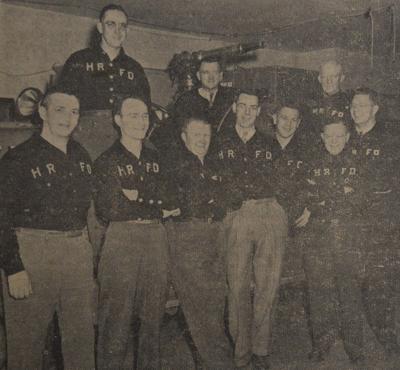
An emergency telephone line that was out of order drew the ire of Odell Fire Chief Ken Palmer when a house burned down near Dittbenner corner south of Hood River Monday.
Later, it was determined that a faulty ringing generator had caused the problem.
“I don’t know whether it made any difference in saving the house,” said Palmer, “but this line is something that always should be operating.”
As it turned out, the passerby noticing the fire tried to call the Odell department. Failing that, he contacted the Hood River department, which relayed the alarm to Odell.
Palmer said the phone outage had first been noticed and reported at 9 a.m. When the fire occurred at 2:45 p.m., the phone again failed to work.
Roy Crockett, president of the United Telephone Co. of the Northwest, talked with fire department officials Wednesday morning after investigating the incident.
He learned that a fuse had blown out in the ringing generator, it had been replaced by a man dispatched within 15 minutes of the alert, and that the fuse had blown a second time before the fire call.
“It was one of those horrible coincidences that can happen when mechanical equipment is involved,” said Crockett. Since that time, the ringing generator has been replaced. The telephone company president says he plans to meet with the Odell Fire board to discuss possible ways of future prevention of similar cases.
By the time Odell firemen reached the fire at the Archie Hansen home, the interior was completely ablaze, and flames were coming through the roof. Firemen knocked the blaze down and concentrated on saving two buildings nearby.
Pine Grove, West Side and Hood River fire departments all responded to Odell’s mutual aid call. Palmer described the home and its contents as a complete loss. No one was at home at the time of the blaze, and cause was not immediately determined.
— Hood River News, February 15, 1968
1928 — 90 years ago
Henceforth, the old Tucker Road through East Barrett will be known and designated as Orchard Road. This decision was arrived at by the County Court after residents of the district had petitioned for a name change, which will cover the entire road from the Epping Corner to its junction with Jericho Lane at the top of Davidson Hill. This road was formerly the real Tucker Road, but of late years the designation has been generally applied to the road out of town to Tucker’s Bridge by the way of Barrett and Jericho Lane, and this has caused considerable confusion. So in the future, when you think of Orchard Road, remember it is the former east Barrett section of the West side.
1938 — 80 years ago
The county court of Hood River Wednesday requested the News to publish an appeal to fruit growers and others to provide work of any kind for a large number of unemployed men, many of them heads of families, who are in need. Any fruit grower or farmer who can furnish a job is urged to communicate with the Relief Office, upstairs in the Franz building. At the present time, 92 men are employed on WPA projects, and 42 others are in urgent need of work, with none available through WPA. Each day, others are applying for work, but cannot find it. The court suggests that, if any Relief applicant refuses a job when it is offered, the grower report the name of the man to the Relief office as early as possible.
1948 — 70 years ago
City councilmen heard a proposal in their Monday evening session for the formation of a recreation district. The matter will be brought up again in a special meeting of the city fathers next Monday evening. Dan Pierson, Ed. Dresser, Ted Barton and Charles Fuller, members of the youth council, presented the plan to the council. Such a district, the showed, could carry out a recreational program and be maintained through tax-levying powers. A very low millage rate, they said, would provide the necessary funds.
1958 — 60 years ago
Hood River County reported 24 times more flu cases last year than it did in 1956, announced the Hood River County Health Department this week. Despite the staggering increase of influenza cases reported, the county death total dropped 25. This decrease, coupled with 11 fewer births recorded here, raised the population roll by 14 persons. The tremendous increase in flu cases followed a state and national pattern in which the effects of Asian flu were mainly responsible. In 1956, Hood River reported 18 influenza cases. Last year the county reported 439.
1968 — 50 years ago
Teachers have voted via mail ballot by a large margin to accept the salary proposal approved by the school board and Teacher Consultation Committee. Clarence Krueger, chairman of the consultation group, said that 175 ballots were mailed, 131 were returned and 122 voted in favor of the proposal. Nine of the votes were against accepting the plan. Beginning salary for a bachelor’s degree teacher with no experience will be $6,000. Top step on the schedule for a master’s degree with 15 years’ experience will be $10,560.
1978 — 40 years ago
A solar heating plan for the city swimming pool appeared headed toward its last gasp, but discussion of a skateboard area for Hood River remained alive during a city council session Tuesday. Council member Jerry Kramer wanted to keep the solar heating matter open for consideration for possible alternate plans, but expenses anticipated make it seem unlikely. The same consideration applied when the council reviewed a proposal for a skateboard park requested in a petition signed by more than 200 young people. They left the topic open for future action, asking for more study and a report before they recommended a direction.
1988 — 30 years ago
Another piece of the dream fell into place for owners of the Mt. Hood Railroad Thursday as the State Advisory Committee of Historic Preservation agreed to nominate the 1911 depot to the National Register of Historic Places. This doesn’t mean it will necessarily be accepted for the National Register, but Oregon nominations have a good track record in that regard, according to Jack Mills of Mt. Hood, railroad president.
1998 — 20 years ago
Dust and noise aren’t the only irritants facing downtown business owners, workers and shoppers around the Oak Avenue urban renewal project. The pungent odor of natural gas has been a frequent nuisance as well. Natural gas lines running under the street in the two-block work area have been ruptured five times since the project started Jan. 19. The breaks led to gas leaks that halted work and prompted evacuations of nearby buildings. According to city officials and project overseers, the breaks are largely the result of the location of the gas lines themselves. The lines run just below, and in some cases virtually within, the asphalt on the street, making them vulnerable to breaks even with relatively little disturbance.
2008 — 10 years ago
Debris that filled in the Event Site in November 2006 will remain in place this summer at the waterfront. Port of Hood River Director Michael McElwee said while the port had hoped to shift 9,000 yards of sand and rock this summer, that timeline has changed. The port’s plan was to contour the edge of 3.9 acres of their land and remove sand from directly in front of the Event Site. “The Event Site remains the most prominent, active windsurfing site in the Columbia Gorge; it’s important to the community and it’s important to preserve as a recreational entity,” McElwee said.
— Compiled by Trisha Walker, News staff writer


Commented