Recycling in Hood River County has begun again — but what can be recycled, and how, is more limited when it comes to plastics.
Hood River Garbage has been landfilling co-mingled recyclables since late 2017, when China announced that it would no longer import post-consumer plastics and unsorted paper due to high levels of contamination. Curbside collection did not change because, as Jim Winterbottom, district manager of The Dalles Disposal/Hood River Garbage, explained in a January 2019 News article, officials wanted people to stay in the habit of recycling so that, when markets opened up, there would be a seamless transition.
That looked-for transition is now here. Approval in May by Hood River County, the City of Hood River and the City of Cascade Locks to enact a 2.61 percent recycling surcharge has enabled the local collector to begin moving some materials to processors in Portland.
But gone are the days of tossing plastics such as yogurt containers and frozen dinner trays in the recycling bin. Certain materials can still be co-mingled — put in the same container — but more care needs to be taken on the front end.
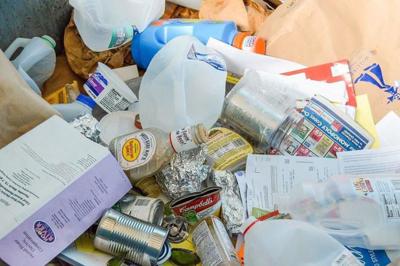
The only plastics now accepted are numbers 1 and 2, and only those with necks, such as milk jugs, shampoo containers and detergent bottles. And they need to be free of trash and food debris.
The change comes at the request of the material reuse facility (MRF) in order to make its co-mingled recycling more marketable, as reported in a May 2019 News article.
“1s and 2s are a material that people do want and plastics really can reuse 1s and 2s,” Winterbottom said in that article, explaining that plastics 3-7s are useful only in large quantities separate from the co-mingle stream and ultimately go to the landfill when they are co-mingled.
“There’s just not a lot to do with it,” he said.
While the Hood River Garbage website detailing the changes is still in progress, as are updates to the WasteConnect app, new countywide recycling guidelines are now out.
The following materials can be co-mingled (put in the same container):
Cardboard, newspapers, magazines, catalogs, junk mail and phone books
Office paper, colored paper, note pads, letters and paper bags
Boxes (tissue, shoe, cookie, cereal and cracker-style boxes) with liner removed
Cardboard tubes
Plastic bottles, numbers 1-2 with a neck only (beverages, milk jugs, shampoo, detergent, and cleaners); rinse and remove caps
Aluminum and tin cans (rinsed)
Clean aluminum foil
Empty aerosol cans (plastic caps removed)
Corrugated cardboard (flattened, no larger than a 2-foot by 2-foot square)
The following items should be separated (do not put in the same container):
Glass bottles and jars (rinse, put metal lids in blue bin)
Motor oil (put in a clean gallon jug with a lid and place next to recycling bins)



Commented