
Science has advanced in leaps and bounds over the last several centuries. Our knowledge about the cosmos, our planet and life on Earth increases almost daily.
Evolutionary biology has led to tremendous advances in medicine, engineering to constantly improving construction and transportation, and technological applications to computers and the information age.
Yet an alien landing in the US from another galaxy might easily conclude from the news that the big mysteries in science revolve around evolution, conception and when life begins, risks of vaccination and climate change.
Of course, these are primarily cultural debates over some of the most studied and settled questions in science. We rarely hear about the fundamental science mysteries we know surprisingly little about.
For instance, we aren’t sure what makes up most of the universe. All the known planets, stars and galaxies only account for about 5 percent of the apparent matter in the universe. Another 70 percent consists of dark energy, with the remaining 25 percent dark matter — both substances no one has been able to clearly identify or define. Yet widely differing observations and exacting measurements show their influence on the matter we can see, and allow scientists to regularly explain and predict discoveries based on their presence.
Most theories assume dark matter must consist of subatomic particles that interact weakly with “normal” matter — tiny particles similar to electrons and protons that we just can’t identify yet. Dark matter doesn’t interact with light, but scientists can detect the gravity it creates.
Descriptions of dark energy are even more nebulous, including that it represents temporary particles that regularly blink in and out of existence. Dark energy works in opposition to gravity, which explains why the universe is expanding rather than contracting. If dark energy in some form can’t be proven, Einstein’s theory of gravity no longer works.
Closer to home, we know how life developed and evolved on our planet. But despite some intriguing evidence, no one can prove how life first arose.
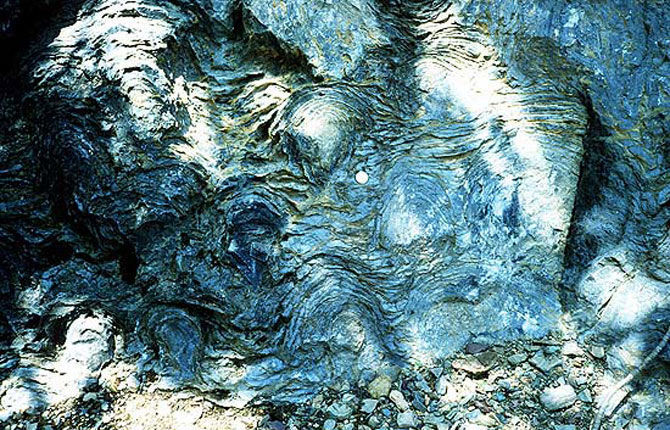
Roughly 3.5 billion years ago, the first living thing appeared on Earth. No record remains of this simple replicating organism. However, experimental evidence shows that a variety of organic molecules, the building blocks of life, spontaneously organize and could potentially appear relatively quickly in environments similar to early Earth.
Whether life began in the oceans, around thermal vents, in moist layers of clay or some other favorable site remains pure speculation. Even seeding of organic molecules from space has gained some acceptance since complex organic molecules have been identified on meteorites and in distant galaxies.
For me, the most surprising mystery remains gravity. We can describe what it does, predict complex motions of bodies in space, guide spaceships to distant planets and live with it every day. But no one knows why or how gravity works.
It travels at the speed of light, affects energy and bends light, but is a weak force that drops off rapidly over distance. Theory says it plays an important role defining both space and time as we know them. Much like dark matter, gravity is thought to work through tiny particles called gravitons, which have yet to be found or proven to exist.
These examples are only the tip of the iceberg. A list of what we don’t know would be nearly endless. A few science followers even suggest we’re approaching the limits of what can be learned given our technology, and that humans’ present level of intellectual development won’t allow further progress.
I look at it differently. If science doesn’t keep asking big questions, and trying to solve them, it just guarantees we’ll never find the answers. Whether everyone ultimately likes those answers is another issue.
Oregonian Fred Schubert, a The Dalles biologist, has a lifelong interest in general science and science writing. Feel free to submit comments on this article or suggestions for new topics to fcscience@qnect.net.


Commented