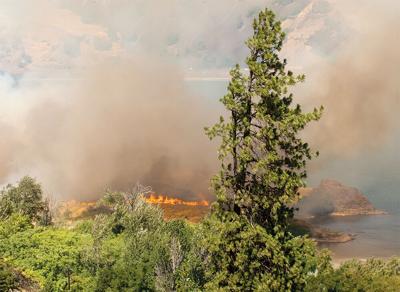
Wildfire smoke is a health threat, and everyone should limit their exposure, but especially those with respiratory or heart disease, the elderly and children. Pictured, a past fire at Squally Point, located just west of the Columbia Gorge Discovery Center.
Wildfire smoke is a health threat, and everyone should limit their exposure, but especially those with respiratory or heart disease, the elderly and children. Pictured, a past fire at Squally Point, located just west of the Columbia Gorge Discovery Center.
With several fires already burning across the state, it’s important for businesses and individuals to be prepared for wildfire smoke.
As with any emergency, having a plan in place before there is a need could help prevent injuries and illness, and potentially save lives.
Know the risks
Smoke travels much farther than the fire itself and contains chemicals and particles that, when breathed in, can cause severe health issues, including:
Reduced lung function
Fatigue
Eye irritation
Worsening asthma and other existing heart and lung conditions
Coughing
Sore throat
Wheezing
Difficulty breathing
Keep in mind certain workers may be more susceptible to the impact of smoke due to their age, health history, and how much they work outside.
“Smoke is complex. It could be made up of trees and other organic matter and may contain biotoxins like poison ivy or poison oak,” says Kim Henry, an industrial hygienist at SAIF. “But it can also contain fumes and vapors from burned items such as car tires, metal equipment, and other human-made materials. Smoke can travel hundreds to thousands of miles and impact communities far away.”
Know which fires are burning
Employers should have current information on active wildfires, even the ones that aren’t in their immediate area or community. Monitoring weather forecasts, fire conditions, and air quality reports can help you make more informed decisions.
Know your plan
Before wildfire smoke hits your area or community:
It’s crucial to provide annual wildfire smoke training to all employees and include wildfire smoke events in your emergency plans.
Prepare production schedules and work assignments with potential business interruptions in mind and identify the risk of smoke exposure for each type of employee.
During a wildfire or smoke event:
Communicate frequently with employees and make it easy for them to communicate with you.
Conduct an exposure assessment at the start of each shift to determine air quality.
Offer the appropriate filtering facepiece respirators based on the air quality index (AQI). Find out more about respirators in SAIF's online training.
For those working inside: shut down outside air intakes and allow air-conditioned buildings to operate on recirculated air. Change filters on HVAC units and keep windows and doors closed.
For outside workers, relocate or re-assign work activities away from the smoke zone. Stop work when air quality and/or visibility present health and safety hazards.
After a wildfire or smoke event:
Talk about what you learned: what went well and what could have gone better?
Cleaning up after wildfire smoke impacts requires a thoughtful response. Make sure whoever conducts the cleaning has the correct equipment and guidance.



Commented