
On a typical spring day in the Gorge, when cerulean blue skies turn ominously gray from a mass of angry rain clouds, a crowd of 80 people assembled for a celebration.
Much was traditional about this gathering. There were the honored guests, speeches, music, flowers and food. People found shelter under voluminous tents to celebrate the 10th anniversary of the Japanese Heritage Garden.
Four hundred tags emblazoned with the names of the Japanese children and families forcefully interned in 1942, flapped in the wind, a dogged reminder of the injustice inflicted on our neighbors and classmates. The celebration of the garden’s creation 10 years prior was meant to be a gift of forgiveness and renewed friendships, honoring the Japanese living in the valley in 1942, and the path taken to re-establish relationships broken in the past.
■
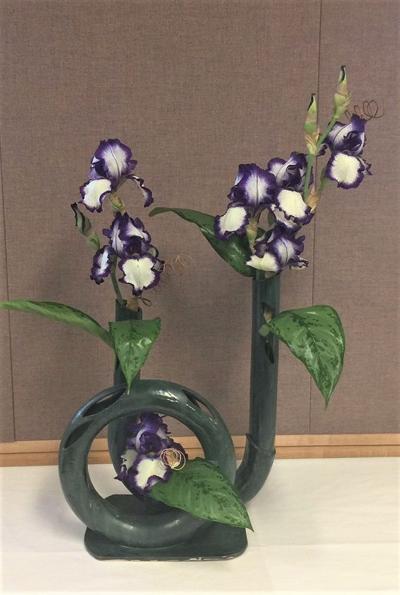
It was a beautiful celebration in spite of the unpredictable weather. The warm Extension Office served as a welcome refuge with platters of delectable homemade cookies curbing our cravings for sweets. The stunning Japanese flower arrangements that lined the walls answered the cravings of our souls for a more soothing experience in juxtaposition to the harshness of our current political climate
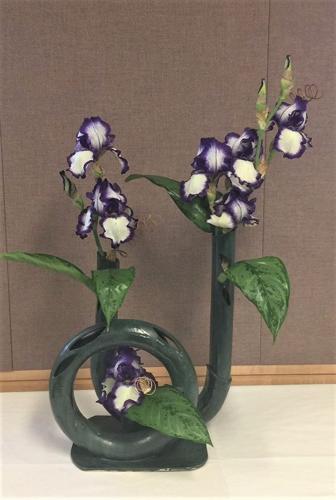
One arrangement caught my eye, evoking the simplicity and complexity of human relationships with its curving circular vase and strong linear lines punctuated by rippling iris blooms and buds.
In other ways, the celebration was atypical; a celebration to heal old wounds reopened once again by political unrest, discriminatory practices, hateful words and violent acts that flood across our country.
Memories rise to the surface of similar acts the Japanese were subjected to at the hands of their own government, neighbors and classmates. While many of these hurtful memories have faded over time, fear and mistrust are rekindled as one is bombarded by news of innocent families forced to leave their homes, seeking sanctuary from violence inflicted by their own government.
The endless pictures of the families living in slums along our country’s southern border. The plaintive cries of young children separated from their mothers, seeking comfort in the arms of a stranger, their only refuge to cower beneath a silver space blanket.
Our government is not providing trauma-informed care, a best practice they entreat our service agencies to use. They are, in fact, inflicting trauma on these human beings who have fled violence, starvation and injustice.
■
I have listened to the poignant stories of family and community members such as Janet Hamada, Mark Thomas and Patrick Rawson who have visited the border, offering comfort, food and messages of hope. These offers are the very acts of kindness that are remembered by the Japanese community before and after their internment, instrumental in easing the pain, helping facilitate forgiveness, and leading to the strong relationships that we nurture today.
As we strolled through the tranquil garden designed by Sadafumi Uchiyama, I reflected on the horrific experience of the Japanese people in Hiroshima and Nagasaki and the terrors they experienced as our atomic bombs rained down on their homes and families. It was not a comparable experience to the trials and terrors the American Japanese suffered at the hands of the U.S. government while being interned. Yet, both were deeply regrettable events, causing irreparable harm to future generations.
Sadafumi Uchiyama, who curates the Portland’s Japanese Garden, spoke of its original purpose when it was created in 1957. It was meant to heal wounds. It was meant to bring a greater appreciation for the soul of the Japanese that was reflected in the stones, the water and the plantings. He created Hood River’s Japanese Heritage Garden in the same vein. It too symbolizes the building of strong relationships between different cultures, and is designed to heal, comfort and provide hope to all who stroll along its paths.
After World War II was over, the first offering of healing in Hood River came from the returning soldiers. They spoke of the bravery of the Japanese American soldiers that fought by their side, confronting the voice of bigotry that washed across our valley.
Some farms were returned to their rightful owners, shop owners began to sell goods to the Japanese Americans who had to rebuild their homes and orchards. Laws forbidding citizenship, land ownership and marriage based on race were overturned.
The children bore hateful words and behaviors, but gradually, they began trusting one another once again. Friendships renewed. Schools became a safe haven. The Japanese community began to gather publicly, holding Christmas parties, celebrating 88th birthdays of the Issei, picnicking on the banks of the Columbia, and teaching some of the cultural arts that enhanced their lives and sustained them through times of hardship.
Ray “Chop” Yasui, an unlikely ambassador between the people of Japan and the United States took the lead in re-establishing relationships first among families, neighbors, and communities. As time passed, he reached out nationally and internationally. He took these steps in spite of his own brother and father being incarcerated by the U.S. government and branded as traitors.
He, along with his family, were all interned during World War II. Yet he returned to his home in Hood River to rebuild his life. He faced racism head on, using his humor and good will to wash the weight of prejudice off his shoulders. He opened the cherry market in the far east, benefiting farmers on both sides of the Pacific Ocean. Later he started the Sister City program with Tsuruta, Japan. A program that is stronger, 43 years later, than when it was created.
Our sister city program is a symbolic representation of that healing relationship where youth, gift and disaster support exchanges have all occurred over the last 43 years. When our community was raising money for a much-needed dialysis center in Hood River, the people of Tsuruta provided the largest single donation in memory of its founder, Ray Yasui. When the tsunami devastated the sea board of Japan, Hood River Valley High School youth and the sister city program contributed $10,000 to the rescue efforts. We treat one another as family, with respect for our unique cultures and with a shared vision of sustaining a relationship for centuries to come.
It is easier to reflect on injustices of the past than it is to face them in the here and now. We are afraid to confront racism and injustice that exists in our small community, especially if we feel there might be personal repercussions for speaking out. I am proud that we live in a community where there are more people willing to raise their voice than those who perpetuate injustice and retaliate. It is the strength, the heart and the soul of our community. We will thrive in the face of adversity if we continue to build strong relationships, trust and compassion and rejoice in diversity.


Commented