Hood River Valley High School teacher Emily Martin teaches Mind-Body Connection, a personal wellness and health science class that she developed after witnessing high levels of stress and anxiety in the student body. She also teaches science, leads a monthly mindfulness hike with Good River Wellness Center and a monthly meditation class at Machi Yoga, and is a mindfulness coach.
Hood River Valley High School teacher Emily Martin teaches Mind-Body Connection, a personal wellness and health science class that she developed after witnessing high levels of stress and anxiety in the student body. She also teaches science, leads a monthly mindfulness hike with Good River Wellness Center and a monthly meditation class at Machi Yoga, and is a mindfulness coach.
I teach my high school students this technique and encourage them to use it next time they’re about to take a test. This breath technique, known as the physiological sigh, is confirmed by scientists to be the quickest and most effective way to calm the body.
How? Surprisingly, with your breath, you can change your heart rate. We don’t often think about moderating our own breath, but the heart is innervated and reacts to the slightest change in volume. When we inhale deeply, the space around the heart expands and the volume of the heart enlarges. When the nerves sense this, the heart rate speeds up to compensate for the larger volume. The opposite is true when we exhale for an extended period of time. Amazing, right?!
Did you know that certain types of gratitude practice actually rewire your brain circuitry away from fear and anxiety and towards a sense of wellbeing and motivation? Andrew Huberman of Stanford University has researched the most effective gratitude practice that can change the emotional pathways in your brain. Gratitude lists bring a sense of joy in the moment, but for actual brain circuit changes, you should recall and focus on a deeply emotional and personal experience of either being thanked or expressing thanks. The research is showing you only need to do this for a few minutes a few times a week to have lasting impact. That’s it. Amazing, right?!
My students think so, too. I teach Mind-Body Connection, a personal wellness and health science class at Hood River Valley High School. The course has grown in popularity over the past three years.
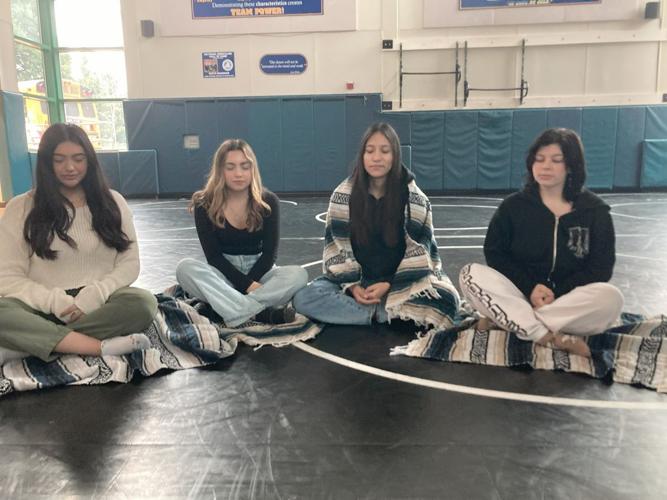
I developed the class after witnessing high levels of stress and anxiety in the student body. I wanted to offer students a class where they could relax, unwind, and learn self-care tools. In addition to breathing techniques and mindfulness meditation, students also learn the practice of qi gong and yoga, which link breath and movement together, yoking them into harmony. The result: A little more peace in their day. We regularly practice Forest Bathing, a type of mindful walking in the woods known to reduce blood pressure, slow heart rate, and boost immunity. On Fridays, we do a lying down meditation in which students fall into a deep state of relaxation.
These techniques need not be confined to students at the high school. I recommend as adults we find time for self-care. As I remind my students, self-care is not selfish, but truly an act of service to everyone we come into contact with during our day. For a deep-dive on stress-reduction techniques, I recommend the Huberman Lab podcast. I also encourage everyone to find opportunities for movement meditation and nature connection.
Getting outside in nature is scientifically proven to improve your health.
•••
Emily Martin teaches science in addition to Mind-Body Connection at Hood River Valley High School. The former director of Cascade Mountain School, Trout Lake, she leads a monthly mindfulness hike with Good River Wellness Center and a monthly meditation class at Machi Yoga, and is a mindfulness coach.




Commented