Oregon middle-school and high-school students have the opportunity to learn about local civil-rights hero Minoru Yasui and enter an essay contest sponsored by the Oregon Nikkei Endowment and the Minoru Yasui Tribute Project.
Winners will be awarded cash prizes and a trip to Portland for the Minoru Yasui Day celebration on March 28. The celebration will include a march from the Oregon Nikkei Legacy Center to Portland Center Stage at The Armory beginning at 4 p.m., followed by an awards ceremony, a screening of the film “Never Give Up! Minoru Yasui and the Fight for Justice,” and discussion with film producer Holly Yasui and Peggy Nagae, Min Yasui’s attorney.
The essay contest encourages young people to engage in research about a specific chapter in Oregon history — the forced removal of all persons of Japanese ancestry from their homes, and internment in concentration camps — and to reflect upon how the lessons of the past relate to immigration and national security issues in 2018.
The essays can be from 500-1,000 words and the deadline for submission is March 1. For complete rules and a list of resources, see www.min-oruyasuitribute.org/essay-contest. All Oregon students, whether in public, private or home-schools are encouraged to submit their work.
The winning essays will be selected by March 15, and will be eligible for publication in the award-winning multicultural magazine Stepping Stones.
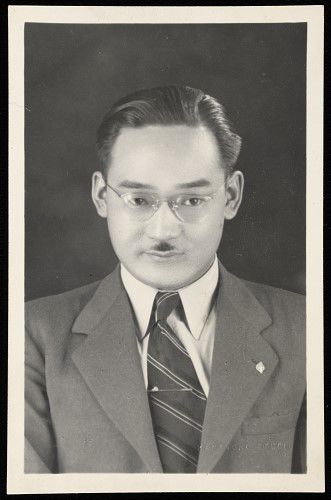
Minoru (Min) Yasui was born in Hood River in 1916. He graduated from the University of Oregon School of Law and was the first Japanese American to pass the state bar. During World War II, he initiated a legal test case by deliberately violating military orders that lead to the forced removal and incarceration of over 110,000 persons of Japanese ancestry in U.S. concentration camps. He spent nine months in solitary confinement awaiting his appeal to the U.S. Supreme Court, which ruled against him.
After the war, he moved to Denver and continued to defend the human and civil rights not only of Japanese Americans but for ethnic and religious minorities, children and youth, the aged, low income people, etc. As executive director of the Denver Commission on Community Relations, he helped to initiate and oversaw a plethora of programs and organizations serving diverse communities. In the 1970s and ‘80s, he spearheaded the redress movement to win reparations and a formal apology from the government for the injustices against Japanese Americans during World War II. He also reopened his wartime case, and it was on appeal when he died in 1986. He is buried in his hometown of Hood River.
“We hope that the essay contest will encourage students to explore the life and times of an exemplary Oregonian, to form and express their opinions about important issues today like racial profiling and civil disobedience,” said Holly Yasui, Minoru Yasui’s daughter. “Getting informed and writing about civil rights is a first step to preparing young people to become the leaders of tomorrow.”
Thanks to a generous grant from the Confederated Tribes of Grand Ronde “Spirit Mountain Community Fund,” Holly Yasui is offering her recently completed film, “Never Give Up! Minoru Yasui and the Fight for Justice,” free of charge to libraries and schools to help students to prepare for the essay test.
The mission of the Oregon Nikkei Endowment is to preserve and honor the history and culture of Japanese Americans in the Pacific Northwest, to educate the public about the Japanese American experience during World War II, and to advocate for the protection of civil rights for all Americans. Our two projects include the Japanese American Historical Plaza in Waterfront Park, designed by landscape architect Robert Murase, and the Oregon Nikkei Legacy Center, a place to explore the culture and history of Japanese Americans, located in Portland’s historic Old Town neighborhood



Commented