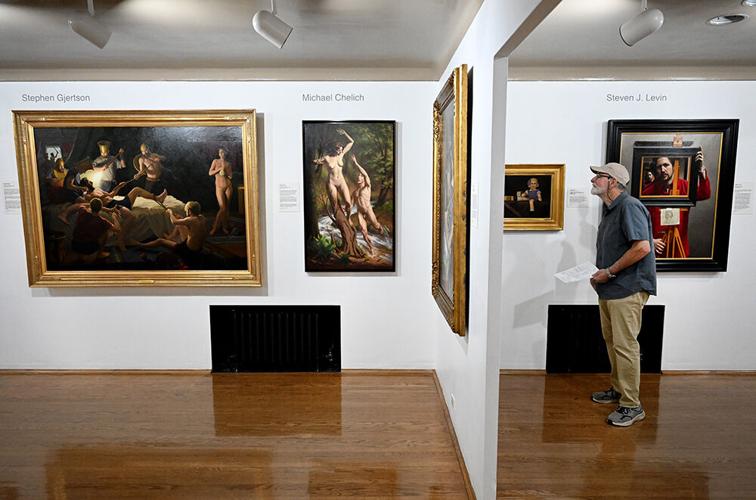
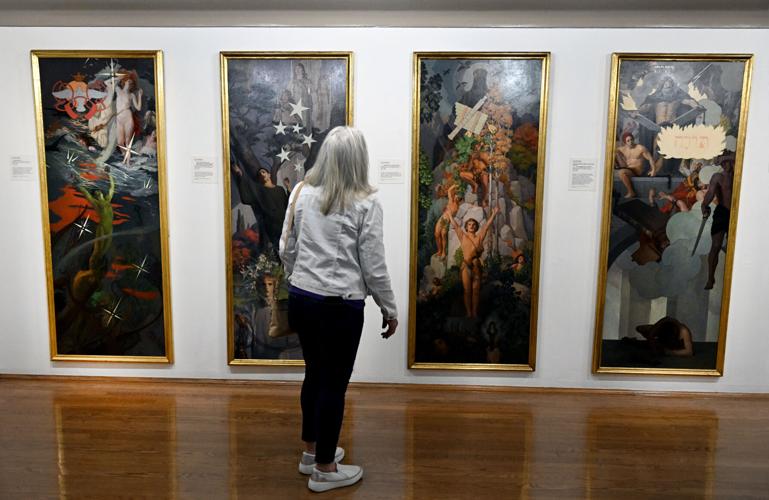
A museum visitor looks at large paintings on display in the American Classical Realism exhibit at the Maryhill Museum of Art near Goldendale in April. The museum collection is now home to more than 50 American Classical Realist works. More photos at columbiagorgenews.com.
Helen H. Richardson photo / Special to the Columbia Gorge News
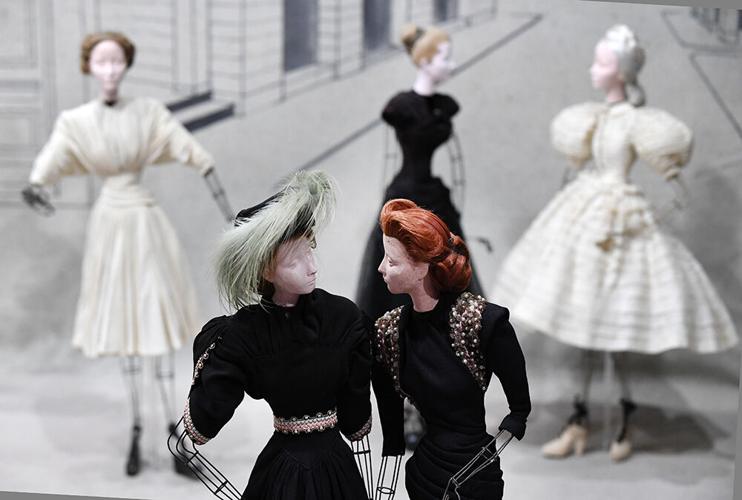
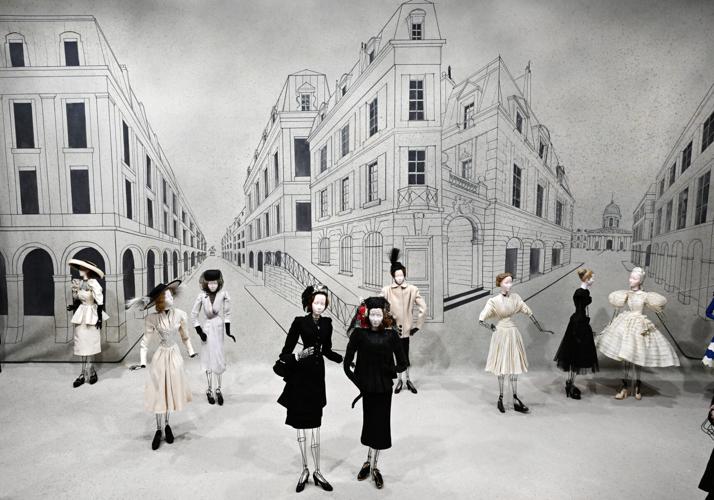
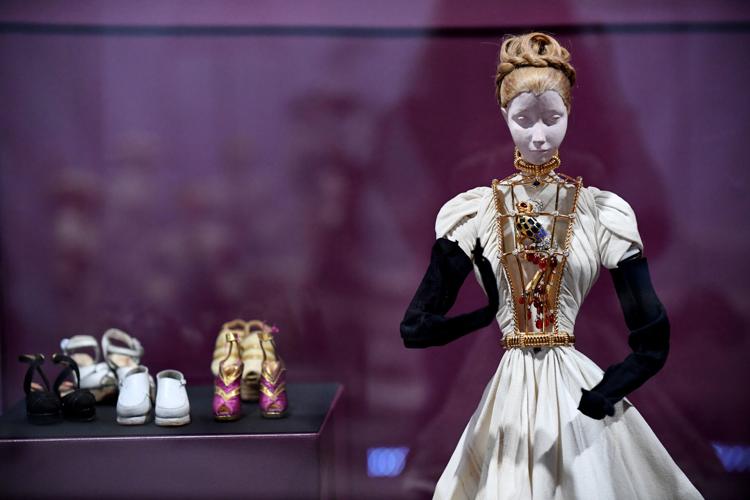
Post-World War II French haute couture fashions on one-third-life-size human mannequins are part of the Théâtre de la Mode exhibit at Maryhill Museum of Art, a permanent, rotating exhibition. Maryhill is home to nine re-built sets and restored mannequins dressed in period casual and formal wear. Helen H. Richardson photo / Special to the Columbia Gorge News
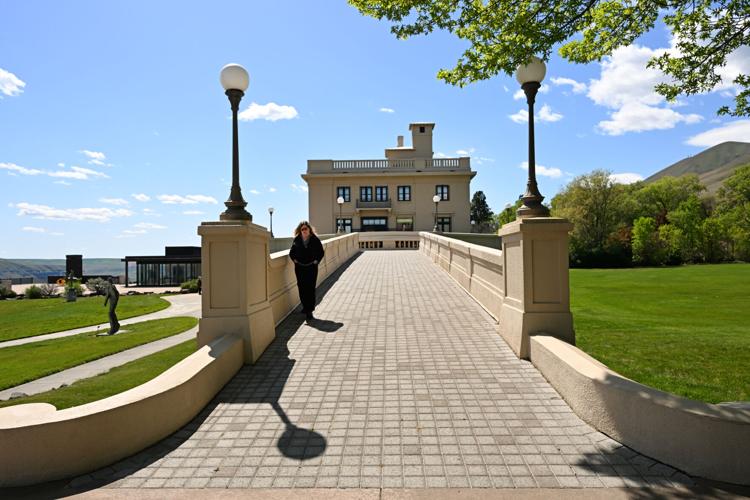
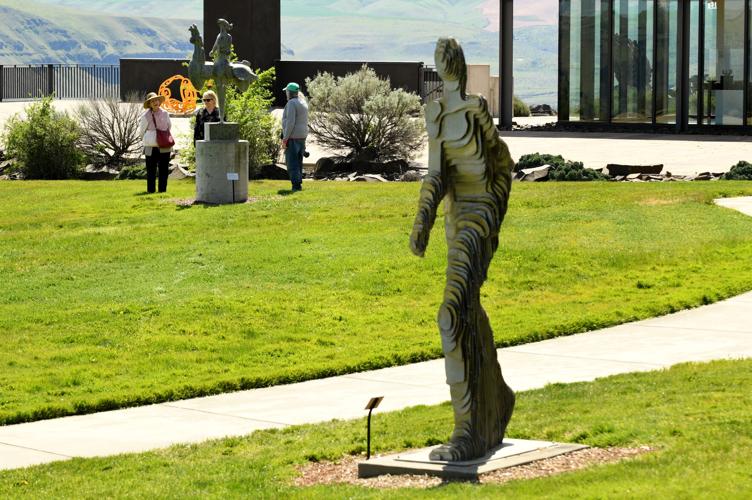
GOLDENDALE, WASHINGTON - The William and Catherine Dickson sculpture park surrounds the entrance to the Maryhill Museum of Art. This has recently been upgraded to be more ADA accessible as accessibilty for all is a priority for the museum.
Post-World War II French haute couture fashions on one-third-life-size human mannequins are part of the Théâtre de la Mode exhibit. The Théâtre de la Mode (Theatre of Fashion) is a permanent, rotating exhibition of approximately 1/3-scale mannequins dressed in exquisite post-World War II French haute couture fashions. It was created in 1945–1946 to promote the revival of the French fashion industry and raise funds for war survivors, serving as a "love letter" from Paris to the world after the Nazi occupation. When it appeared at Louvre’s Museum of Decorative Arts in 1945, the Théâtre de la Mode opening drew 100,000 visitors. Maryhill is home to nine re-built sets and restored mannequins dressed in period casual and formal wear. Each year, three of the nine sets are on display.
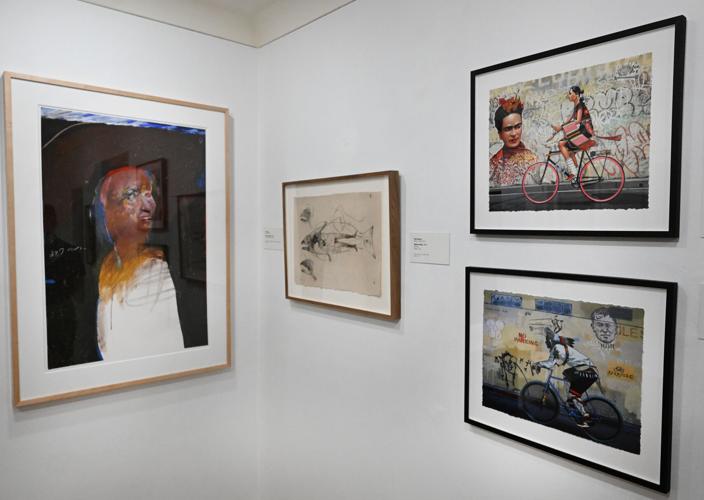
Indigenous artists are part of the Contemporary Indigenous Art display at Maryhill Museum of Art. Some of the work includes giclée prints by native artist Craig George, right, Diné, Navajo. The works are Passing the Torch, upper right, and No Parking, lower right.
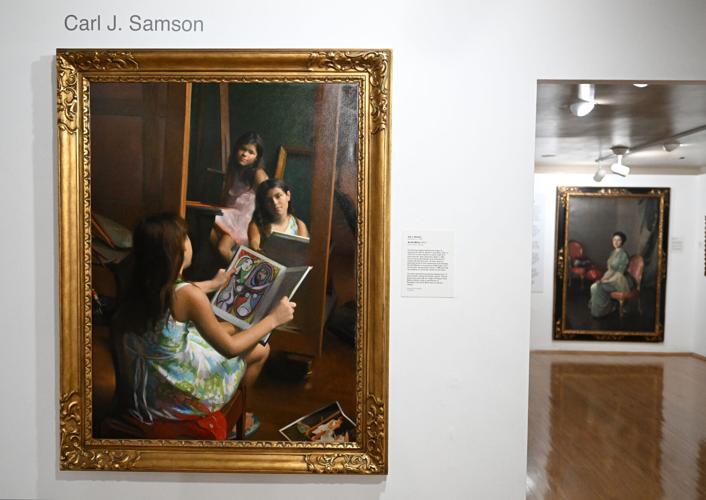
At The Mirror, 2010, an oil painting by Carl J. Samson, is on on display in the American Classical Realism exhibit at the Maryhill Museum of Art. The exhibit features approximately 40 paintings produced by four generations of artists. The museum collection is now home to more than 50 American Classical Realist works. The 2026 exhibition includes four generations of artists, including Richard F. Lack (1928–2009), Robert Douglas Hunter (1928–2014), Samuel Rose (1941–2008), and Stephen Gjertson (b. 1949). The museum is also borrowing several works by related artists for the display.
A museum visitor looks at large paintings on display in the American Classical Realism exhibit at the Maryhill Museum of Art. The exhibit features approximately 40 paintings produced by four generations of artists. The museum collection is now home to more than 50 American Classical Realist works. The 2026 exhibition includes four generations of artists, including Richard F. Lack (1928–2009), Robert Douglas Hunter (1928–2014), Samuel Rose (1941–2008), and Stephen Gjertson (b. 1949). The museum is also borrowing several works by related artists for the display.
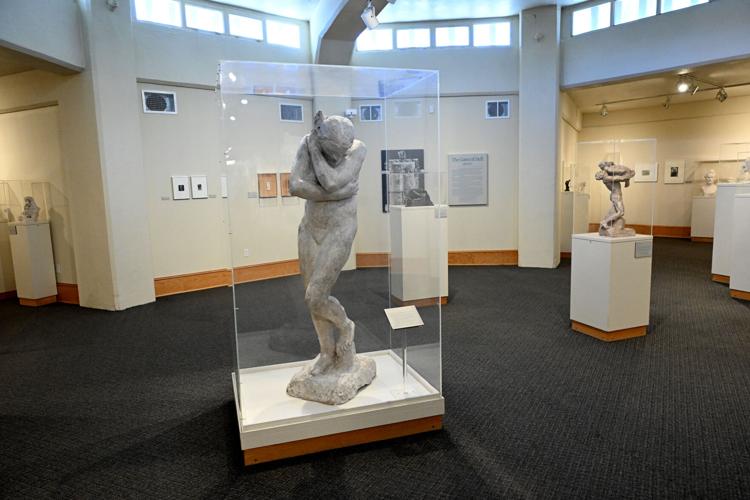
Large sculptures, such as Eve, 1881, Plaster, are part of the extensive collection by Auguste Rodin in the Auguste Rodin Gallery at Maryhill Museum of Art. Rodin, (1840-1917) is considered to be the father of modern sculpture. The museum collection contains more than 80 works by Rodin including bronzes, terra cottas, plaster studies and watercolor sketches.
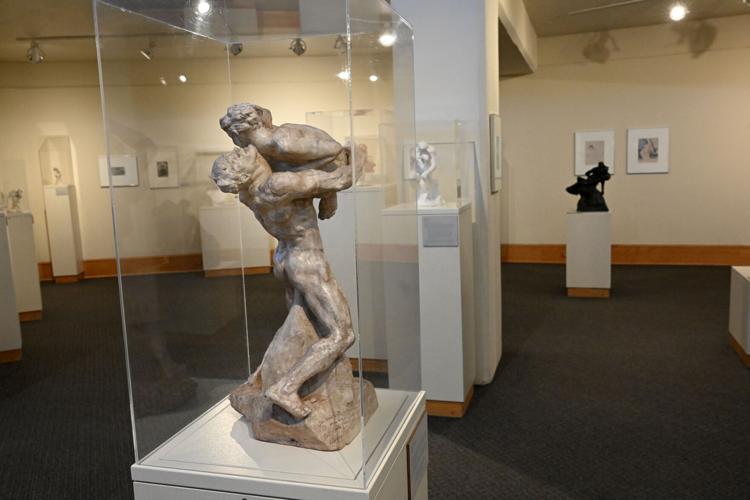
Large sculptures, such as Je Suis Belle, c1881-1882, plaster, are part of the extensive collection by Auguste Rodin in the Auguste Rodin Gallery at Maryhill Museum of Art . Rodin, (1840-1917) is considered to be the father of modern sculpture. The museum collection contains more than 80 works by Rodin including bronzes, terra cottas, plaster studies and watercolor sketches.
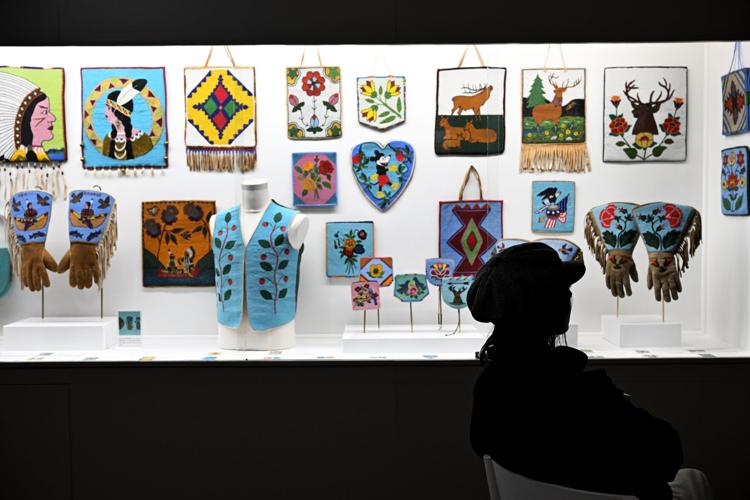
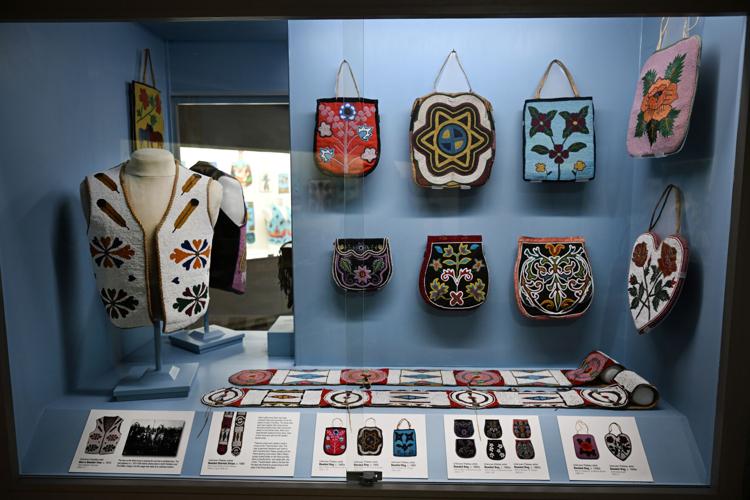
Beaded pieces, such as the Beaded blue vest by New Perce (Nimiipuu) Maker, c 1910, are on display in the Indigenous Peoples of North America permanent collection at the Maryhill Museum of Art. The collection has a large and varied display of art made by Indigenous peoples of North America. It features a wide array of baskets, beadwork, carved wood and lithics, as well as other material. Indigenous art has been important to Maryhill Museum of Art’s mission since its inception and the collection includes more than 3,500 objects. Of this total, the largest portion is from the Columbia River Plateau region. Many of these are lithic (stone) items.
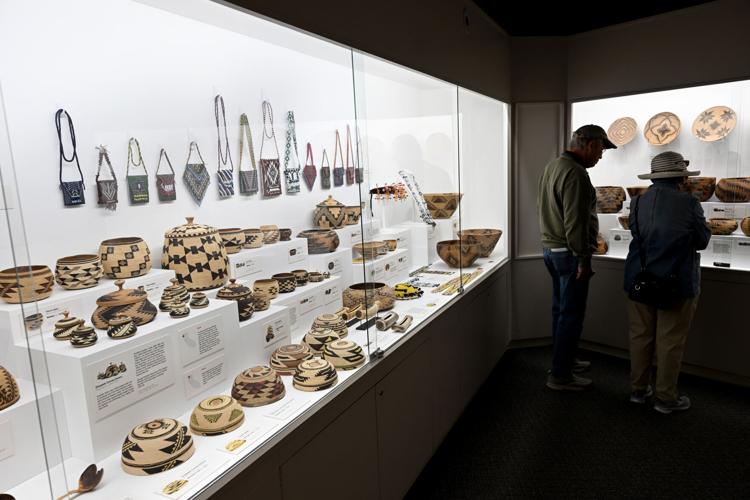
Visitors look at intricate baskets on display in the Indigenous Peoples of North America permanent collection at the Maryhill Museum of Art. The collection has a large and varied display of art made by Indigenous peoples of North America. It features a wide array of baskets, beadwork, carved wood and lithics, as well as other material. Indigenous art has been important to Maryhill Museum of Art’s mission since its inception and the collection includes more than 3,500 objects. Of this total, the largest portion is from the Columbia River Plateau region. Many of these are lithic (stone) items.
Beaded pieces are on display in the Indigenous Peoples of North America permanent collection at the Maryhill Museum of Art near Goldendale, Washington on April 24, 2026. The collection has a large and varied display of art made by Indigenous peoples of North America. It features a wide array of baskets, beadwork, carved wood and lithics, as well as other material. Indigenous art has been important to Maryhill Museum of Art’s mission since its inception and the collection includes more than 3,500 objects. Of this total, the largest portion is from the Columbia River Plateau region. Many of these are lithic (stone) items.
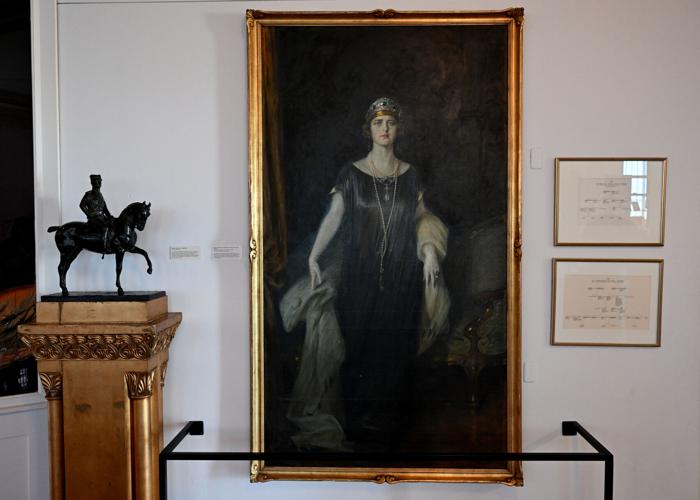
King Alexander I on horseback, bronze, early 1900s, left, and a large portrait of Mignon, daughter of Queen Marie of Romania is on display at Maryhill Museum of Art. The painting is Oil by Paul Joanovitch, This is a portrait of Queen Marie’s daughter known as Mignon. Queen Marie of Romania, (1875-1938), was a friend of Sam Hill. Her visit to the museum in 1926 prompted a media frenzy and created a sensation in the Columbia River Gorge. During her visit she delivered more than 100 works of art and personal items to the museum. The collection includes paintings, Russian icons, manuscripts and the gown Queen Marie wore to the 1896 coronation of her cousins Tsar Nicholas II and Sarina Alexandra of Russia.
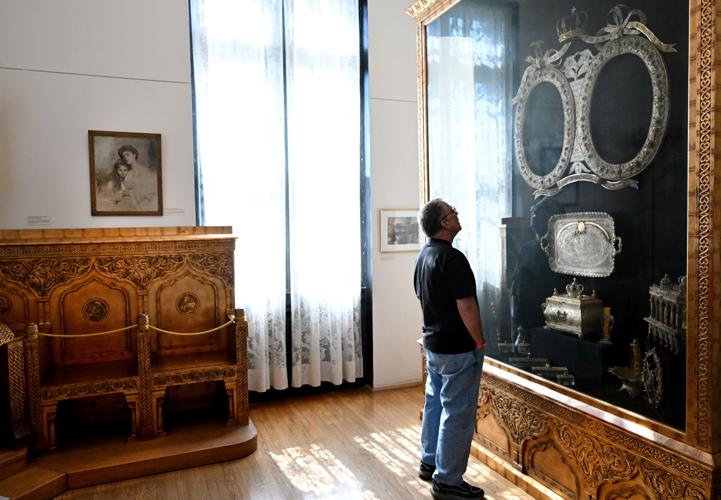
A visitor looks at what were wedding gifts presented to Alexander and Princess Marie, Mignon, daughter of Queen Marie of Romania, on display at Maryhill Museum of Art.
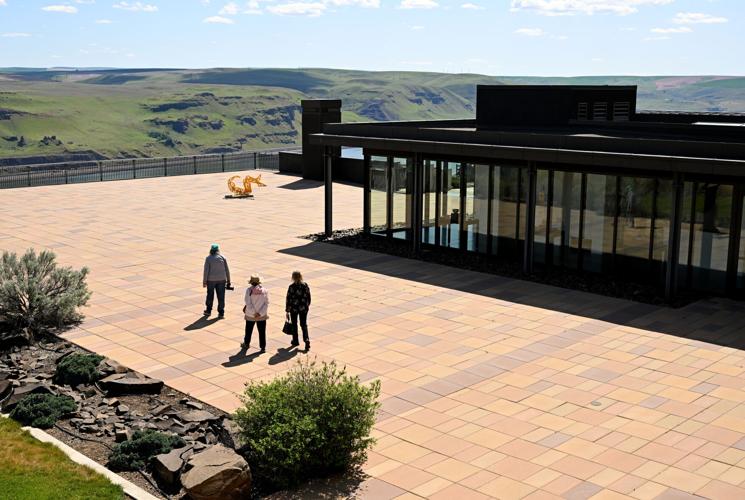
Visitors look at a sculpture entilted Winter Rider Variation, 2010, a bronze with gray/green patina by James Lee Hansen, on display in the The William and Catherine Dickson sculpture park at Maryhill Museum of Art. At right in the foreground is Quantum Man, 2007 by Julian Voss-Andreae.
Post-World War II French haute couture fashions on one-third-life-size human mannequins are part of the Théâtre de la Mode exhibit at the Maryhill Museum of Art near Goldendale, Washington on April 24, 2026. The Théâtre de la Mode (Theatre of Fashion) is a permanent, rotating exhibition of approximately 1/3-scale mannequins dressed in exquisite post-World War II French haute couture fashions. It was created in 1945–1946 to promote the revival of the French fashion industry and raise funds for war survivors, serving as a "love letter" from Paris to the world after the Nazi occupation. When it appeared at Louvre’s Museum of Decorative Arts in 1945, the Théâtre de la Mode opening drew 100,000 visitors. Maryhill is home to nine re-built sets and restored mannequins dressed in period casual and formal wear. Each year, three of the nine sets are on display.
A museum visitor looks at large paintings on display in the American Classical Realism exhibit at the Maryhill Museum of Art near Goldendale in April. The museum collection is now home to more than 50 American Classical Realist works. More photos at columbiagorgenews.com.
Helen H. Richardson photo / Special to the Columbia Gorge News
Post-World War II French haute couture fashions on one-third-life-size human mannequins are part of the Théâtre de la Mode exhibit at Maryhill Museum of Art, a permanent, rotating exhibition. Maryhill is home to nine re-built sets and restored mannequins dressed in period casual and formal wear. Helen H. Richardson photo / Special to the Columbia Gorge News
The entrance to the Maryhill Museum of Art near Goldendale.
Helen H. Richardson
GOLDENDALE, WASHINGTON - The William and Catherine Dickson sculpture park surrounds the entrance to the Maryhill Museum of Art. This has recently been upgraded to be more ADA accessible as accessibilty for all is a priority for the museum.
Helen H. Richardson
Post-World War II French haute couture fashions on one-third-life-size human mannequins are part of the Théâtre de la Mode exhibit. The Théâtre de la Mode (Theatre of Fashion) is a permanent, rotating exhibition of approximately 1/3-scale mannequins dressed in exquisite post-World War II French haute couture fashions. It was created in 1945–1946 to promote the revival of the French fashion industry and raise funds for war survivors, serving as a "love letter" from Paris to the world after the Nazi occupation. When it appeared at Louvre’s Museum of Decorative Arts in 1945, the Théâtre de la Mode opening drew 100,000 visitors. Maryhill is home to nine re-built sets and restored mannequins dressed in period casual and formal wear. Each year, three of the nine sets are on display.
Helen H. Richardson
Indigenous artists are part of the Contemporary Indigenous Art display at Maryhill Museum of Art. Some of the work includes giclée prints by native artist Craig George, right, Diné, Navajo. The works are Passing the Torch, upper right, and No Parking, lower right.
Helen H. Richardson
At The Mirror, 2010, an oil painting by Carl J. Samson, is on on display in the American Classical Realism exhibit at the Maryhill Museum of Art. The exhibit features approximately 40 paintings produced by four generations of artists. The museum collection is now home to more than 50 American Classical Realist works. The 2026 exhibition includes four generations of artists, including Richard F. Lack (1928–2009), Robert Douglas Hunter (1928–2014), Samuel Rose (1941–2008), and Stephen Gjertson (b. 1949). The museum is also borrowing several works by related artists for the display.
Helen H. Richardson
A museum visitor looks at large paintings on display in the American Classical Realism exhibit at the Maryhill Museum of Art. The exhibit features approximately 40 paintings produced by four generations of artists. The museum collection is now home to more than 50 American Classical Realist works. The 2026 exhibition includes four generations of artists, including Richard F. Lack (1928–2009), Robert Douglas Hunter (1928–2014), Samuel Rose (1941–2008), and Stephen Gjertson (b. 1949). The museum is also borrowing several works by related artists for the display.
Helen H. Richardson
Large sculptures, such as Eve, 1881, Plaster, are part of the extensive collection by Auguste Rodin in the Auguste Rodin Gallery at Maryhill Museum of Art. Rodin, (1840-1917) is considered to be the father of modern sculpture. The museum collection contains more than 80 works by Rodin including bronzes, terra cottas, plaster studies and watercolor sketches.
Helen H. Richardson
Large sculptures, such as Je Suis Belle, c1881-1882, plaster, are part of the extensive collection by Auguste Rodin in the Auguste Rodin Gallery at Maryhill Museum of Art . Rodin, (1840-1917) is considered to be the father of modern sculpture. The museum collection contains more than 80 works by Rodin including bronzes, terra cottas, plaster studies and watercolor sketches.
Helen H. Richardson
Beaded pieces, such as the Beaded blue vest by New Perce (Nimiipuu) Maker, c 1910, are on display in the Indigenous Peoples of North America permanent collection at the Maryhill Museum of Art. The collection has a large and varied display of art made by Indigenous peoples of North America. It features a wide array of baskets, beadwork, carved wood and lithics, as well as other material. Indigenous art has been important to Maryhill Museum of Art’s mission since its inception and the collection includes more than 3,500 objects. Of this total, the largest portion is from the Columbia River Plateau region. Many of these are lithic (stone) items.
Helen H. Richardson
Visitors look at intricate baskets on display in the Indigenous Peoples of North America permanent collection at the Maryhill Museum of Art. The collection has a large and varied display of art made by Indigenous peoples of North America. It features a wide array of baskets, beadwork, carved wood and lithics, as well as other material. Indigenous art has been important to Maryhill Museum of Art’s mission since its inception and the collection includes more than 3,500 objects. Of this total, the largest portion is from the Columbia River Plateau region. Many of these are lithic (stone) items.
Helen H. Richardson
King Alexander I on horseback, bronze, early 1900s, left, and a large portrait of Mignon, daughter of Queen Marie of Romania is on display at Maryhill Museum of Art. The painting is Oil by Paul Joanovitch, This is a portrait of Queen Marie’s daughter known as Mignon. Queen Marie of Romania, (1875-1938), was a friend of Sam Hill. Her visit to the museum in 1926 prompted a media frenzy and created a sensation in the Columbia River Gorge. During her visit she delivered more than 100 works of art and personal items to the museum. The collection includes paintings, Russian icons, manuscripts and the gown Queen Marie wore to the 1896 coronation of her cousins Tsar Nicholas II and Sarina Alexandra of Russia.
Helen H. Richardson
A visitor looks at what were wedding gifts presented to Alexander and Princess Marie, Mignon, daughter of Queen Marie of Romania, on display at Maryhill Museum of Art.
Helen H. Richardson photo
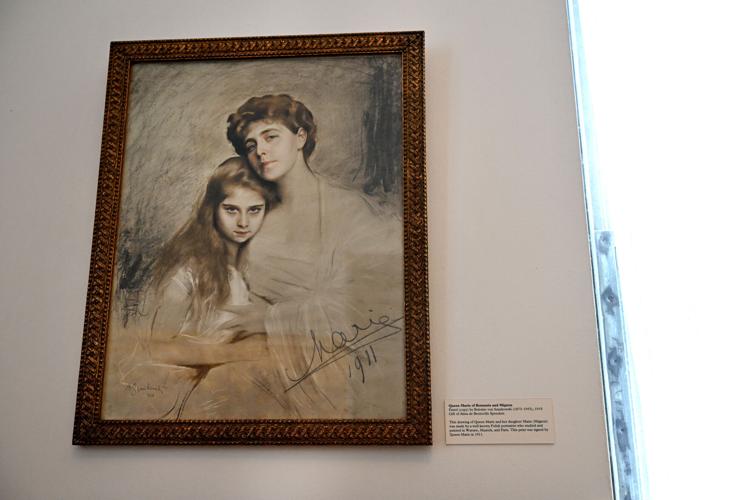
A pastel drawing of Queen Marie of Romania and her daughter Mignon by Boleslav von Szankowski on display at Maryhill Museum of Art.
Helen H. Richardson
Visitors look at a sculpture entilted Winter Rider Variation, 2010, a bronze with gray/green patina by James Lee Hansen, on display in the The William and Catherine Dickson sculpture park at Maryhill Museum of Art. At right in the foreground is Quantum Man, 2007 by Julian Voss-Andreae.
THE GORGE — As you travel east along State Route 14, a cream mansion surrounded by tall trees, green grass and an ADA accessible sculpture garden stands in stark contrast to the rocks and golden fields that dominate the landscape. This is the Maryhill Museum of Art, which is celebrating its 100th anniversary this year.
Maryhill’s beginning is almost as unusual as its place among the predominantly agricultural towns around it. Naming the four founders starts off almost like a joke: “a lawyer, a dancer, a socialite and a queen walk into a bar.” Sam Hill was a businessman and lawyer who moved west, lobbied for and built paved roads in Oregon and Washington, including the Historic Columbia River Highway. He also began erecting a hilltop mansion above the John Day Dam, dedicated to his daughter.
His plans for a community around the house were thwarted by the lack of irrigation and its remote location. “Around 1917, as he was trying to determine the future of this place, his friend Loïe Fuller said, ‘Between us, we could furnish a museum of French fine arts,’ and they made a manifesto,” explained Maryhill’s Executive Director Amy Behrens.
Loïe Fuller was a pioneer of modern dance who lived in Paris and connected Hill with artists there, the most notable of which was Auguste Rodin, who furnished the large collection of his works housed at the museum. The Rodin room at Maryhill includes bronzes, terra cottas, plaster studies and watercolor sketches that show his full creative process, unlike many Rodin exhibits that focus on the finished bronzes alone.
The museum’s dedication took place in 1926 by Queen Marie of Romania, granddaughter of Queen Victoria of England. She trekked across the United States by train with many of the Romanian pieces now featured, both her own and others, and had a large influence on Maryhill’s design. She championed traditional folk art and the arts and crafts movement there, acknowledged in the centennial celebration via traditional Romanian embroidery and folk pottery. This exhibit also features a companion gallery for younger children to engage with the displays in a more tactile way.
Upon Hill’s death, not long after the dedication, his estate was tied up in long proceedings that delayed public opening. Alma de Bretteville Spreckels, a San Franciscan socialite and friend of Hill’s, joined the museum’s board of trustees and brought her own collection, along with her expertise in opening a museum, as she’d already done down south.
“People often say, ‘Oh, it’s such an eclectic collection,’ but it’s really influenced by the tastes of our four founders,” said Behrens. “I think the way that the museum, over the past 100 years, has stewarded that collection and expanded the collection to still align with those tastes, but really to diversify to the needs and interests of our surrounding populations is a real strength of the museum.”
And Maryhill highlights that diversity, with many additional permanent collections and seasonal exhibitions, such as the Pacific Northwest Plein Air artworks currently on display through the end of May.
Beaded pieces are on display in the Indigenous Peoples of North America permanent collection at the Maryhill Museum of Art near Goldendale, Washington on April 24, 2026. The collection has a large and varied display of art made by Indigenous peoples of North America. It features a wide array of baskets, beadwork, carved wood and lithics, as well as other material. Indigenous art has been important to Maryhill Museum of Art’s mission since its inception and the collection includes more than 3,500 objects. Of this total, the largest portion is from the Columbia River Plateau region. Many of these are lithic (stone) items.
Helen H. Richardson
Walking inside, you’ll find the Indigenous Peoples of North America exhibit right under the rotunda, filled with artwork from the tribes across the Pacific Northwest and complemented by a contemporary Indigenous art display upstairs. As Behrens explained, Maryhill works to make the Indigenous art visible, and they facilitate a Wa’paas basket weaving workshop, which has been “successful in welcoming Indigenous people into the museum,” said Behrens.
Post-World War II French haute couture fashions on one-third-life-size human mannequins are part of the Théâtre de la Mode exhibit at the Maryhill Museum of Art near Goldendale, Washington on April 24, 2026. The Théâtre de la Mode (Theatre of Fashion) is a permanent, rotating exhibition of approximately 1/3-scale mannequins dressed in exquisite post-World War II French haute couture fashions. It was created in 1945–1946 to promote the revival of the French fashion industry and raise funds for war survivors, serving as a "love letter" from Paris to the world after the Nazi occupation. When it appeared at Louvre’s Museum of Decorative Arts in 1945, the Théâtre de la Mode opening drew 100,000 visitors. Maryhill is home to nine re-built sets and restored mannequins dressed in period casual and formal wear. Each year, three of the nine sets are on display.
Helen H. Richardson
Another permanent display, Théâtre de la Mode, is a collection of miniature haute couture items which toured Europe and America in 1946 in the aftermath of World War II. “[People] think about it as just fashion, but it’s actually a story of resilience,” said Behrens. “[At the end of World War II, the French] were really struggling to jump start their economy again and they had all this intellectual capital, but they didn’t even have enough material to have a fashion collection mounted.”
They drew inspiration from a centuries-old European tradition of creating miniatures on mannequins, she said, that would be sent palace to palace to inspire the nobility for war relief fundraising. After the tour ended, however, they remained in the United States and were lost in the basement of a department store until de Bretteville Spreckels added them to the museum’s collection.
This collection is not static either. The curators continue to develop, modernize and make the collection more accessible for the community. “I see our future in the next 100 years as continuing to have a reciprocal relationship with the communities that we serve and continuing to have this sense of awe,” said Behrens. “Awe and wonder that completely take you out of your day-to-day life.”
Maryhill, like almost all museums following the COVID-19 pandemic, has struggled to recapture its visitors. But to ensure it stays accessible to the community, the museum’s endowment funds the educational programs, subsidizes admissions and supports daily running. They also facilitate several special admissions programs, the largest of which is the Discover and Go library program which provides admission with a local library card. For those interested in donating to the museum, or those interested in becoming a volunteer, visit maryhillmuseum.org.
The Maryhill Museum of Art is open 10 a.m. to 5 p.m. daily through mid-November.



Commented