HOOD RIVER — The Northern Pacific rattlesnake, the Columbia River Gorge’s only venomous serpent, is not to be feared, as important to the ecosystem as any creature that navigates its diverse terrain.
Historically viewed as enemies of humans in media and legislation, though, rattlesnakes have developed an unfavorable reputation: primitive, lowly nuisances that pose a threat to our safety — the ultimate other.
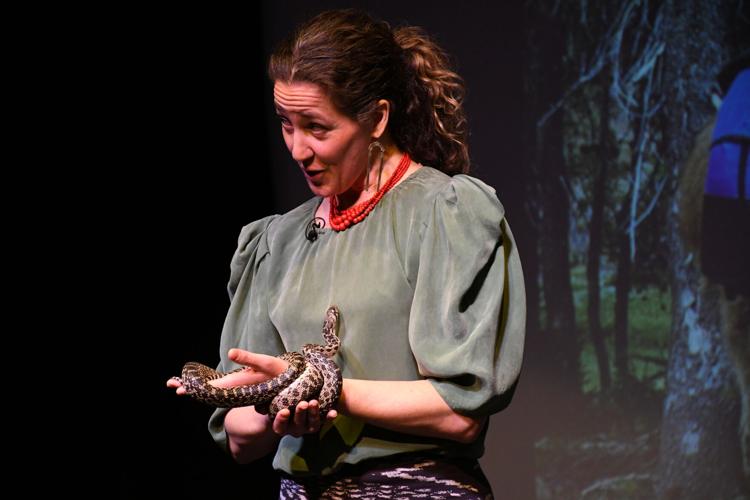
Central Washington-based naturalist and herpetologist Adrian Slade, who's been infatuated with snakes since early childhood, shared facts and busted myths about our deeply misunderstood neighbors at the Columbia Center for the Arts on March 18 — the sixth presentation in host and curator Sarah Fox’s Sense of Place season 16.
“I love rattlesnakes more than I love people,” Slade said. “I’m doing this for them.”
Adrian Slade
As a kid, snakes instantly captured Slade’s attention and curiosity, which, it turns out, is the default. Scientists have demonstrated that babies aren’t innately afraid of snakes; they learn to fear them by watching adults' expressions.
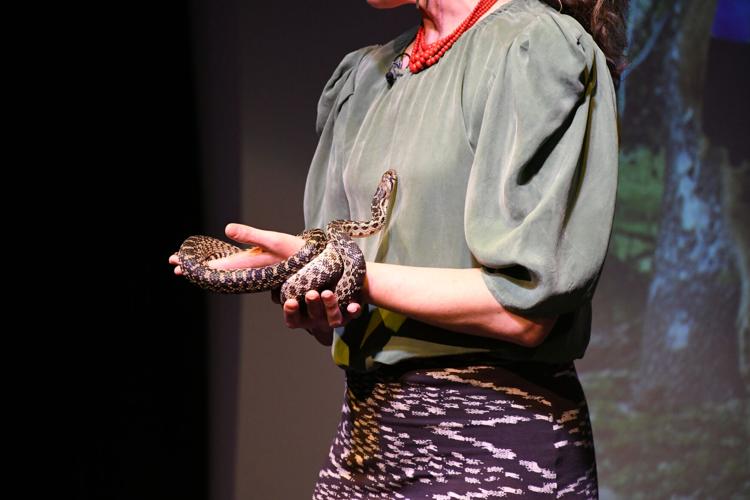
Herpetologist Adrian Slade delivers a lecture about the Northern Pacific rattlesnake
Slade’s parents nurtured her passion for snakes the same way that other kids get to obsess over more innocuous things, like birds or dinosaurs. “I caught them. I named them. I wrote stories about them,” she said. “I owe them a great deal.”
With a B.S. and M.S in Biology from Central Washington University, she has spent the last decade observing snakes in their natural habitats. Her work focuses on the natural history, behavior, and conservation of Pacific Northwest reptiles, especially Northern Pacific rattlesnakes. “I’m not asking you to love rattlesnakes the way I do,” Slade said. “But I know things about them that might change the way you see them.”
Northern Pacific rattlesnake
The Northern Pacific rattlesnake is the only venomous reptile in the region — prominent east of the Cascade crest — inhabiting the pine-oak woodland and shrub steppe biomes in the Gorge. They spend most of their lives coiled in elegant repose, blending in, waiting to ambush prey.
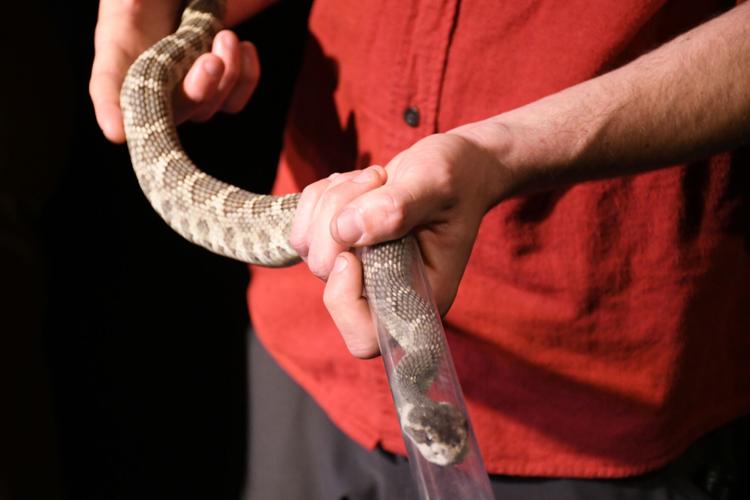
Cooper the Northern Pacific Rattlesnake in the hands of Slade’s partner, Tyler
Rattlesnakes eat many different small animals, such as birds and lizards, but their favorite food source is rodents like mice and squirrels. Being limbless, they have to be extra scrappy when it comes to killing their meal. Their venom, therefore, evolved as a risk-reduction strategy to kill their prey without prolonged physical contact.
A rattlesnake’s most iconic feature, its rattle, is a specialized anti-predator warning device unique to the genus. The rattle is made of keratin — the same material as our fingernails — and grows a new segment each time they shed their skin. These hollow, interlocking segments bang together, producing a rattling noise. “Rattling is a last resort because it gives them away,” Slade explained. “They would much prefer to hide or flee instead. Snakes don’t chase people. They don’t attack people.”
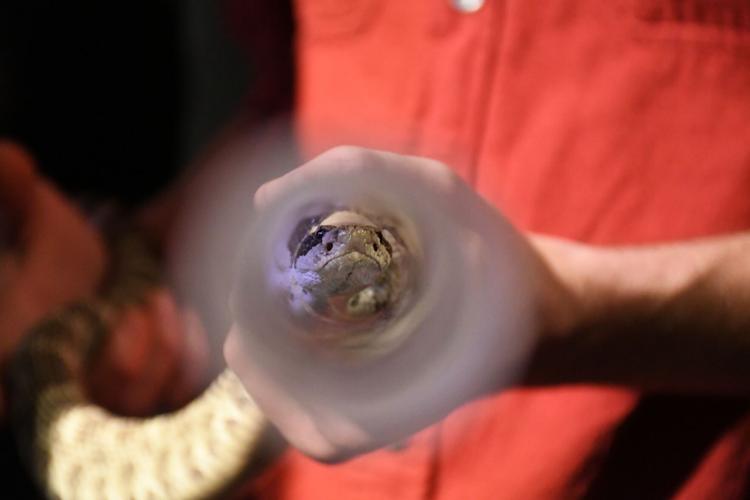
Cooper the Northern Pacific rattlesnake peaks from the safety of his tube
Rattlesnakes follow each other’s scent trails closely to locate dens, often using the same dens for their entire lives — a behavior called site fidelity. Over the course of their long and storied lives, they become creatures of habit, learning and remembering their favorite places and faithfully returning to them every year. “They, too, have a strong sense of place,” Slade said.
Why snakes matter
By consuming a large number of rodents, rattlesnakes help regulate rodent populations and reduce the spread of rodent-borne diseases. They indirectly remove thousands of ticks from the ecosystem by eating tick-carrying creatures.
Rattlesnakes are also mesopredators: when a predator, like a golden eagle, eats a rattlesnake, it effectively consumes the snake and the rodents inside it. When a snake eats a rodent that has unchewed seeds in its cheek pouches, those seeds can germinate within its feces. Some native seeds have higher germination rates within rattlesnake waste than without it, meaning they can help shape plant communities.
Both medically and culturally, humans too reap the benefits of rattlesnakes’ presence. Snake venoms have yielded life-saving drugs widely used to treat heart conditions and blood clots. Many Indigenous peoples regard them as rain-bringers and spiritual messengers, as reflected in petroglyphs and stories. “They have been here for millions of years before us,” Slade said. “They don’t need to earn their right to exist. The least we can try to do is coexist with them.”
Threats and misconceptions
Of the 50 species of rattlesnakes from Canada to northern Argentina, many are threatened or endangered, but receive less conservation attention than more “charismatic” animals because of their reputation.
Yet the dangers that rattlesnakes pose are wildly overblown. Bites are extremely rare, with fewer than 20 reported annually in Washington state. When bites do happen, it’s usually when someone is improperly handling, harassing, or trying to kill the snake. “You are five times more likely to die from a lightning strike,” Slade said.
The largest threat to rattlesnakes is habitat loss and fragmentation caused by human development. When habitat is converted to human-dominated landscapes, snakes face degraded dens, hostile humans, and more roads that bisect their routes.
On a road with 4,000 vehicles per day, Slade found, more than 70% of snakes attempting to cross were killed. Even low-traffic roads can cause enough adult mortality to push populations towards extinction over time.
Finally, a long history of colonial-era demonization has perpetuated opportunist killings: hikers, homeowners, etc., killing snakes on sight. Rattlesnake roundups, for-profit events where thousands are captured, displayed, tortured, and killed for entertainment, cause steep population declines and teach children that killing snakes is normal and fun. “Rattlesnakes are one of the few wild animals that still face this level of socially acceptable persecution,” Slade concluded. “We made a mistake when we demonized them, and they need our advocacy now more than ever.”
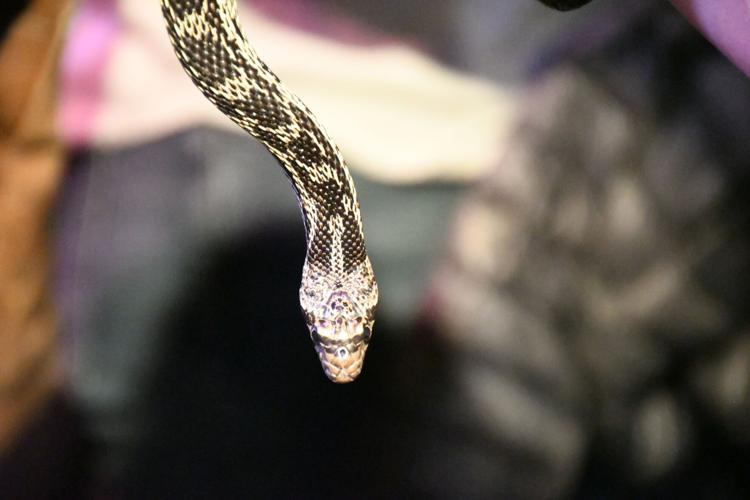
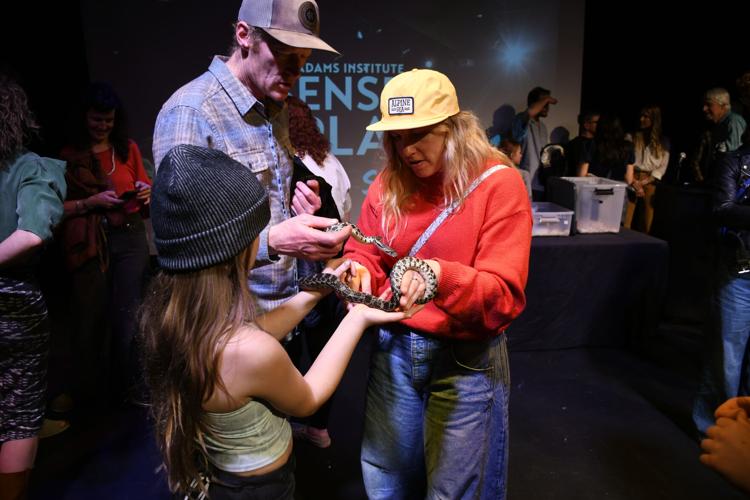
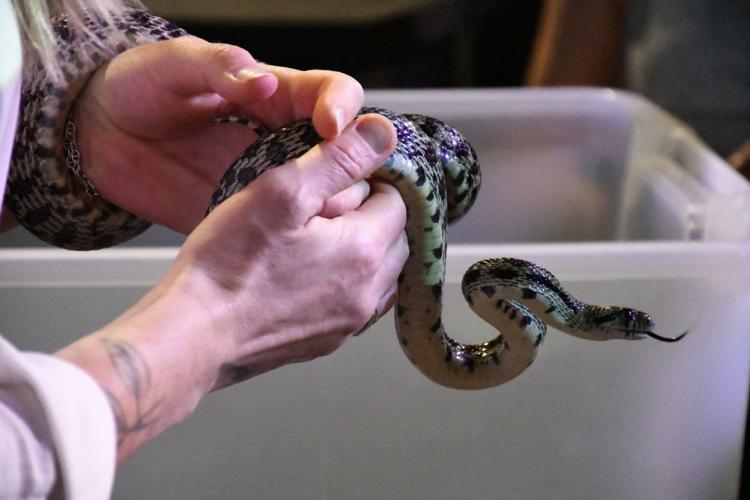
Sense of Place audience members meet Jill the gopher snake
After the lecture, Slade offered the audience an up-close-and-personal encounter with a selection of live snakes, including Jill, the gopher snake, and Cooper, the Northern Pacific rattlesnake, whose head was confined to a small tube for safety.




Commented