

Anne Gehrig,
OSU Hood River County Extension Central Gorge Master Gardener Volunteer
This time of year as gardens overflow with produce, I’m reminded of the 1978 film “Attack of the Killer Tomatoes” in which mutant tomatoes run amok, terrorizing humanity. Meanwhile, in pantries across the country, a silent and very real threat lurked: Clostridium botulinum. Invisible, tasteless, and odorless, it’s the perfect sci-fi villain, thriving in low-acid, low-oxygen environments. A shortage of updated guidelines coupled with improperly canned goods led to many cases of “killer tomatoes” in the 70s.
Fearful of poisoning their families, some gardeners turned to dehydrating food. Fruits fared well, but dried green beans and desiccated spinach never gained much traction. Freezing was another option: the introduction of freezer bags allowed gardeners to toss surplus veggies into the freezer and forget them. Often they emerged the following summer, freezer burned and looking like artifacts from the Shackleton expedition.
Fortunately, it’s possible to preserve your harvest — and your sanity — without jeopardizing your health. Before you begin, think about which foods your family prefers and how much you’re likely to consume in a year. Consider space available: how much pantry or freezer real estate do you have? What equipment do you need? The Hood River Library has a variety of home preservation equipment available for checkout.
Canning works well for fruits and acidic produce. Properly sealed, canned goods can last a year or more. Always use new and undamaged lids, follow the recipe exactly, and pay close attention to processing times. If processing low-acid vegetables like beans or corn, a pressure canner is required.
Freezing: Botulism is less common in frozen foods. Freezing doesn’t kill most microorganisms — it just puts them to sleep — so wash produce thoroughly. If you’re concerned about microplastics, opt for glass canning jars instead of bags. Allow adequate headspace when freezing liquids like tomato sauce or pumpkin puree. To save space, cook roasted tomatoes down to a thick puree that can be reconstituted later. Roasting intensifies that summer flavor. Process in small batches to avoid altering the freezer’s temperature. Prevent cherries, berries, peaches and pesto from clumping by freezing on a jellyroll pan for about an hour before packing into jars. Tip: an inverted funnel can double as a cherry pitter. Place the cherry, stem-side down, on the funnel spout and push.
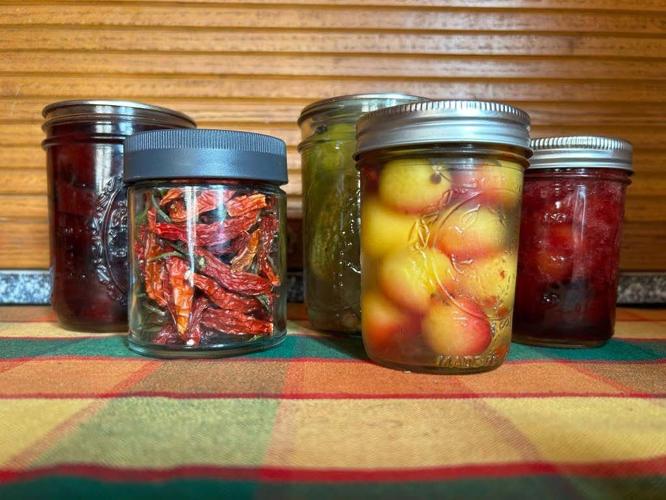
Drying is an excellent choice for fruits. Add dried apples or cherries to baked goods or trail mix, or use them as a garnish on salads. Because of their concentrated sugars, dried fruits are high in calories, so consume in moderation. Overly-dried tomatoes can be ground to a powder and mixed with salt to season popcorn or soup. Make your own chili powder by grinding dried chiles, minus stems and seeds.
Pickling isn’t just for cucumbers. Beans, beets, asparagus, and cherries are also excellent pickled, and the high concentration of salt and vinegar makes them less vulnerable to spoilage and toxins. Quick pickles should be refrigerated. If you wish to keep them in your pantry instead, opt for the traditional brining method, and process in a boiling water canner.
Whether you opt to freeze, can, pickle, or dehydrate, remember these key points:
Wash hands, containers, and produce thoroughly before processing.
Follow the science. Unless your grandmother was a microbiologist, don’t follow her recipes or advice. Instead, consult research-based publications like these: OSU Extension Home Food Preservation.
Freshness matters: preservation does not improve overripe produce.
Follow instructions exactly, especially when canning.
Don’t let an overabundance of produce overwhelm you. Savor some now, save some for later. It’s like having summer in a jar.
If you’d like more information on preserving your harvest, there’s still time to catch the second session of Preserving Your Bountiful Harvest at the OSU Hood River County Extension Office on Saturday, Aug. 22 at 10 a.m.
Central Gorge Master Gardener volunteers provide free beginning gardening classes and continuing education to home gardeners. For research based information about specific gardening or pest questions, submit your concern online at extension.oregonstate.edu/mg/hoodriver or by phone at 541-386-3343. Home gardeners can also drop off plant or pest samples Monday through Thursday between 9 a.m. and 4 p.m. at the OSU Hood River County Extension Service, 2990 Experiment Station Drive, Hood River.
The Central Gorge Master Gardener program is a division of the OSU Hood River County Extension Service. OSU Extension Service prohibits discrimination in all its programs, services, activities, and materials.


Commented