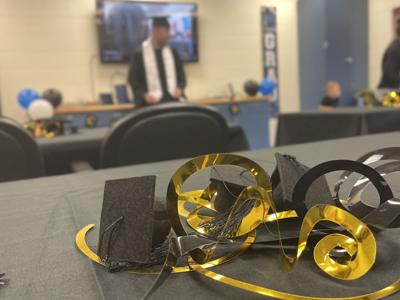
THE DALLES — On a sunny fall day, roughly 30 people packed into a small conference room at the Northern Oregon Regional Correctional Facility (NORCOR). Decorations and a large cake by the doorway reinforced why they were there: to celebrate a graduate.
What unfolded was not a typical ceremony. There was no procession, no “Pomp and Circumstance,” and the speeches stayed clear of platitudes. Instead, with only one graduate, guests had the opportunity to praise his achievements and offer tailored advice as he charts a path out of the justice system.
Of the approximately 38,700 students who graduated from Oregon public schools last year, six came from Innovations Academy at NORCOR. Each graduation was a critical milestone not only in the life of that individual, but also a step toward a safer Oregon.
Studies of adults in custody found that those who participate in education programs have 43% lower odds of recidivating than those who did not. Another study specific to juveniles found that employment and school commitments were two of the three most powerful buffers against reoffending. Youth who have been incarcerated frequently do not re-enroll in school when their commitment ends, and multiple studies have measured these youth graduating from high school anywhere from 13% to 39% less often.
Innovations Academy, operated by the North Wasco County School District in partnership with NORCOR and the Oregon Youth Authority (OYA), aims to counter this trend. Within NORCOR’s Youth Care Center (YCC), staff work with two populations: youth who have been detained by their local county’s justice system, and those who have been escalated to OYA through adjudication.
Both populations have incredibly high rates of trauma, experiences with substance abuse, and histories of mental and behavioral health issues, but there are key differences that impact their readiness to learn. Youth in detention often arrive in crisis, uncertain of their legal outcomes, and still processing recent trauma. With their length of stay uncertain, it can be challenging to develop a cohesive educational plan for them. In contrast, school staff observed that OYA youth tend to arrive with greater stability, clearer timelines, and goals for themselves.
Typically, youth from both populations have struggled in traditional school settings — often feeling unsafe, unseen, or unsupported. “That sense of emotional and physical safety is foundational” to educational success, said Principal Donna Sholtis.
To support these learners, all NORCOR and Innovations Academy staff have been trained in trauma-informed care and restorative practices. With that grounding, Innova-tions Academy leaders and educators can develop the trusting relationships that enable student-centered instruction.
“The most important thing for us is to listen to what the kid needs,” said Sholtis, “and then do our very best to provide the education that’s tailored toward their goals.”
NORCOR and Innovations Academy staff have created more hands-on learning opportunities, including woodworking, horticulture, 3D printing, and laser engraving. Students can earn food handler certifications, build picnic tables for local parks, and explore pathways to jobs or higher education.
The school’s reentry transition specialist, Jaime Paiser, helps ensure those goals don’t retreat to the background after release. She supports students for 90 days after they leave, helping them re-enroll in school or navigate employment options, and access housing and food resources.
“You can’t help a student with their educational needs unless you’re taking into consideration all of the needs that they have,” she said.
A strong sense of community reinforces student success at NORCOR. “[Students] are all very motivated by each other,” Paiser said, noting the “camaraderie and self-awareness” youth develop as they interact in the classroom. Volunteers from The Dalles and surrounding areas offer mentorship, music instruction, and art programming. A local church group provides weekly support, and partnerships with Columbia Gorge Community College and local employers help youth envision a future beyond the facility’s walls.
Many of these individuals showed up to the graduation. Their presence underscored their commitment to, as one individual put it, “continue to support you in any way we can moving forward.”
“We’re just really, really excited about your future,” another said. “I’ve told you before, I’m going to be bugging you all the time.”
In that future, youth return to their home communities as valued, contributing community members. Consistent with the research, their degrees, industry-recognized credentials, and stable employment give them what they need to live their lives outside of the justice system. It’s not just a turning point in their life, though — it’s also a step toward a safer, more resilient Oregon.
•••
William Howell is the communications director for the Oregon Youth Authority.



Commented
Sorry, there are no recent results for popular commented articles.