
By Charlie Vanden Heuvel
Columbia Gorge Beekeepers Association
Of late there is a growing conversation concerning Native Bees versus the European Honey Bee. In order to arrive at an appreciation of these two differing segments of the insect world, one must delve into the behavior of each.
The European Honey Bee was brought into North American by the pioneers who also brought fruit trees from their home regions. They understood the relationship between the trees and their pollinators.
The original bee entering North American was the German, a dark bee. They did not thrive well in our climate in spite of similarities between their native habitat and ours.
They were soon replaced by several subspecies: Caucasian, Italian and Carniolan. As evolution will have it, these three subspecies eventually melded into mutts. The Honey Bee Virgin Queen mates with nine to nineteen Drones (males) from area colonies. Viewing a bee colony might find differing genetics, as the genes of the three subspecies move forward.
The beauty of nature as it applies to the honey bee begins with the mixture of the drones fertilizing the eggs of the queen. Think about the variety of differences evident in our own society. Eye color, hair color, and so much more.
The honey bee is a great pollinator. In fact, it is the only bee that gathers more honey than it needs to sustain the colony through the winter months. Their foraging area can be three to five miles in radius.
The foraging area of most native species is between 150 to 1,100 yards.
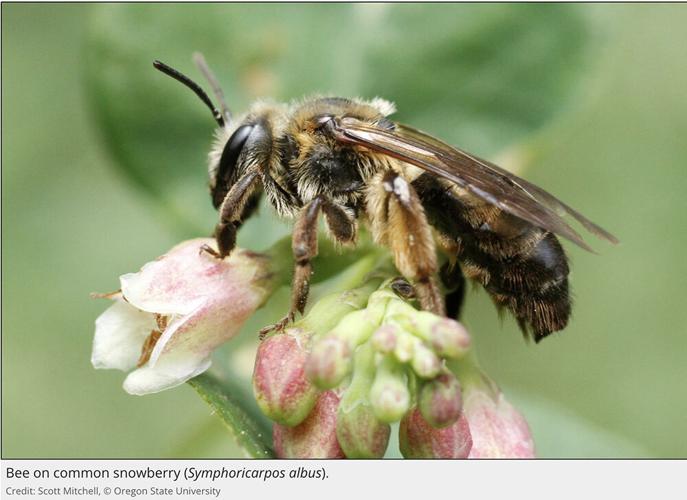
The mason bee is typically active from March through May. The carpenter bee forages during a similar period of the year. The leafcutter waits for summer months to emerge. Bumblebees, ones blessing our geographic area, have several subspecies, which emerge at differing times from mid-spring to early fall.
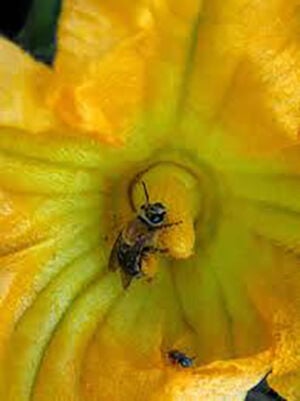
Approximately thirty-five percent of native bees are pollen specialists. Their larvae only consume pollen from specific plant families. An example is the squash bee, focused on the squash and pumpkin flowers. These specialists co-evolved alongside specific flora, thus became one with their available pollen.
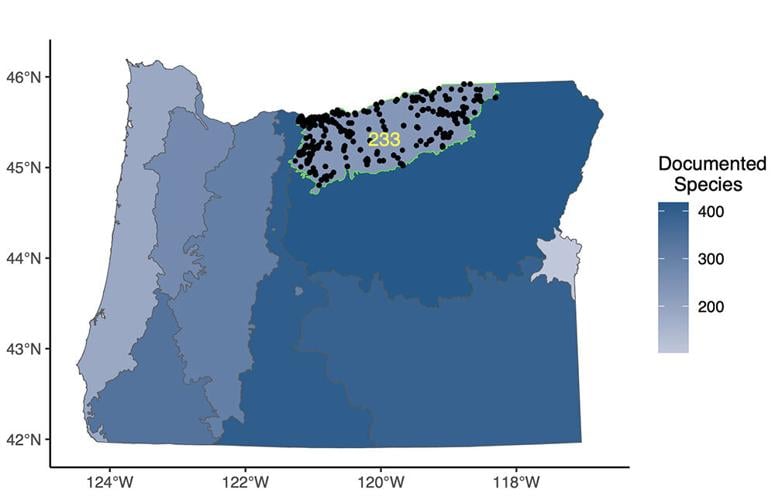
Oregon State University began a survey of the Native Bees in Oregon. Other states have joined in the effort in their own territory. There are about four thousand native bee species within the United States. Oregon has around seven hundred species while Washington has about six hundred.
Consider querying folks at the local restaurant. The variety of meal orders spans the menu. Some desire rich protein diets while others seek more rough vegetation. So it is with the bee species, no matter if they are Native or European. Each seeks a different nourishment.
The short-haired bumblebee (Bombus subterraneus) went extinct in Britain in 1989 due to habitat loss. Yet, today they have once again reappeared. This once again is Nature being in charge! Our (we human) appreciation of Nature is very limited. We do struggle but the haze prevents our complete understanding.
Some folks will point out the similarity of viruses evident in the honey bee as the bumblebee. Did the virus spread from the honey bee to the bumblebee? The honey bee virus populations escalate to the point of becoming disease, while those viruses now found in bumblebees have not appeared to affect the bumblebee. To be honest, our understanding of viruses is limited. Detection, using DNA, has just recently come onto the horizon.
Honey bees and native bees have several viral, fungal and parasitic diseases in common. For instance, Deformed Wing Virus (DWV), Black Queen Cell Virus (BQCV) and gut parasites like Nosema are the most prominent.
The spillover of diseases comes into play as foraging visits on the same flowers leave behind viruses and parasites on petals and pollen.
Unfortunately, native bees do not possess similar defense mechanisms as the honey bee. The honey bee colony is considered a super organism. All behavior and actions of the bee colony are directed to the whole. The Native Bee is essentially solitary, thus must forage and defend on an individual basis.
Just to bring greater clarity the human body has bacteria, fungus, viruses and cancers evident always. Some of our bacteria is considered “good” while others are disease causing. The honey bee colonies pre-1987 had viruses. Yet, most did not evolve into a disease state. It was the arrival of the Varroa destructor mite in 1987 that shifted the honey bee viruses into a hyper issue. Similar to the bite of a mosquito, which offers humans Dengue Fever, Zika, Chikungunya, and Yellow Fever among others.
For those of you thriving for more attention concerning the Native Bees of Oregon you may download Bees of Oregon 2025 which was recently released: https://ir.library.oregonstate.edu/concern/technical_reports/cr56n948j?locale=en.
Consider dispensing a few dollars toward
Project Apis m in support of their funding (https://www.projectapism.org/partners/#give).
The Columbia Gorge Beekeepers Association meets on the third Wednesday of each month, http://www.gorgebeekeepers.org/, at the Hood River Extension, 2990 Experiment Station at 6:00 PM. A different subject is presented by an Entomologists or experienced beekeeper. All are welcome. Visitors may attend in person or via Zoom. You may reach out to the club for login information - admin@gorgebeekeepers.org. You may also enjoy a visit to the Hood River Extension to view the three bee hives maintained by the Columbia Gorge Beekeeping Club and financially by the Hood River Master Gardeners, Klahre House and the Columbia Gorge Beekeepers Association.


Commented
Sorry, there are no recent results for popular commented articles.