
Americans have always reached for an extra sauce cup, but in 2026, that habit has become a menu strategy. Chains are launching spinoff brands built entirely around dipping, while independent restaurants are treating the sauce flight the way beverage programs once treated wine flights. And the sauces themselves are leaving the kitchen entirely, moving onto grocery shelves nationwide.
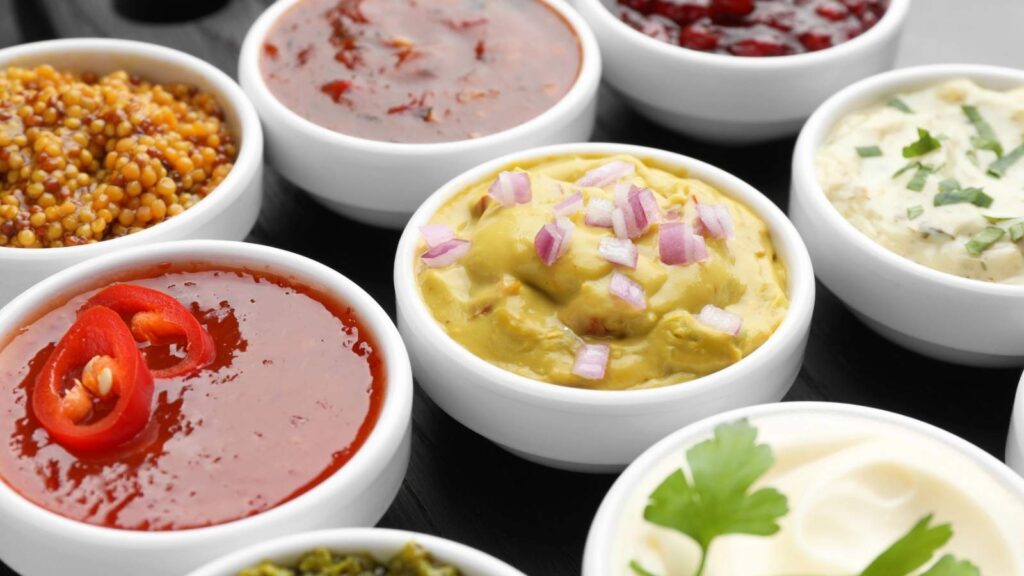
The appetite that drives all of it is well documented. A February 2026 YouGov poll found that 50% of Americans always or often add condiments to their food when given the option, and 1 in 5 carry their own sauces to restaurants when they expect the options to fall short. Operators from fast food to fine casual have taken note, and the response changes how menus are built, how loyalty is earned and where the sauce ends up next.
Chains bet on sauce as identity
When KFC launches a spinoff brand built entirely around dipping, the trend stops looking like a moment and starts to become an industry direction. Saucy by KFC opened its first Florida location in 2024 and has since expanded to markets across the state, including Orlando, Tampa, Jacksonville and Naples, with Yum Brands CEO Chris Turner signaling a broader Southeast expansion ahead. The concept centers on chicken tenders paired against 12 globally inspired signature sauces, including Chimichurri Ranch, Spicy Mango Chutney and Korean Sweet Heat. The sauce is not the side, but the point.
The pivot reached further than chicken, with Shipley Do-Nuts, a 390-location Texas-rooted chain, entering the format in March 2026 with Kolache Dippers and Rowdy Ranch, the brand’s first-ever signature dipping sauce. The item pairs miniature sausage kolaches with a spiced ranch built for dunking. A chain that spent 90 years building its identity around pastry and coffee has just designed its newest menu item around the act of dipping.
Restaurants make the dip the experience
The format has roots in casual dining. Chili’s Triple Dipper, which lets guests choose three appetizers each paired with a dipping sauce, had grown to represent 11% of the chain’s overall business by late 2024, with sales up 70% year over year. Independent operators took notice and pushed the layout further into fine casual and independent dining.
At Sho Pizza Bar in East Nashville, the Michelin Bib Gourmand-recognized restaurant serves its long-fermented, wood-fired pizza alongside a dedicated crust dipper flight: miso ranch, Calabrian chili honey and stracciatella cheese. The pizza arrives as the canvas; the flight is the invitation to explore it.
At Spare Birdie Public House in Cedar Park, Texas, the format is a menu staple. Dip Trios let guests build their own three-dip sampler, a standalone shareable built entirely around the act of dipping, not attached to any particular entree.
Bobwhite Counter, a Southern fried chicken spot with locations across New York City and Jersey City, takes the format one step further. The Sauce Flight delivers all eight house-made dipping sauces at once. Guests can also take the sauces home. Bobwhite sells pint-sized containers of its most popular recipes, blurring the line between restaurant condiment and pantry staple before that product even hits a grocery shelf.
The Matador, a scratch-made Mexican restaurant and tequila bar with 12 locations across the Pacific Northwest and Carolinas, lists a Dip Flight of queso, guacamole and refried bean dip as a permanent fixture in its Snacks + Starters section.
The sauce moves to the grocery aisle
The clearest signal that dipping has moved past trend status is where the momentum is heading next: retail shelves. In May 2026, Papa Johns announced it is bringing its Special Garlic Dipping Sauce to grocery stores nationwide for the first time in the brand’s 40-year history, rolling out this summer to roughly 7,500 locations, including Walmart, Kroger, Albertsons, Safeway and H-E-B. The bottled version was designed for dipping, drizzling and cooking at home. The company calls it “life beyond pizza night.”
Papa Johns joins a category already in motion. Chick-fil-A, Zaxby’s, Buffalo Wild Wings and Texas Roadhouse have all moved signature sauces onto retail shelves in recent years. What once lived inside restaurant kitchens is now competing for space in refrigerator doors.
The moment is bigger than the sauce
Griffith Foods’ 2026 Food & Flavor Outlook found that 90% of consumers are open to trying new condiment products, driven by demand for low-risk, high-reward flavor exploration. The sauce flight delivers exactly that. It costs almost nothing to execute and gives a menu something to talk about without requiring a kitchen overhaul.
The instinct behind the dip is not new. What is new is how seriously the industry has decided to build around it, from a KFC spinoff redesigned as a flavor destination to a 90-year-old donut chain introducing its first signature sauce. When brands that never considered themselves sauce-forward start building menus around the dip, the appetite driving them is real.
Jennifer Allen is a retired professional chef and long-time writer. Her work appears in dozens of publications, including MSN, Yahoo, The Washington Post and The Seattle Times. These days, she’s busy in the kitchen developing recipes and traveling the world, and you can find all her best creations at Cook What You Love.
The post The biggest fast food trend isn’t a new sandwich — it’s the sauce appeared first on Food Drink Life.


Commented