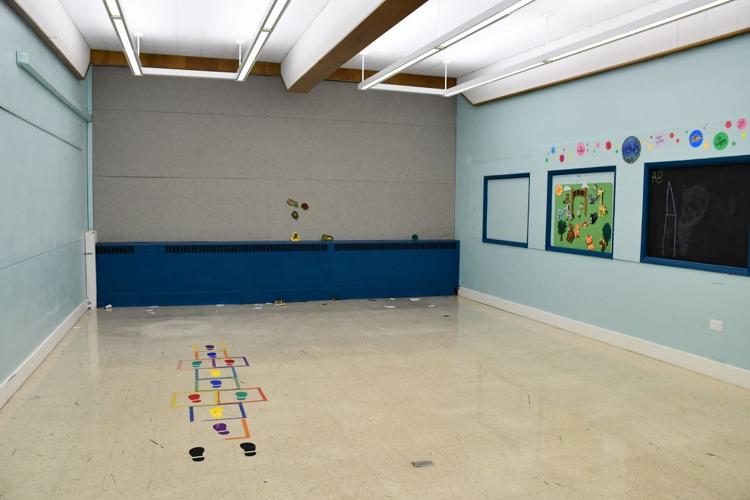
Classrooms at Larkspur are designed with the students they serve in mind. Off of one of the classrooms is also a cool-down room (pictured above) where students who are agitated or stressed can go to burn off some energy and self-regulate.
THE DALLES — After a decade without a day treatment program for children suffering from emotional and behavioral issues, The Dalles is once again able to offer services to children needing partial hospitalization, now through a program called Larkspur Day Treatment.
Started in November 2022, Larkspur is a day treatment program for children from kindergarten through fifth grade. Held at the Wahtonka campus in The Dalles, the program is a partnership between North Wasco County School District 21 and Trillium Family Services, a Portland-based youth mental health organization.
As a day treatment program, Larkspur provides mental and behavioral health services for up to eight “high-acuity” kids at a time, Larkspur Clinical Program Manager Jamie Davis said.
“When we talk about high acuity, we’re talking about kiddos that have very severe behavioral problems,” Davis said. “They do have a mental health diagnosis, they’re taking medication most likely, and there’s usually a pretty significant trauma history. So we’re seeing the kids that are needing the most help in the region.”
In order to enter the program, a child needs a referral from a physician or a mental health care provider, as Larkspur is a partial hospitalization placement funded by insurance. While “partial hospitalization” may sound intimidating, the program strives to make the experience feel safe and familiar. In many ways, it’s a lot like going to school. It takes place Monday through Friday, 8:30 a.m. to 1:45 p.m., with early release on Wednesdays.
“Kids do get educational services while they’re in the program,” Davis said. “There is a full teaching staff that teaches the curriculum to their grade level.”
Classrooms at Larkspur are designed with the students they serve in mind. Off of one of the classrooms is also a cool-down room (pictured above) where students who are agitated or stressed can go to burn off some energy and self-regulate.
Alana Lackner photo
In addition to standard education, children are provided with skills training and emotional support throughout the day. In the morning, after they arrive, they have a morning skills group. The end of the school day wraps up similarly, with an afternoon check-in to ensure clients have time to process their day before they go home.
According to the facility’s psychiatric service provider, Psychiatric Mental Health Nurse Practitioner Colin McInnes, Larkspur’s biggest focus is giving children and their families the tools they need.
“I have a strong belief that children do well if they can, people do well if they can,” McInnes said. “If they can’t, it’s because they lack a skill to do a certain thing, whether it’s to regulate their emotions, whether it’s to socialize, whether it’s to communicate. And if we can identify what that lacking skill is, then we can hopefully teach it. If we can teach them and teach their family how to manage that and model that, then there’s a lot of potential there for healing and growth.”
Larkspur works to achieve this in several ways, not just through their daily skills training, but also through mental health services that occur on a weekly basis. Each week, clients receive individual therapy as well as weekly family therapy to teach parents how to help their kids through the treatment process.
Clients also receive medication management services on a weekly basis. McInnes handles medication services, with a major part of his job being to prescribe and adjust medication for those who need it, but says that choices are always up to the child’s guardians.
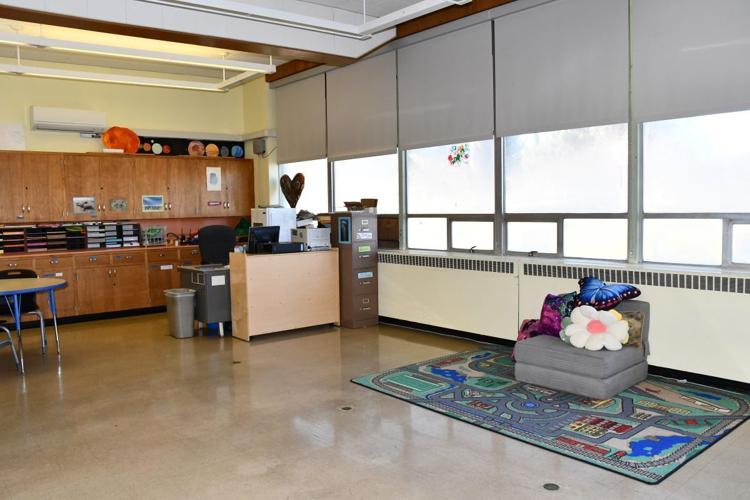
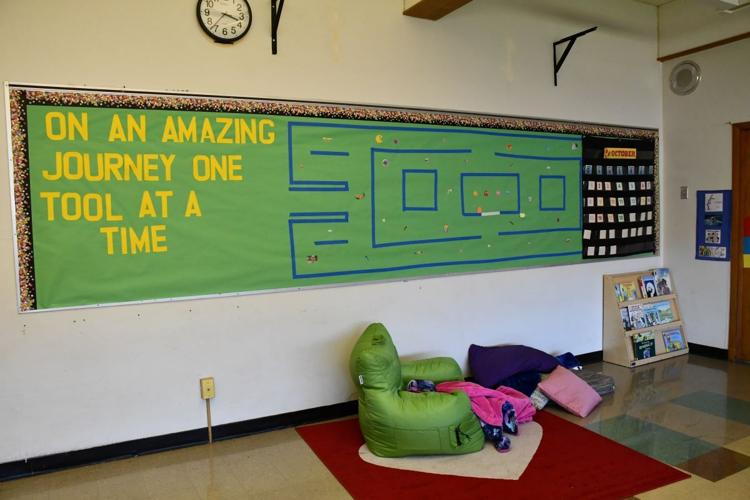
A chair full of fun pillows gives students a place to decompress.
Alana Lackner photo
“I see my job as being to educate and inform people,” McInnes said. “And I look, I assess, and then I say, ‘These are my recommendations. What do you want to do?’ As the parents, they get to choose.”
Transition out of the program
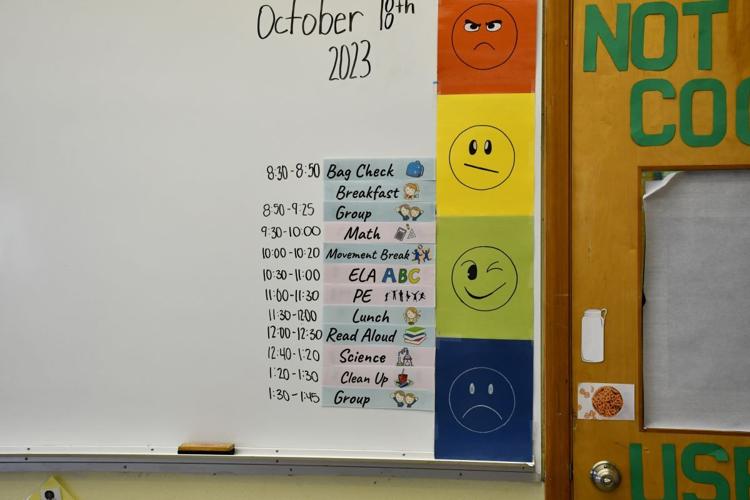
Predictability and routine is always important for children, but especially so for those who may be struggling with mental health issues. Every day, children are given individual schedules that they can check. Any appointments they have, along with regular classes or skills programs, will be listed on the schedule so children know exactly what to expect.
In a similar vein, transition out of the program is also designed to be as smooth and predictable as possible. According to Transition Specialist Robert Salazar, transition is something they think about from the time a new client arrives at the program.
“Within a week or two of a new client coming, I like to meet with the family to talk about a transition plan,” Salazar said. “So from the very beginning we’re talking about, ‘Okay, what does it look like after you discharge from here?’ This is a partial hospitalization placement, so they really are transitioning from a high level of care back into their local school, back into the community.”
The end of the school day wraps up with an afternoon check-in to ensure clients have time to process their day before they go home.
Alana Lackner photo
Transition includes getting students set up with outpatient mental health services so they continue receiving treatment after they graduate from the program, working with partners such as Mid-Columbia Center for Living or The Next Door, but it also includes robust communication with the school the child will be transitioning to.
Children typically stay in the program from around three to six months, depending on the needs of the individual client. The goal is always to reintegrate back to school, and as clients begin developing skills and becoming classroom ready, a discharge date will be set and the transition process will begin.
According to Salazar, about a month before a child is set to be discharged, he arranges to meet with the principal, the teacher, the school counselor and special education services to discuss what the child will need and what the school can expect. They also make sure that, if needed, the student has an up-to-date Individual Education Plan (IEP).
In addition to standard education, children are provided with skills training and emotional support throughout the day.
Alana Lackner photo
“It’s used potentially to inform the school’s instruments like functional behavioral assessments and safety plans,” Salazar said. “So that everyone in the building is aware of what this client is going to need to be successful and that there’s safety measures put in place to ensure success.”
For a week before their discharge, Salazar will accompany the child to their new school for a few hours at a time to get them used to the classroom experience.
“We’ll do partial days, so a partial day at the school, a partial day here [at Larkspur],” he said. “Working our way up to at least a half day of a school day in school, and then we kind of wrap up things with a transition review meeting where we talk about how it went.”
In addition to standard education, children are provided with skills training and emotional support throughout the day.
Alana Lackner photo
Though the ultimate goal is to get a child back into school and their community, it’s incredibly important to make sure they’re ready, Davis said. Making sure the child is provided with proper mental health care and given skills to cope with their feelings is the first step to ensuring their academic success, she said.
“When the anxieties are down and the mood is stabilized, they’re better ready to learn,” she said. “Their brains are more calm, and that means that they’re better prepared to retain information.”
Future goals
McInnes said that in the future, Larkspur would like to be able to have more clients enrolled at once, potentially up to 12 or 14. He said they would also like to offer services for those in middle school.
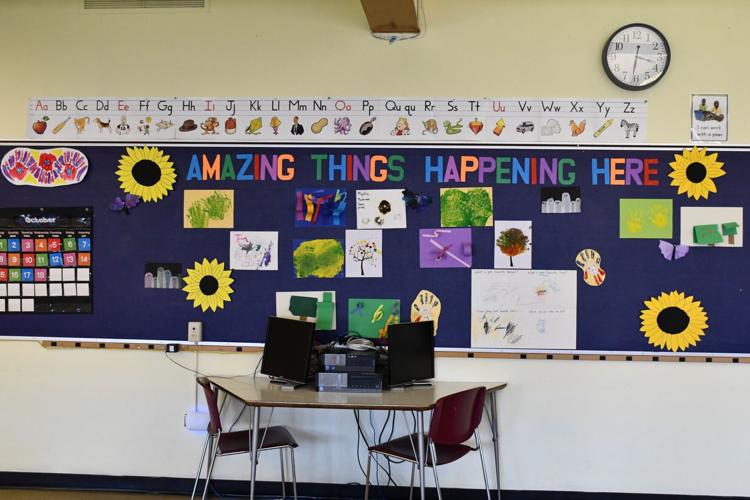
Classrooms at Larkspur are designed with the students they serve in mind.
Alana Lackner photo
“I have children in the community myself and I know that middle school is tough,” McInnes said. “And some of those kids need extra help too. So at some point, I’d like us to be able to expand to be able to help that group as well.”
In its current state, though, McInnes and Davis both expressed that they’re very proud of how far the program has come in a year.
“We have done really good work, really great work thus far,” McInnes said. “And I think we’re primed to really, this year, continue to carefully provide for the community.”



Commented