
WASCO CO. — After burning some 18,286 acres since July 9, the Larch Creek fire is dwindling in size within its bulldozed, dugout, burned out perimeter.
All evacuation levels were dropped completely on July 22, with the fire 81% contained, Wasco County public information officer. Crews have “made leaps and bounds since last week." A local command team is taking over, said Fire Chief Bob Palmer.
No homes burned, but crews are still figuring out whether any outbuildings or barns were destroyed, said Krell. The fire burned mostly scrubby brush, but not much cropland is known to be destroyed, “so I think we got lucky.”
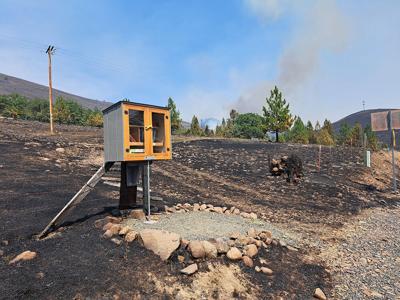
When the fire is moving fast in grassy fuel, the risk to buildings is low and even little structures can escape. Krell recalled a community library box, untouched in a burnt landscape, still full of borrowable books.
Landowners and farmers can check the Wasco County Sheriff’s Office Facebook page for information on grants and other resources to help repair their land. If they don’t know where to start, Krell encouraged landowners to contact her at 541-993-8173 or stephaniek@co.wasco.or.us.
Human activity started the fire on July 9. A full investigation of the cause will wait until the location of that first 911 call is safe to inspect, Krell said.
The conflagration grew rapidly in hot, dry weather marked by “extreme fire risk” warnings until sometime around July 14, when it stabilized near its current size, and areas of concern began dwindling.
A bulldozed ring fully surrounded the fire last week, but that couldn't be called containment because the fire might still have jumped it, Krell said. Night-time flights by infrared cameras mapped this area more precisely each day.
“We’ve been fortunate in our jurisdiction to not have a significant fire for a period of time,” said Palmer. The last such blaze, the Milepost 87 fire, was smaller but did damage homes in the Lone Pine trailer park. Several other big fires in the last two or three years topped 10,000 acres.
Local weather conditions have changed in recent decades, increasing fire risk, he said. It’s all about wind.
In past years, hot temperatures usually didn’t coincide with high wind, he noted. But lately, Palmer said, “We’ve been seeing hot days with windier conditions. And so that makes it challenging.” Wind speeds fire up, feeding it oxygen, spreading embers, and drying fuel.
Average temperatures also rose over the last few decades, with impact on fire risk. Hot days also dry out the fuel, “probably one of the top circumstances that creates problems for any firefighting agency to maintain the small footprint.” National Oceanic and Atmospheric Administration (NOAA)predicts more extreme conditions in future summers, he said. The windier, hotter weather is a problematic change.
Aircraft began responding to local fires faster in response. “Aircraft makes a huge difference,” said Palmer. Agencies like Oregon Department of Forestry, U.S. Forest Service, and OSFM introduce aircraft earlier now, keeping fires smaller and protecting property, especially in wildland-urban interface areas.
Fires like Larch Creek, upwards of 10,000 acres in size, are infrequent but expected in Wasco County, Palmer said. Keeping it fire from growing even bigger and saving all the threatened homes was “quite remarkable,” he added, given the weather and terrain crews faced. The fire “had the potential for a much more challenging and dynamic situation.”
Across Oregon, big wildfires are still active. Resources from nine other states were dispatched to them last week, including to Larch Creek, Oregon State Fire Marshal (OSFM) announced on July 15.
Deschutes and Sherman counties are “fairly overwhelmed” with fires over 10,000 acres, after dry lightning struck across central Oregon recently, Palmer said. The nearest big conflagration is Lone Rock, with an area of 124,556 acres in the Prineville District as of July 22. A little farther away was the 14,602-acre Boneyard Fire, the Battle Mountain Complex and 12 other conflagrations in central Oregon and along the Cascades.
“It’s just a matter of if, not when, they’re going to occur,” said Palmer. He encouraged people to be aware of local fire conditions and avoid creating sparks, for example by mowing grass with a metal blade — and to call 911 if they see lightning start a fire.


Commented