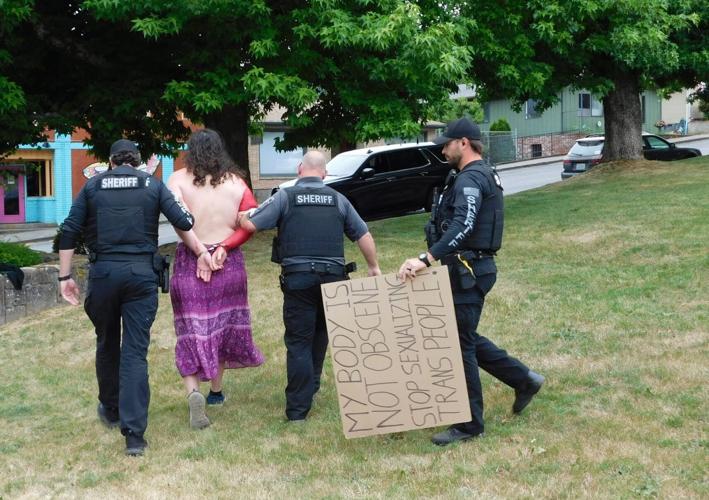
At left, Stevenson City Council member Lucy Lauser, getting arrested. Lauser was cited for indecent exposure during what she says was a political protest.
At left, Stevenson City Council member Lucy Lauser, getting arrested. Lauser was cited for indecent exposure during what she says was a political protest.
STEVENSON — Washington state’s Supreme Court issued a ruling Thursday that ended the effort to remove Stevenson City Council member Lucy Lauser from her position.
“The charge that Lauser committed malfeasance or violation of oath of office … is neither factually nor legally sufficient” to support such an action, the high court’s ruling said of a recall petition filed last May against Lauser.
A second petition to recall Lauser, filed in August, was dismissed in October by a lower court and not appealed. The combination of rulings means that, at this point, Stevenson voters will not weigh in on allegations that Lauser should be removed from office.
Lauser was thrilled.
“It still feels a little bit surreal,” she said several hours after the ruling was issued, adding that waiting months for a decision had led to heightened anxiety. “It vindicates everything I’ve been saying, that my body is not obscene and I have a right to express myself and be treated equally.”
The reasons for recall
Both recall petitions against Lauser were based on incidents when she publicly took off her shirt in downtown Stevenson and exposed her breasts. The petitions said this constituted criminal indecent exposure and met the conditions required for recall. Lauser maintained her actions were constitutionally protected political speech.
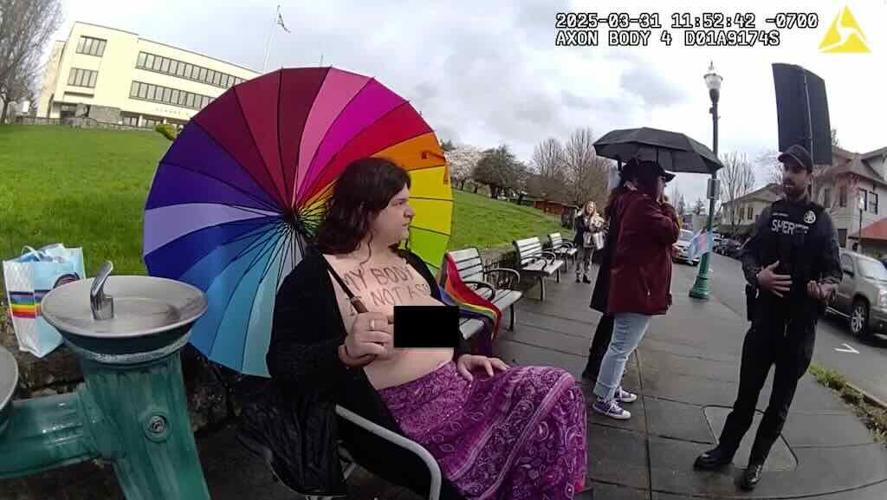
The first incident was part of a March 31 gathering to mark an international day designed to raise awareness of transgender people and rights. Lauser is a transgender woman. Police spoke with Lauser that day but took no further action.
The other happened on July 4, and led to law enforcement arresting Lauser for indecent exposure.
Stevenson resident Kathleen Fitzgerald, who led both recall efforts, previously told Uplift Local that she felt “compelled to act” after witnessing the incidents.
“If a private citizen had done what council member Lauser did, there would be consequences. The same standard must apply to those in public office,” Fitzgerald said after filing the second petition. “It’s about accountability and public trust.”
But because Fitzgerald’s second petition was dismissed, the high court focused exclusively on the first. The justices’ ruling covered two questions — whether the recall petition was supported by both the facts and the law. Both are necessary for a recall to go forward.
While all nine justices made it clear they agreed the recall should be dismissed, three said that the court should have stopped deliberating after it decided the facts didn’t support a recall.
Stevenson City Council member Lucy Lauser during the March 31, 2025, incident that led to the first recall petition against her.
Image from law enforcement body camera footage; blackout rectangle added by Uplift Local
What the high court weighed
Washington case law cited in the Supreme Court ruling says that when recall petitions allege that an elected official broke a law, “the facts must show the official intended to do so.” But, the justices wrote, that was not shown in Lauser’s case.
The recall petition said Lauser had broken Washington’s indecent exposure law, which includes phrases that are subject to interpretation, such as “open and obscene” and “reasonable affront or alarm.”
The justices ruled that because Lauser believed her topless protests were an expression of her political views, she did not intend to commit a crime.
“Lauser had a good faith belief her conduct was lawful,” the court wrote.
The ruling then considered whether Lauser’s behavior was constitutionally protected as political speech. Justices concluded it was, because she was conveying a specific message, about transgender rights, in circumstances that “create a great likelihood” that her message would be understood.
This was a conclusion three justices said the court did not need to explore or express. “The facts do not show that Lauser intended to commit this offense,” Justice Barbara A. Madsen wrote in a partially dissenting opinion. “I would leave it at that.”
But it is precisely that conclusion that gives the ruling its real significance, says Adrien Leavitt, a staff attorney for the ACLU of Washington, who represented Lauser in the recall appeal.
By determining that Lasuer’s topless protest was constitutionally protected speech, the court made a “really clear and beautiful statement” that her actions were “not a crime on Transgender Day of Remembrance or any other day,” Leavitt said. “It creates a really important clarification about both the law in Washington state as it applies to indecent exposure, and constitutionally protected expression.”
Criminal charges remain
Leavitt made it clear he does not represent or advise Lauser in the criminal indecent exposure case.
Those charges are still in play. In December, Skamania District Court Judge Ronald H. Reynier ruled against Lauser’s motion to dismiss the charges. Last week, he set a tentative trial date of April 22.
However, Brian Pruett, Lauser’s court-appointed attorney, told the judge during last week’s hearing that he intends to request that the Skamania Superior Court review Reynier’s decision against dismissal.
Editor’s note: This story has been updated with comments from Lauser and Leavitt and details of the ruling. We have reached out to other people involved in this story for comment and will add more information when we have it.



Commented
Sorry, there are no recent results for popular commented articles.