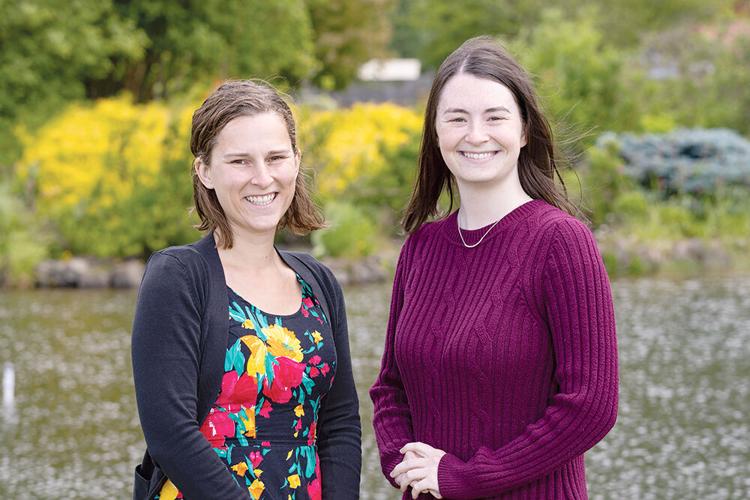
Pictured, from left, are the new residents in a Hood River-based family medicine rural training program, Dr. Amanda Ciechanowski and Dr. Amelia Matthews.
Pictured, from left, are the new residents in a Hood River-based family medicine rural training program, Dr. Amanda Ciechanowski and Dr. Amelia Matthews.
HOOD RIVER — Hood River is home to a small residency program for medical school graduates who are going into family practice — which for years has been the most-needed type of doctor in medicine.
The Providence Hood River Family Medicine Rural Training Program began in 2013, and the program recently welcomed its new class of two medical school graduates: Dr. Amanda Ciechanowski and Dr. Amelia Matthews.
They will complete their training in three years.
“I want the community to know there are these wonderful young doctors who speak Spanish, are very enthusiastic, and have got good hearts,” said Dr. Robert Gobbo, the program’s founder and director.
Illinois native Ciechanowski’s undergraduate and graduate school majors were Spanish Literatures and Cultures, along with molecular and cellular biology. She went to medical school in Cuba, was her school’s valedictorian, and received the Scientific Merit Award.
“Amanda describes herself as a connector and thoroughly enjoys finding any excuse to bring people together,” a press release from the residency program stated. During the pandemic, she helped with Cuban COVID-19 vaccine trials.
She did postgraduate studies focused on the application of integrative medicine in inpatient and outpatient settings. Integrative medicine treats physical, emotional, mental and spiritual needs, and “integrates” conventional approaches and complementary therapies for optimal health.
She moved here with her husband Hirzel, their daughter Alma who recently turned 1, and her cat “Sponch.”
Matthews, originally from North Carolina, majored in biology in college and went to medical school in Arkansas. She was honored by her medical school classmates as a Gold Humanism recipient for her work in her community and in Central America.
“She loves the breadth of practice of family medicine and she believes the healthcare community needs to call for healthy environments for kids to grow up in,” the press released stated.
Matthews did research on nutrition access in the Mississippi Delta and has been a long-term volunteer in one program that helps Parkinson’s patients and another that works with children with disabilities.
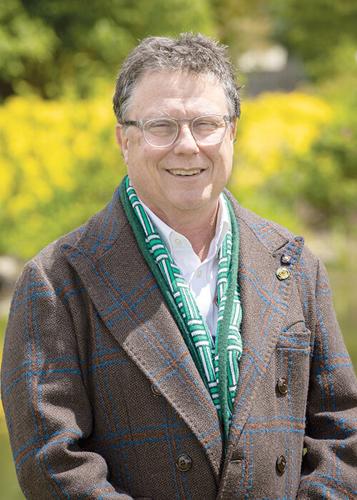
Pictured is Dr. Robert Gobbo, who founded and directs the Providence Hood River Family Medicine Rural Training Program.
Michael PETERSON PHOTOGRAPHY / Contributed photo
Since its inception, the program has graduated 15 residents and boasts a 100% board passage rate, Gobbo said. “The fact that half of them have stayed in the Gorge has been great,” Gobbo said.
That is indeed a big win for the Gorge, considering family medicine doctors have been the most sought-after specialty among hospitals and medical groups for the 18th year in a row, according to a 2024 report by AMN Healthcare/Merritt Hawkins, an industry-leading report on physician recruiting.
The program is unique in that Providence and One Community Health are partners on it, Gobbo said.
One Community Health is a nonprofit community and migrant health center that serves more than 20,000 patients with medical, dental, and behavioral health services.
Residents spend most of their first year training at Portland hospitals but see patients at One Community Health for all three years of their residency.
The residents experience the full scope of family practice, getting training from delivering babies to caring for the elderly, Gobbo said.
“On an average day, the residents will deliver babies, admit an elderly patient in heart failure, see their continuity patients in clinic, learn how to do procedures like ultrasound, family planning and skin biopsies, treat patients with substance use disorders, and see patients in the nursing home,” Gobbo said. This is all done under the supervision of faculty physicians.
“We wanted them broadly trained and well capable to take care of the needs in rural communities,” Gobbo said. “The whole point is to train people to do full spectrum family medicine and to practice in rural communities.”
Full spectrum family medicine means providing care in both clinic and hospital settings, delivering babies, and serving community needs, so it includes some public health background, Gobbo said.
The residency program has been lucky to have a variety of teaching staff. “We have kind of a little bit of unique environment,” Gobbo said. Local community providers “all like to teach and have been very supportive of the residency.
“We are really lucky that we have enough obstetrical providers here” who are “very willing to train residents.”
Family medicine has been on the decline because medical education has been deemphasizing primary care and rural practice for decades, Gobbo said, and other practices are more lucrative.
Loan forgiveness programs aren’t available enough to support family doctors working in rural areas. Rural areas also have “maternal care deserts” due to small hospitals closing, or not having providers who deliver babies, he said.
“Training in a small community is dynamic, challenging, and not for everyone, but is incredibly rewarding because our residents can see the differences they are making in their patients’ lives and our communities,” Gobbo said.



Commented