
THE DALLES — Wasco County commissioners have approved a $158,431,216 million spending plan for fiscal year 2025-26, a blueprint that pours new money into public safety, capital projects and the $50 million Resolution Center while banking nearly $12 million for the next rainy day.
Finance Director Mike Middleton commented that this year features a particularly big budget, including the largest single public works fund in county history.
“Part of the reason why it is so large is we do have the Resolution Center fund in there,” he told the board as he asked for the budget’s final passage on June 4.
The total package is only 0.3% larger than last year, yet it trims day-to-day costs and bulks up reserves. The adopted plan pares the general fund — the county’s primary checking account — by $4 million, to $43.4 million, mainly because a five-year federal planning grant will be spent more slowly than originally projected.
“The expenses slightly exceed the revenues on the presented FY26 Budget, but this is an intentional use of fund balance and will correct in FY27,” Finance Director Mike Middleton explained in the 647-page budget book.
Where does the county’s money come from?
The county expects to collect $156.1 million in revenue, down 1.6% from financial year 2024-25.
Property taxes come in at $14.1 million. State funding brings in $11 million and federal funding totals $2.6 million (this is excluding the money directly provided for the Resolution Center.)
Electrical and plumbing permit fees are surging this year. Building codes — bolstered by Google data center and megawatt substation projects — now accounts for $9.3 million in revenue.
Licenses and permits bring in $3.4 million, including the solid waste host fees paid by Waste Connections via the Wasco County Landfill, which accounts for $1.9 million.
Contributions and donations come in at $3.2 million.
Investment earnings are projected at $2.1 million, double the haul just two years ago, thanks to higher short-term interest rates. Service charges bring in another $1.6 million.
A notable line in the ledger is a projected $50.4 million infusion of state and federal construction grants for the new Resolution Center — a behavioral health residential treatment center offering substance abuse treatment and a drop-in center for individuals in crisis.
The money will not be spent, Middleton stressed, until every grant agreement is signed.
Another revenue source is the county’s enterprise-zone payment, mostly the limited-time voluntary fee Google pays in lieu of property taxes on its data center campus. That revenue drops from $5.6 million this year to $2.6 million next year. Even so, the cash continues to underwrite pay-as-you-go capital projects from fairground wiring to sheriff’s radios.
Capital projects: buildings, outdoor rec and emergency services
Outside the Resolution Center, commissioners authorized another $15.1 million in the Facility Capital Reserve Fund, up 23.7%, to modernize the historic courthouse, reroof county offices and keep the new Third Street administration building on schedule.
Fairgrounds & Hunt Park: A state grant and local match will rebuild animal barns, add 50 full-service RV pads and upgrade electrical systems. The fair fund grows 13.7%, to $587,649, while the parks fund jumps 21% to $1.2 million.
Kramer Field: A dedicated reserve carries $36,376 for the next phase of improvements with the goal of hosting tournaments.
New digital 911: The 911 communications fund remains flat at $1.54 million (though last year’s spending only hit 1 million), but its equipment reserve climbs 37% to $739,120, laying away cash for a county-wide computer-aided dispatch and records-management system. Sheriff’s Chief Deputy Scott Williams called the upgrade “a year-long project” that will replace obsolete software dating to the late 1990s.
State and federal changes impact budgets
Personnel costs rise 22% to $20.7 million as the county absorbs a jump in state retirement premiums and adds targeted staff:
Three new IT technicians supported by outside-agency contracts,
An office administrator for the new IT department,
Two grant-funded “family navigators” in Youth Services,
A new supervisor for 911 dispatch,
A new survey technician,
An electrical inspector hired early for succession planning and
A possible new plumbing inspector, potentially hired by Hood River instead.
These positions correlate with the region’s growth amid expanding energy and data center projects. Still, Middleton prescribed a conservative approach to new projects.
“New or expanded services must be covered by ongoing revenues,” he wrote in the “Priorities and Issues” section of the budget, but several county divisions will shrink.
Public Works falls 4% to $7.27 million due to federal cuts, with hopes that the state’s new transportation package might replace federal funding. The department is primarily funded by the state Motor Vehicle Fund and the Secure Rural Schools (SRS) legislation which pulls timber taxes towards improving safe access to rural schools. If SRS is not re-authorized, the department will lose 13% of its operating budget.
County Schools lose nearly half its pass-through due to the stark absence of federal Title I funds in FY25, dropping the fund’s beginning balance this year.
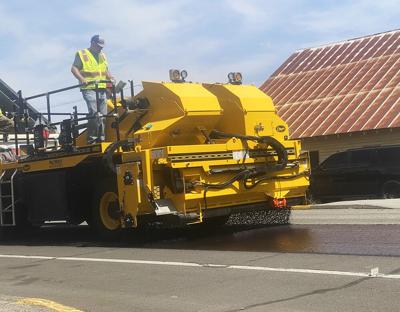
Road Reserve is down 30% as the department cashes out savings for chip-seal oil and heavy equipment.
The general operating reserve drops 14% after transferring $2 million last year into capital improvements on facilities. Even with the draw, the county will end the fiscal year with $11.9 million unappropriated — money that can cover emergencies without borrowing.
County loans $3 million to QLife
At the county board meeting, commissioners approved a $3 million intergovernmental loan to QLife, the municipal fiber network jointly owned by the county, The Dalles and Northern Wasco County PUD.
Executive Director Liz Lance told the board the cash would help QLife compete for a share of Oregon’s $700 million federal “BEAD” broadband allotment.
“Broadband is a highly competitive market, and we are very much looking forward to being able to bring additional access and accessibility to the area,” Lance said.


Commented