On May 20, Adapting to Climate Change in the Gorge was held at the Discovery Center in The Dalles, sponsored by Friends of the White Salmon River and Columbia Gorge Climate Action Network. Around 100 people attended from all around the Gorge. Scientists, tribal leaders, agency personnel, and community activists presented on three main topics: Climate effects on local flora and fauna, environmental equity, and adaption and action.
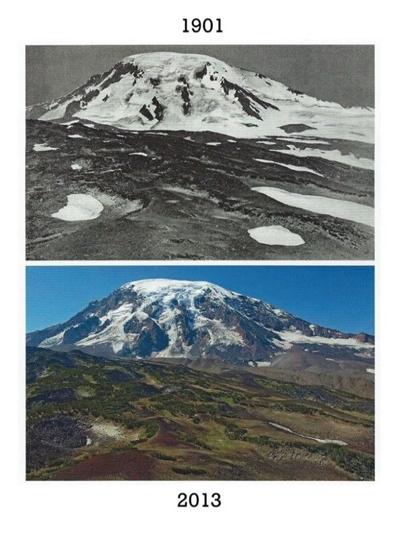
Hydrologist Oriana Chegwidden, Ph.D., discussed the changes in precipitation. Projections show a 40% reduction in total snow volume by the 2080s. More precipitation will fall as rain, and the snow will melt earlier, leading to higher winter flows and dryer summers with reductions in summer stream flows and warmer water.
Management of carbon in forests was addressed by former Richardson Chair of Forest Science at OSU, Mark Harmon, who discussed the scientific basis for addressing and managing carbon storage in forests being used for timber production.
Pat Connolly, Ph.D., and Bill Weiler, wildlife biologist, addressed adaptation to climate change by salmon and by mammals. Some species are immediately threatened, while but there is much we do not know about how wildlife will be affected. As Connolly said, “This is not rocket science. It’s harder than rocket science.”
Yakama Tribal Member and Fisheries Biologist Elaine Harvey talked about the preservation and protection of natural resources that are significant to the Yakama Nation. She said, “With climate change already in our midst there is a grave concern for the Yakama First Foods which is a vital part of Yakama culture and way of life.”
Ubaldo Hernandez, founder of Communidades, a Gorge-based group seeking environmental and social justice, discussed how environmental and climate change issues converge with social and economic injustice, and that climate change solutions need to address the power inequalities in our communities. All voices need to be heard.
The afternoon session turned to action. Presentations on forestry (Darold Ward), the development of an energy plan for the City of White Salmon (Peter Fink), the Hood River Energy Council (Alexia Kelly), adaptation efforts by local orchardists (Ashley Thompson), and the Gorge Commission’s Climate Change Action Plan (Lisa Naas Cook) led to breakout sessions where on-going and necessary actions were discussed. The speaker presentations are available on the FWSR website.



Commented