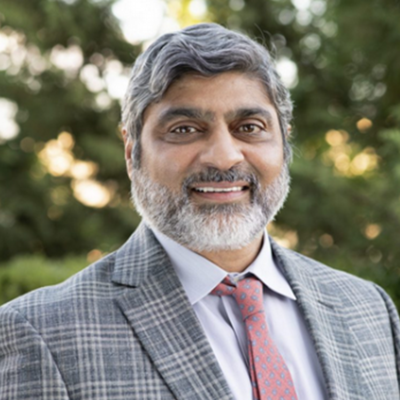
Mid-Columbia Medical Center Chief Medical Officer Jayant Eldurkar
THE DALLES — Mid-Columbia Medical Center will suspend medical oncology services at Celilo Cancer Center effective Feb. 28 due to the lack of a medical oncologist in what Chief Medical Officer Jayant Eldurkar said he hopes will be a temporary setback for the center.
Eldurkar said hospital staffing nationwide has been difficult since the COVID-19 pandemic, with many medical personnel leaving the profession, and a new medical oncology physician has been especially tough to find. Prior to the pandemic, only 11% of all oncologists were working in rural areas like The Dalles. Today, only 3% work in rural areas, choosing instead to work in urban settings or as traveling physicians.
Others want to practice remotely, over the phone or via Zoom. “You can do a lot of oncology that way,” Eldurkar said, but medical oncology requires someone to physically examine the patient. “You can’t do that on a telehealth model,” he said.
Other options, like traveling physician programs, are significantly more expensive than having an oncologist on staff. “It can be cost prohibitive to a small institution like us, and many others across the country. Unfortunately, we see and hear about oncology programs closing on a daily basis,” he explained.
In addition, many qualified oncologists are older and looking toward retirement. Training programs continue to train the same number of new oncologists, but the loss to retirement is greater.
Medical oncology focuses on solid tumors, and the treatment of cancer with chemotherapy, targeted therapy, immunotherapy and hormonal therapy.
Radiation oncology services, non-chemo infusion services, implanted device maintenance, and surgical cancer care — breast, colon, access ports, prostate, urological, head, neck and breast cancer navigation — will still be offered and are not impacted by the change, according to the MCMC website.
Navigating changes
Those actively seeking chemo and other cancer services no longer available locally will still be assigned a “nurse navigator,” Eldurkar said. The navigator will help prospective patients get the care they need, and identify alternatives if care can’t be given locally. “Is care available? We hope so,” he said. Shutting down services at MCMC will put additional pressure on larger institutions that are still offering those services, and alternative providers are being identified.
“(The closure) is going to put pressure on them as well,” Eldurkar said.
Although MCMC has recently been cleared to join Adventist Health, a network expected to give MCMC more resources in the future, the hospital and Adventist are currently wait for state and federal regulatory approval before moving forward in that partnership.
Eldurkar is confident services will return to the Gorge, however.
“We will most definitely be starting up again,” he said. “That’s why we want to retain all of the Celilo staff, so they are in place when we get the program up and running again. Everybody here is putting tremendous effort into pulling every lever they can to bring cancer care back to the Gorge,” he said.
There isn’t anyone currently available, he said again, but “things are starting to change for the better, I think. You can’t fill all the gaps overnight, but we are hiring physicians,” he said.



Commented