THE GORGE — For a small conservation district balancing the needs of human communities with those of streams and increasingly human-filled forests in western Klickitat County and all of Skamania County, asking landowners to voluntarily participate is working.
But with a growing population, growing demands on water and the impacts of climate change — like rising wildfire risk — that balance won’t get easier, said Tova Tillinghast, district director at Underwood Conservation District (UCD).
UCD does not enforce any laws or regulations. Instead of reporting a violation, their policy is to help a landowner get the resources and knowledge to "do the right thing" without judgment, said Barbara Bailey, chair of the board of supervisors for UCD.
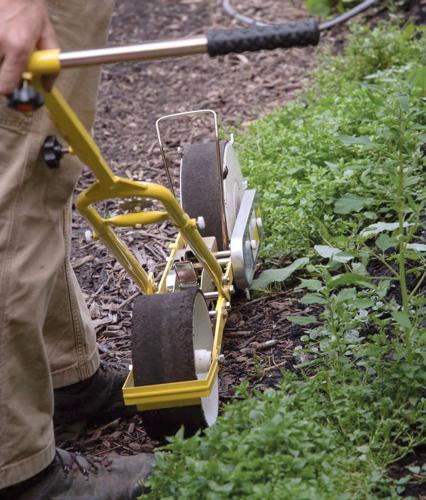
The idea is to protect and restore wild land and farmland by helping landowners and producers access the resources to manage their acreage well, both for themselves and for ecosystems. For example, small producers and market gardeners can borrow things like a poultry plucker and honey extractor, or the tools for no-till farming, from the Food & Farm Tool Library, adding value to products and protecting soil and water.
UCD can help replace too-small culverts with fish passages — also helping floodwater and debris from storms pass through without damaging roads and bridges.
They can help identify invasive plants, and find techniques and resources for controlling those. That means judging which invaders are worth fighting — like Tree of Heaven — and which are so common they just can’t be stopped. The Klickitat and Skamania County Noxious Weed Control Boards decide that, but some areas, like riparian (stream-side) forests, are so important to water quality and wildlife habitat that treating weeds and restoring native vegetation is necessary.
And at Buck Creek, UCD replaced open ditches with 9,000 feet of pressurized piping the White Salmon Irrigation District can withdraw only the water they need. As a result, an additional 2.39 cubic feet per second now flows down Buck Creek for fish, wildlife and forest. The City of White Salmon also withdraws water from Buck Creek, at a different point.
In making wildlands and waterways more resilient, the UCD also makes them more resilient to drought, flood and wildfire.
But at times, conservation and human interests do conflict. As climate and conditions change, “it’s going to be harder and harder to meet human needs with the needs of other organisms that rely on that water [or other natural resources," Tillinghast said. Which is why she is so proud of the Buck Creek project: It’s a win-win situation, something she can’t always enjoy.
To solve these conflicts, watershed planning is helpful. A watershed plan maps out a stream’s needs, alongside current and future human needs. But “I don’t see it getting a lot easier,” Tillinghast said.
Landowners of all demographics participate. Many are hobby farmers, small-scale producers or just residents managing a few acres at most.
At a crop talk in 2023, Jacob Larson demonstrates a tool from the Food & Farm Tool Library on the Larsons' 1/3 acre market garden.
Flora Gibson file photo
Others are large-scale landowners like cattle operations. For instance, UCD helped a cattle operation in western Klickitat County install infrastructure at a spring to funnel water into a trough so cattle can drink without trampling the spring. At times they work with local tribes, said Bailey.
Climate change is a major concern for UCD, Tillinghast noted. It brings growing wildfire risks, earlier spring floods, and drier summers caused by warmth melting snow and ice off the mountains earlier.
This has created new issues for UCD, like air quality. "That's a shift, is how we've seen our environment changing. And so we've had to consider, well, how are we going to adapt to that?" said Bailey.
Restoration projects help absorb some impacts from these changes making forests and watersheds more resilient to drought, flood and wildfire, protecting the people that live there. Restoring a stream — for example, changing grazing patterns, or building beaver dam analogs (human-made beaver dams constructed of vegetation and natural materials, in imitation of how beavers affect the landscape), to restore beaver habitat — can help the land around it absorb floods, keep fish healthy and the area fire-resistant. Helping landowners at risk from wildfire create defensible space on their property is also a priority.
Another strategy for mitigating climate change is improving soil health: Using no-till farming practices, mulching, going organic, producing biochar, and so forth. UCD can help landowners learn those techniques and provide tools through the Food & Farm Tool Library.
Over time, UCD projects improved water quality and wildlife habitat on a case-by-case basis, Tillinghast said. But overall, UCD’s impact is harder to measure. Conditions beyond UCD’s control, like climate change and ocean conditions and fishing regulations, affect ecosystems too.
And the area's population and infrastructure is growing — slowly splitting land into smaller parcels with an influx of new landowners — many unfamiliar with land management and conservation issues, who face a steeper learning curve before projects with UCD, Tillinghast said.
For example, Klickitat County’s population has grown 3.8% over the last three years, according to the U.S. Census Bureau. Skamania's population grew about 5%. Both are well above the national growth rate of about 1%.
In decades past, UCD might help one landowner protect a stream; now that might take multiple small parcels.
Funding is from local, state and federal grants, with smaller but stable income from Klickitat County Rates and Charges, a tax of $5 per parcel and between $0.05 and $0.10 per acre, approved by commissioners every 10 years — most recently in 2019. For each dollar UCD gets via this tax, $6 or $7 are spent in the community, Bailey said.
Funding for stream restoration often depends on the presence of anadromous fish in the rivers where they work, including the Washougal, Wind, Klickitat, etc. Anadromous fish runs are also returning to the upper White Salmon River, since the Condit Dam removal in 2011. Anadromous fish are those like salmon, steelhead and lamprey, which migrate to the ocean, then return to breed in freshwater.
UCD's problem, Bailey said, is landowners don't know they exist, or what they do and how they can help. Reaching urban gardeners is a goal.
After 20 years at UCD, that’s still what intrigues Tillinghast: Looking for solutions and common ground between what human communities need to thrive, and what the natural environment also needs.
“That’s the ultimate challenge in all of these different situations,” she said.
A previous version of this article incorrectly implied that UCD operated only in Klickitat County.



Commented