HOOD RIVER — When we think of the arts, we think of a limitless range of human expression: bright colors, abstract shapes, hands-on activities, performing, and so on. But these practices don’t just exercise our creative side; they bridge to other disciplines and help us become more connected, well-rounded humans.
According to Amy Gray, executive director of Arts in Education of the Gorge (AIEG), robust arts curricula in schools — a frequent victim of budget cuts — are needed as soon as possible. Gray presented AIEG’s mission at the Hood River Rotary meeting on Aug. 20, characterizing arts education as a non-negotiable for human creativity, workforce readiness, cognitive development, and civic engagement.
“If kids are not working with their hands and their hearts, they’re not going to be ready for what happens later in life,” she said.
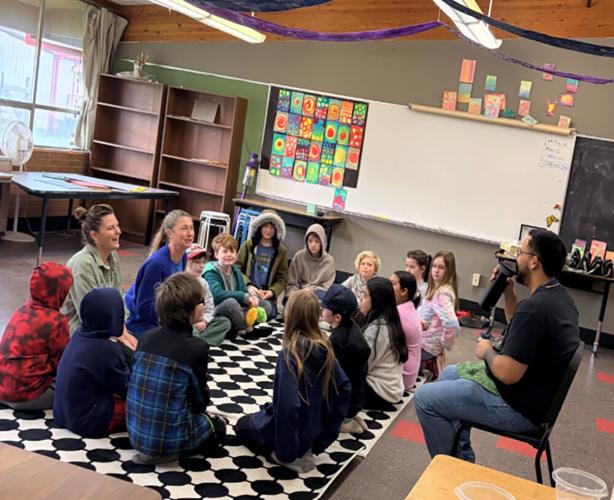
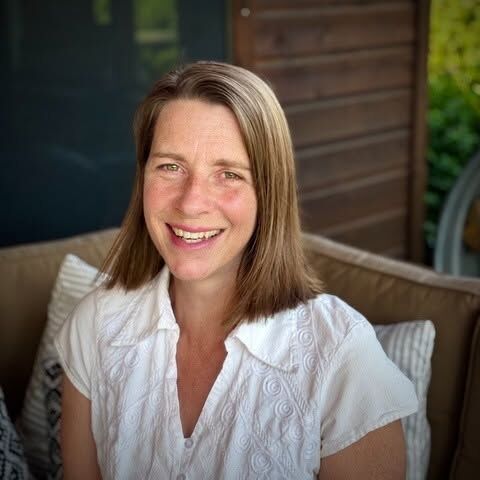
Amy Gray, Executive Director of AIEG.
Arts in Education of the Gorge
Serving the Gorge for 40 years, AIEG is a nonprofit organization that works to bring performing, visual, and literary arts curricula back to schools, thereby enhancing every child’s development.
Through seven art integration programs, partnering with 18 schools throughout the Mid-Columbia region, AIEG’s 40 teaching artists visit classrooms through single and multi-week residency programs. These programs don’t intend to replace existing standards or disciplines, but expand upon them, taking coursework and applying creativity-based lessons and activities.
“We believe that creativity is essential. We don’t think kids can learn without it,” Gray said. “That’s part of the reason why we have chronic anxiety and absenteeism. That’s why reading and math scores are low. We can’t teach reading and math without the arts, so we need them back.”
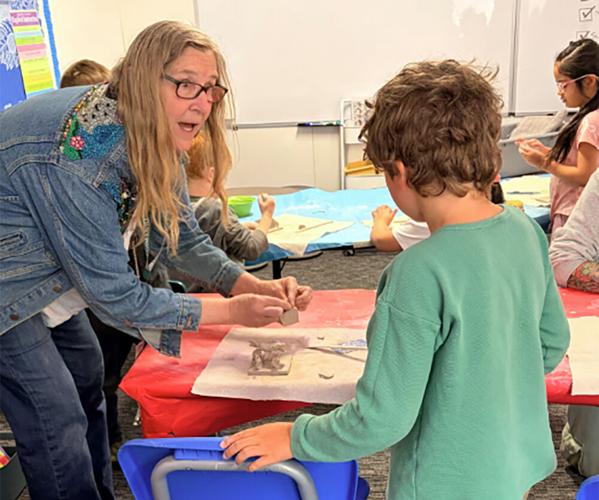
An Arts in Education of the Gorge (AIEG) teaching artist during one-on-one instruction with a student.
Every residency is interactive, hands-on, playful, and messy — especially meaningful in today’s “attention economy,” Gray explained, where interruptions and distractions pull kids away from themselves and their communities. “Perseverance grows attention spans.”
“During residency sessions, AIEG consistently sees students who typically struggle with attention, behavior, or emotional regulation remain engaged for extended periods of time,” said Adrienne Acosta, principal at May Street Elementary. “For many of our at-risk students, these moments of success foster a sense of belonging and self-worth that carries over into other parts of their school day.”
AIEG’s overarching hope is that cultivating these environments will serve kids well into their adult lives, building the collaboration skills that employers need the most and perspective-building skills essential to democratic life.
The program is funded through a mix of parent-teacher organizations and a growing base of grants and foundations, including the Harvest Foundation and the Roundhouse Foundation.
The program
Beyond and interwoven into residency sessions, AIEG participates in several programs and partnerships. The Jumpstart program, for example, gathers four and five-year-olds about to transition into kindergarten and gives them a platform to create art that will end up in a Portland Art Museum student showcase called Imagine Monuments. On Oct. 10, works by kids from Mosier, White Salmon, and Hood River will debut at an opening celebration.
One of its core programs, “Makeshift,” is a grade-specific arts integration series. Gorge first graders participate in community building through movement (dance, singing, body-based arts) while third graders collaborate to create a large public artwork to be displayed for the wider community. Last June, students from several schools collaborated on a mural for the Hood River County Library, depicting three levels of a forest ecosystem.
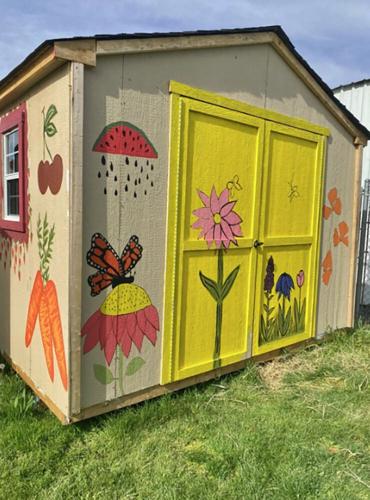
AIEG also offers after-school programming. Since kids in aftercare don’t choose to be there and are often tired, the programs are designed to be engaging and fun. For example, kids in The Dalles painted their own garden sheds last spring.
Students in The Dalles painted garden sheds as a part of the AIEG after school program.
In Fall 2025, AIEG was given a dedicated classroom at Wallace & Priscilla Stevenson Intermediate School in White Salmon, known as Room 111 — a space used as a camp-like studio where teaching artists work with small groups of students in rotating stations. It features a student-created “portal” entrance: an earth science curriculum integration featuring layers of the atmosphere.
At the Dalles Alternative High School, a non-traditional, flexible option designed for students who likely wouldn’t stay in a conventional high school, teaching artists gave students an incentive to show up, leading them in creating a mural of the school mascot, a rising phoenix.
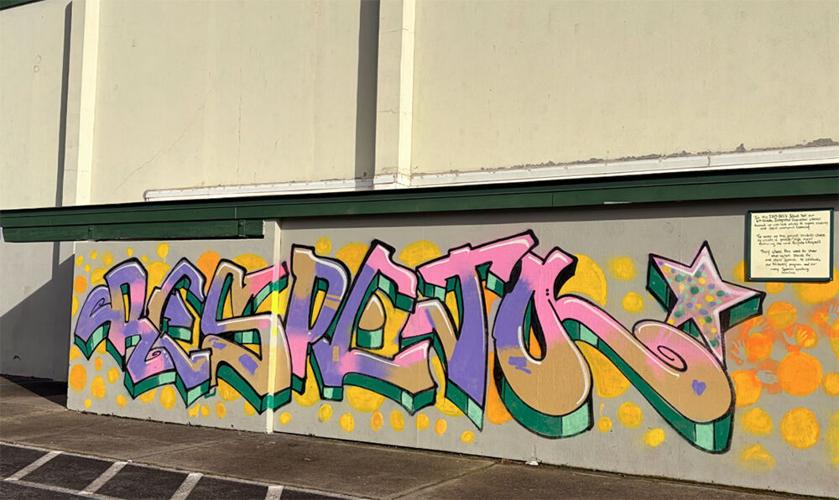
At Wy’East Middle School, students wanted to learn about spray paint and graffiti, so a street artist came with wisdom on lettering and writing, culminating in two murals.
Students from Wy’East Midde School spray painted “Respeto” or respect on the side of the school.
Through these programs, AIEG emphasizes student choice, openness, inclusiveness, and relationship-driven instruction. “We want to meet students where they are, so if they want to be weird and say that to the world, that’s what we want them to do,” Gray said. “Students make their shared spaces magical, and they love coming to school and seeing what they made.”
AIEG additionally participates in Oregon’s statewide “Fifth for the Arts” program. With 80 districts transitioning to a four-day school week model, school buildings are empty on Fridays; AIEG and other nonprofits aim to use this “off” day for opt-in art programs. If implemented fully, up to 20% of school time in participating districts could become arts-rich, community-based learning time outside the traditional schedule.
“As we look to the year ahead, we invite you to continue dreaming, creating, and growing with us as we bring the transformative power of the arts to more students, classrooms, and communities across the Gorge,” Gray said.





Commented