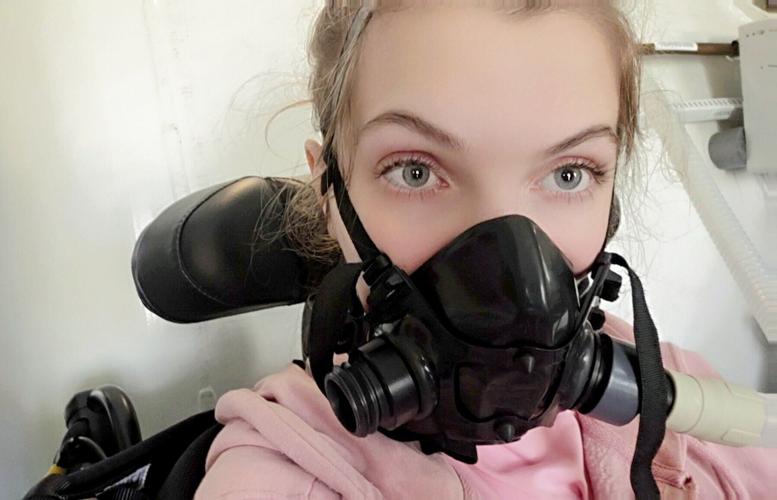
Rubie Boyton was told her seizures were just anxiety ended up brain damaged after a cardiac arrest at 16- and is still unable to talk two years later. (Kim Tucker via SWNS)
Rubie Boyton was told her seizures were just anxiety ended up brain damaged after a cardiac arrest at 16- and is still unable to talk two years later. (Kim Tucker via SWNS)
By Isobel Williams
A girl who was told her seizures were just anxiety ended up with brain damage at just 16 — and is still unable to talk two years on.
Rubie Boyton, now 18, had just celebrated her sweet 16 when she suffered a cardiac arrest in a park that left her brain starved of oxygen for 31 minutes.
The teenager from Ashford, Kent, had suffered two seizures before this — but her mom Kim Tucker says doctors put them down to anxiety and no further testing was done.
However, it turned out to be a rare heart rhythm disorder called catecholaminergic polymorphic ventricular tachycardia (CPVT) which affects one in 10,000 people.
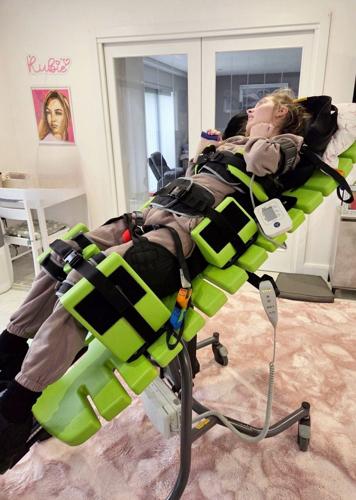
Two years on from the accident, Rubie is still unable to communicate or move and can only eat blended foods, and Kim says the NHS has barely provided support.
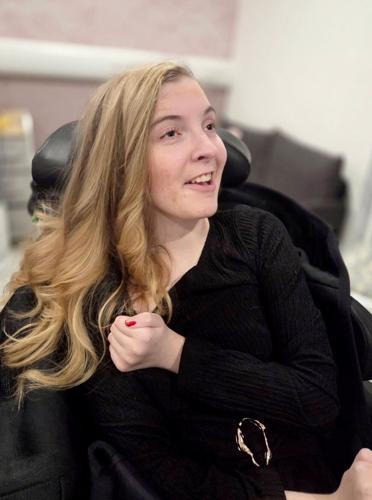
Rubie Boyton before going into cardiac arrest caused brain damage. (Kim Tucker via SWNS)
By Talker
The 42-year-old claims that they only offer physiotherapy once a month, so the family have been paying for their own treatments.
The mother of three said: "I feel sadness because Rubie didn't deserve this.
"The NHS therapy side of things has been pretty much non-existent which has been really difficult to handle because I just thought 'why is everyone giving up on her?'.
"I am so angry. 111 said she should take some paracetamol and she would be fine. I am really annoyed that they didn't tell her to get looked at.
"I don't know why I didn't push for more tests. I thought that if that's what the GP was telling me then they must know. I am angry at myself as well that I didn't ask for more."
CPVT is understood to be passed down by a parent via a faulty gene — and can cause an abnormally fast heartbeat if triggered by physical or emotional stress.
Rubie's disorder was set off in May 2024 while she was out with friends and they were approached by another group of girls in Bridgefield Park near her home.
After Rubie collapsed, a brave friend of hers performed CPR until the teen was airlifted to London's King's College Hospital and placed into an induced coma.
Rubie Boyton, now 18, had just celebrated her sweet 16 when she suffered a cardiac arrest. (Kim Tucker via SWNS)
By Talker
Since awakening, Rubie has been unable to communicate and suffers from dystonia — a movement disorder.
However, Kim says that she has made huge improvements, even getting some reflexes back in her hand.
The teen is also trying to talk with no sound coming out yet, but she is able to communicate through blinking.
Kim said: "Rubie has made massive improvements. I think because I see her every day I sometimes don't see the improvements, but I look back on videos from hospital and it is a massive change.
"She is so much more aware. She is moving more purposefully than she was before."
Despite having carers four days a week, the family are having to mostly look after Rubie themselves, so her mom and stepdad Simon needed to leave their jobs at a local golf club.
They take Rubie to high-dose oxygen therapy twice a week and physiotherapy once a week, with hopes of starting hydrotherapy soon.
Kim added: "We are just trying anything really, we want to give it all a go and see if it makes a difference. I don't think she will get back to where she was before or even close.
Rubie Boyton was told her seizures were just anxiety. (Kim Tucker via SWNS)
By Talker
"It has been such a hard journey for me. We just cope the best that we can. I am grateful for the carers that do come in and give us a hand."
The biggest change in the last two years is the £50,000 (more than $65,000) extension to their family home, which gave Rubie her own wet room, a kitchen for the carers, a bedroom with a TV, and a patio.
This was only possible with a £30,000 (nearly $40,000) disabled facilities grant and volunteers who did work for free to help Rubie after seeing her story online.
Now, Kim says the family are trying to raise more money to pay for treatments for their daughter, as the NHS doesn't cover them.
She said: "I know that building work is expensive, but I think we underestimated how much it was going to cost us.
"The love and support that people have given her and us as a family has just been so nice. There are just no words to describe how grateful we are at the kindness that some people show."





Commented