Lesser Goldfinches are tiny, thumb-sized creatures, rich green on their backs, gilded dandelion on their breasts, with trim little black caps and splotchy white-and-black wings. They sing complex, imitative songs that sound like long conversations, rippling with notes stolen from robins, house finches, wrens, flycatchers and pewees. They survive on sips of water and desert seeds and build tiny, perfect nests concealed in oak and pine branches. My favorite is when they hide their entire family in a single poof of ponderosa pine needles.
They love deserts. They don’t migrate much.
Nothing lesser about them.
I grew up with goldfinches on the feeder, which seemed normal and fine. But droughts and heatwaves had been spreading, and the goldfinch with them — north into warming lands — for most of my life.
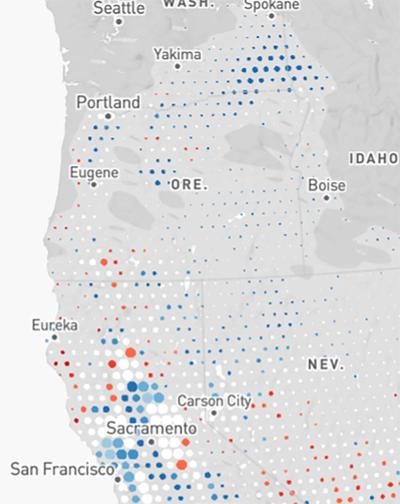
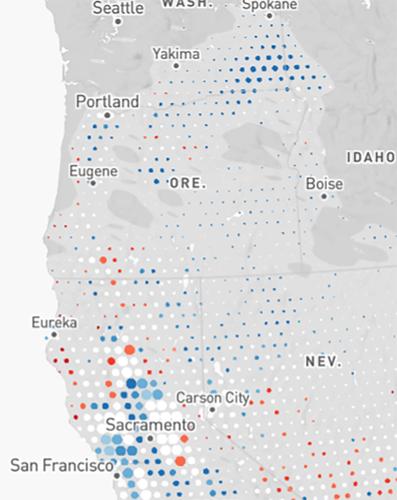
On maps of survey data, it’s clear, across the United States: heat-loving species are moving northwards, as climate disruptions open new habitat. California Scrub Jays and White Egrets moving to Oregon, the goldfinch exploding northwards, limpkins dotting the east coast, Turkey Vultures wintering here in the States instead of Mexico.
Some years back I encountered a wonderful essay by Stephen Carr Hampton, a birder and scientist who fled California’s overheating climate in 2021 alongside many species of desert bird. He recalls the invasion of Lesser Goldfinches to Davis, California in 2021, when dozens of breeders slipped out of the foothills and into the city, one still singing the stolen song of a desert Canyon Wren.
Yes, climate change has happened before. The earth has, actually, become much warmer than it is now. But it’s never, so far as we know, happened so quickly — within the lifetime of a single goldfinch.
I’ve birded in one place long enough to see changes: earlier springs, long rainy winters without snow, egrets in winter and vultures in February. Dozens or hundreds of goldfinches often flock up in winter to eat alder cones, then spread out to sing — their own songs, punctuated with magpies (who don’t live here — that finch must have flitted in from farther east or south), and starling, and a dozen others I can’t pin down — are they gossiping about current or former neighbors? Then they nest.
We have the technology, if you count regenerative agriculture, to absorb perhaps as much carbon as we are currently emitting. We can cool data centers with tech that pulls carbon from the atmosphere, and bury it. We could replace fossil fuels almost entirely (and my checkbook would love that, have you seen the price of gas?!). We have the ability to mitigate or even reverse climate change, if only, somehow, we would use it.
I have my doubts. Even if we do, I doubt I’ll live to see the goldfinches retreat south. That’s fine by me — honestly, I’d miss them.
Sometimes the best we can do is record all the changes, like goldfinches hauling obsolete songs into new habitat.



Commented