
An event marking the one-year anniversary of the derailment will take place Saturday, June 3 at noon, at Mosier Community School, 1204 Historic Columbia River Highway.
“We will gather in Mosier to make a statement against more oil trains coming through our towns and the Columbia River Gorge,” an event listing by Hood River-based conservation group Columbia Riverkeeper announced.
Through speakers, art, colorful banners, and a walk to the river, those present intend to “show solidarity with Mosier” and “send a clear statement to Washington Governor Jay Inslee that he should reject the Tesoro Savage oil train terminal in Vancouver.”
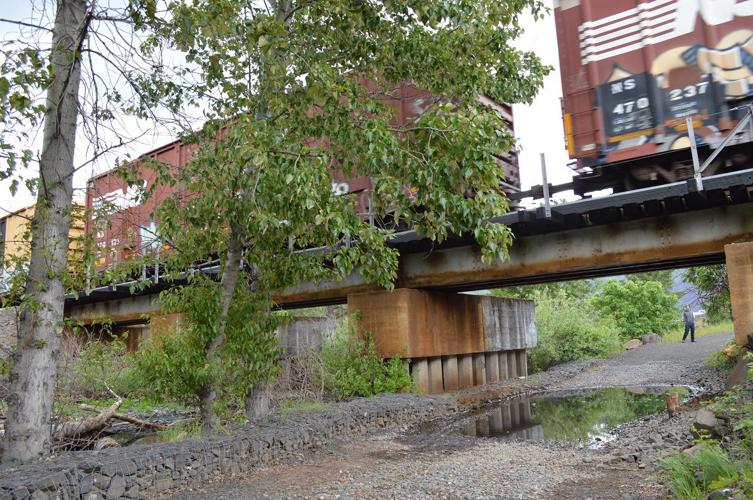
Nearly a year after a fiery train wreck in Mosier leaked thousands of gallons of oil into soil near the Columbia River, environmental regulators are still keeping tabs on contamination levels in groundwater near the site.
On June 3, 2016, 16 cars of a 96-car Union Pacific Railroad train bearing Bakken crude oil left the tracks and several caught fire in an accident caused by faulty rail bolts, railroad leaders said. Nobody was injured in the fiery scene that prompted an evacuation of hundreds.
About 47,000 gallons of oil escaped the ruptured tankers. The ground soaked up about 18,000 gallons, but a small, unknown amount leaked into the Columbia River.
A DEQ report states:
"(The oil) escaped from ... four rail cars. One of the cars tore off the lid of a manhole. As a result, approximately 13,000 gallons of the oil flowed into the nearby wastewater treatment plant, from where it was pumped out and taken to an offsite disposal facility. Initial cleanup involved excavation and offsite disposal of 2,960 tons of petroleum-contaminated soil. Union Pacific Railroad (UPRR) (estimated) that this contaminated soil contained 18,000 gallons of oil. UPRR estimated that the remaining 16,000 gallons of oil burned during the fire. Oil remaining in the derailed cars was successfully and safely transferred by truck to The Dalles, and then hauled by rail to Tacoma, Washington, its original destination. A small amount of oil (was absorbed by booms)."
The city's wastewater system was restored several weeks after.
Tests over the last year by state and federal agencies showed the river wasn’t polluted.
Bob Schwarz, Oregon Department of Environmental Quality project manager, said in a March memo, “Although some oil did enter the river immediately after the derailment, testing indicates that the derailment did not result in a significant impact to the river.”
He said monthly tests showed low concentrations of petroleum in the river upstream from Mosier, but that’s likely due to other human-caused sources like road runoff and river barge traffic.
Groundwater testing, however, has kept regulators busy.
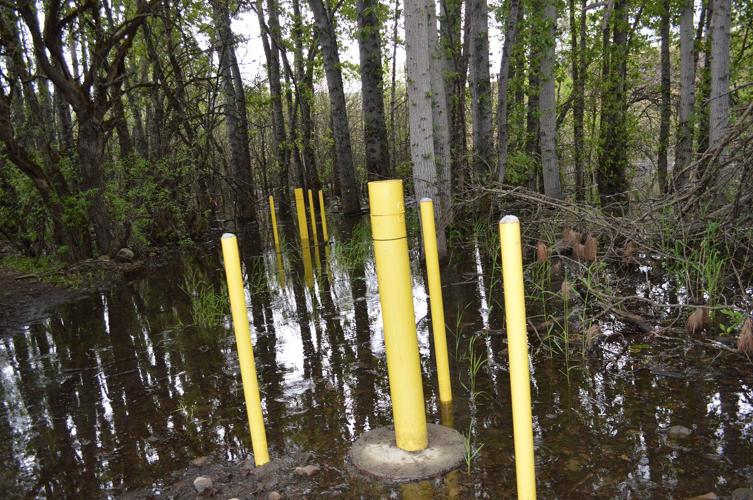
Shortly after the derailment, officials dug monitoring wells and discovered high levels of benzene and other volatile compounds in one of the wells.
DEQ staff found no threat to Mosier’s drinking water — or human life in general, via beach access — though tests showed a possible risk for wildlife in the Rock Creek area. Various amphibians and insects call the ecosystem home.
Crews installed a “biosparge” system of pipes to treat the contamination. The sparges inject air into groundwater about 20 feet below the surface, allowing naturally occurring microbes to break down volatile compounds, Schwarz explained.
Following that treatment, certain ecological standards improved as of February.
According to a report that month, several compounds were “very marginally” above the agency’s ecological screening level. Those include methylnaphthalene, toluene, and xylene.
Schwarz said Friday those levels are “not much of a concern,” but enough that DEQ will continue its work.
In late May, crews will take on more testing.
DEQ plans to study water in the seasonal wetland near Rock Creek, where insects, worms and other creatures “low on the food chain” reside.
Consultants with the City of Mosier, GSI, will also do a round of pumping testing south of the train tracks.
Schwarz anticipates DEQ’s endeavors at the derailment site will continue through the end of 2017. He said it wasn’t a surprise that cleanup would take so long.
“We have to keep working. We’ve made a (lot of progress), but we’re not done,” Schwarz said.


Commented
Sorry, there are no recent results for popular commented articles.