
From
To


A planned oil train terminal that has drawn controversy in Gorge communities suffered its heaviest blow yet when Washington Gov. Jay Inslee denied the project’s permit Monday, siding with environmental regulators.

PORTLAND (AP) — The Trump administration has angered environmental groups and some residents of the Columbia River Gorge by rolling back a 2015 rule on oil train safety. The Obama administration rule change required trains carrying highly explosive liquids to have electronically controlled pneumatic brakes installed by 2021 — systems intended to help prevent fiery oil train wrecks like the one that happened in the Oregon last year, Oregon Public Broadcasting reported Thursday.
To the editor: A year after Mosier’s disastrous oil train derailment resulted in an explosion, toxic fire and 42,000 gallon oil spill, there are now several bills in the Oregon and U.S. Legislature that all Oregonians should be aware of. Compared to California and Washington, Oregon’s weak laws for oil trains and terminals make it much easier and cheaper to transport potentially dangerous oil through our state.

One year after an oil train derailment roiled communities throughout the Columbia Gorge, hundreds gathered at Mosier Community School to remember the fiery wreck and speak out against proposed fossil fuel terminal developments.
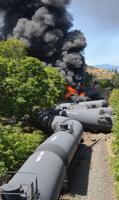
Members of advocacy groups and political leaders will gather Saturday to mark the one-year anniversary of an oil train wreck in Mosier.

Nearly a year after a fiery train wreck in Mosier leaked thousands of gallons of oil into soil near the Columbia River, environmental regulators are still keeping tabs on contamination levels in groundwater near the site.
To the editor: On June 3, 2016, a Union Pacific oil train derailed in Mosier, exploding in flames. The train derailed just several hundred feet from Mosier School, almost incinerating hundreds of children. These Mosier residents are just a few miles away from Rep. Mark Johnson’s district; one would think he would be leading the charge to protect our communities and our rivers from the threat of oil by rail. Instead, Johnson voted to oppose common-sense measures to improve oil train emergency response and hold railroads accountable.
Here is the full text of the letter from the City of Hood River to State Dist. 52 Rep. Mark Johnson (R-Hood River). Copies were also sent to State Sen. Chuck Thomsen (R-Hood River) and members of the House Energy and Environment Committee:
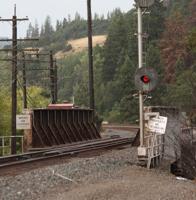
The legal conflict over a train track expansion project in Mosier has risen to federal court.


